
Once all the teeth are gone, eating and speaking become difficult. Complete dentures are one way to restore them, and it helps to understand how they work.
- Complete dentures are removable false teeth that replace all the teeth of one or both jaws.
- They stay in place by fitting closely to the gum and palate, so they can loosen as the gum and bone change.
- The first days need time to adjust, and a few follow up visits are usually needed to fine tune the fit.
- Clean the denture and gum every day, and some people may consider combining dentures with implants for a firmer hold.
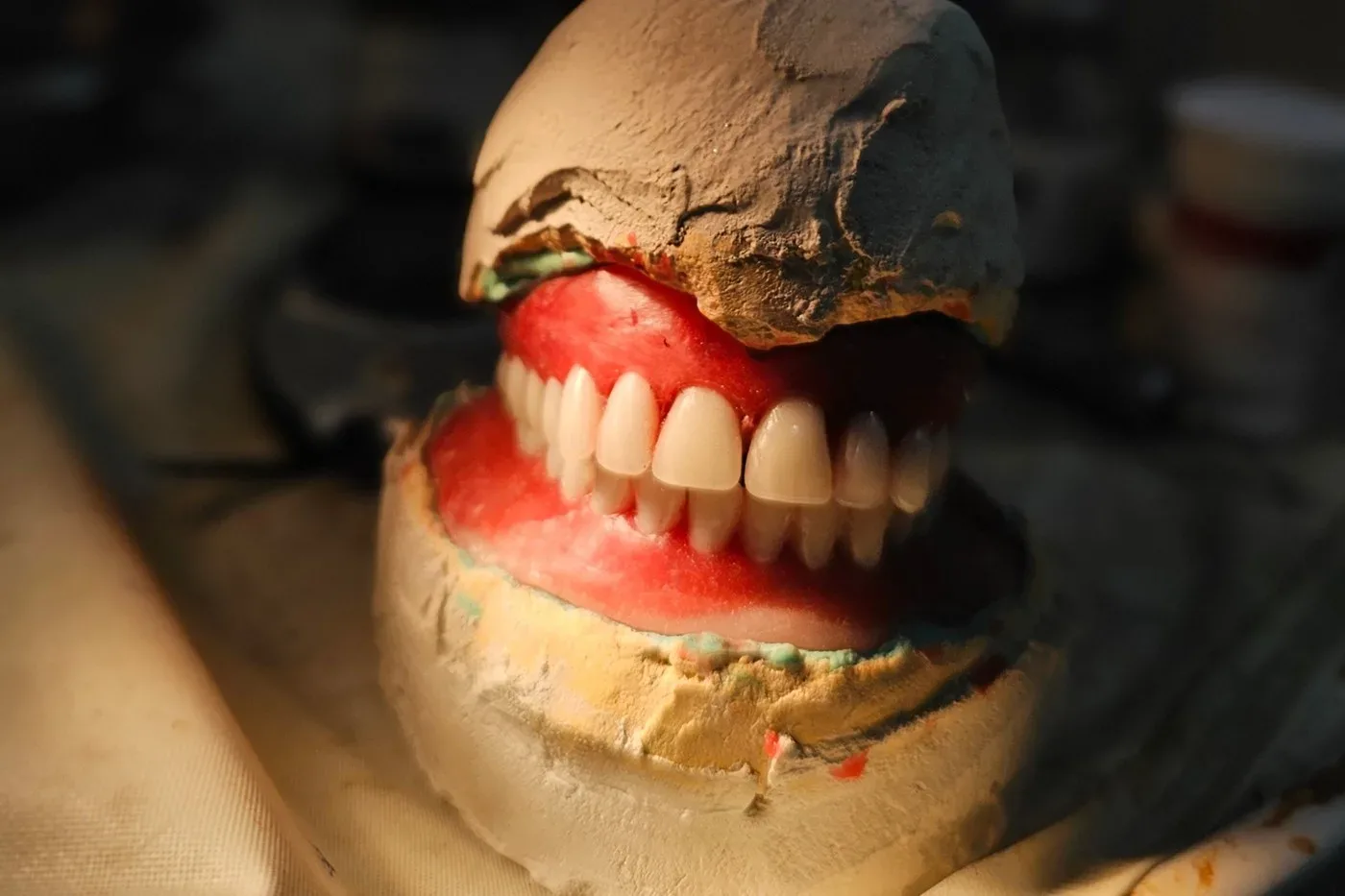
What are complete dentures?
Complete dentures are a removable set of false teeth that replace all the teeth in one jaw or both. They consist of a pink acrylic base that fits closely over the gum and artificial teeth set into it. They are made individually from an impression of each person's mouth.
How do they stay in place?
With no teeth to clasp onto, complete dentures are held mainly by a close fit against the gum and palate, together with a thin film of saliva. For that reason a lower denture is usually harder to keep stable than an upper one, and a denture can become loose as the gum and bone change over time. You may read our article on what to do when a removable denture is loose or hurts the gum.
The adjustment period
- In the first days you may feel clumsy, produce a lot of saliva and speak unclearly.
- Eat soft food cut small, and chew slowly on both sides.
- The gum may feel sore or rubbed at first, and you should return so the dentist can adjust the denture.
The time needed to get used to them differs from person to person, and a few follow up visits are usually needed to fine tune the fit.
Cleaning and storing your dentures
- Remove the denture and brush it clean after meals with a soft brush, taking care not to drop it.
- Clean the gum, tongue and palate with a soft brush or gauze.
- Keep the denture somewhere clean when it is out. See our articles on whether to remove dentures at night and on denture care.
Compared with other options
Complete dentures are a familiar choice after losing all the teeth. Some people may consider combining them with implants so the denture is held more firmly, depending on bone and general health. You can read our comparison of removable dentures and implants. The dentist will examine you and advise what suits you.
You are welcome to walk in during opening hours at Nha Khoa Kỳ Hòa, 266A - 268, 3 Tháng 2 Street, Hòa Hưng Ward, Ho Chi Minh City, or call the hotline 028.3868.1097 (Zalo 082.299.3377) to ask about quieter time slots.
Frequently asked questions
How long do complete dentures last?
It depends on how you care for them and on changes in the gum and bone. Regular check-ups let the dentist inspect and adjust them when needed.
What should I do if my denture is loose?
Do not repair it yourself or use adhesive. Come back so the dentist can check and adjust the fit.
Should I take my dentures out at night?
It is usually advised so the gum can rest and the denture can be cleaned. The dentist will give specific guidance for you.