
An implant is a significant investment that takes months to complete, so it is worth understanding properly before deciding, rather than choosing on a recommendation alone.
- An implant has a fixture placed in bone, an abutment and a crown. The fixture needs time for bone to bond to it, so an implant cannot be completed in a single visit.
- The whole process usually spans several months, with considerable variation between individuals.
- Medical conditions and current medication genuinely change the treatment plan, so declare them fully at your assessment.
- Dental implants fall outside health insurance cover and are a self-paid service.
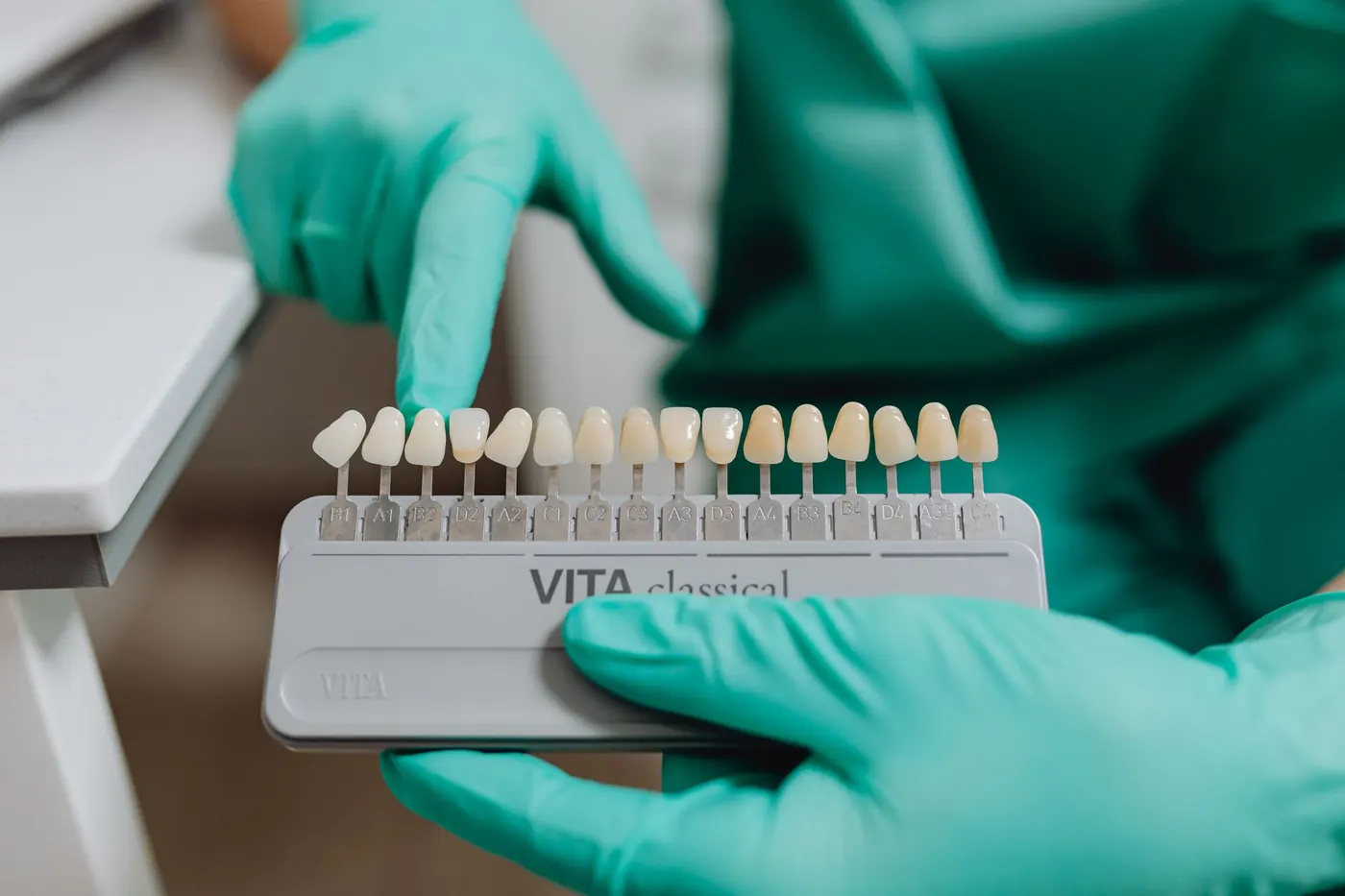
Dental implants come up in conversation a great deal, but most of what people hear concerns price and brand of fixture. This article covers the more practical questions when you are weighing it up: what actually happens, how long it takes, who needs extra caution, and what to ask before agreeing.
What an implant is
A dental implant has three parts. The fixture, made of titanium or a titanium alloy, is placed in the jaw bone in place of the lost root. The abutment attaches to the fixture and emerges through the gum. The crown is the visible tooth, fitted onto the abutment.
What sets implants apart from other options lies in the fixture: once placed, it needs time for bone to grow against and bond to its surface. That process is called osseointegration, and it is precisely why an implant cannot be completed in a single visit.
The stages
Stage 1 - Examination and planning. The dentist assesses your overall oral health, takes x-rays to evaluate bone volume at the intended site, considers the position of important anatomical structures, and asks carefully about medical conditions and medication. This stage determines much of the eventual outcome.
Stage 2 - Dealing with existing problems. Periodontal disease, decay or retained roots need resolving first. Placing an implant into an inflamed mouth is best avoided.
Stage 3 - Bone augmentation if required. Where bone at the site is insufficient, the dentist may propose this. Not everyone needs it, but where it is needed the treatment takes longer.
Stage 4 - Placing the fixture. Carried out under local anaesthetic. You remain awake and should not feel pain at the site. Swelling and discomfort for a few days afterwards is normal and settles.
Stage 5 - Osseointegration. The longest phase, measured in months. During this time you carry on normally and attend reviews so the dentist can monitor progress.
Stage 6 - Fitting the abutment and crown. Once the fixture is stable, impressions are taken, the crown is made and fitted. Only now is the tooth complete.
Stage 7 - Regular reviews. Implants need checking and professional cleaning just as natural teeth do. This is the part most often neglected.
How long does it take?
The whole process usually spans several months, and the actual duration varies considerably between individuals. Influencing factors include the tooth position, the quality and quantity of bone, whether augmentation is required, and how each person heals.
So ask your dentist for the expected timeline for your own case after examination and x-rays, rather than relying on a general figure heard elsewhere.
Who needs extra caution?
Implants are unsuitable or need careful consideration in some situations, which is why the initial assessment matters so much. Tell your dentist about:
- Poorly controlled diabetes, which affects healing.
- Ongoing treatment for bone conditions, particularly involving medication that acts on bone metabolism. This group needs discussion between the dentist and your treating doctor.
- Cardiovascular disease, bleeding disorders, or anticoagulant medication.
- Current or previous cancer treatment involving radiotherapy to the head and neck.
- Heavy smoking, which raises the risk of implant failure.
- Periodontal disease that has not been brought under control.
- A jaw that has not finished growing, in younger patients.
Declare your medical conditions fully and bring a list of your medication. This information genuinely changes the treatment plan; it is not a formality.
What to ask before you agree
- What is the current state of my bone, and will I need augmentation?
- How many stages does my plan involve, and how long is it expected to take?
- What does the total cost include - does it cover the crown and any likely additional steps?
- Which fixture will be used, and is there documentation of its origin?
- What is the warranty and the review schedule?
- Given my medical condition, does anything about the plan change?
- Besides an implant, what other options would suit me, and what are their pros and cons?
The last question is the most worthwhile. Implants are a good choice in many situations, but not always the only suitable one. A dentist who also sets out the alternatives is what you should expect.
Cost and health insurance
Dental implants fall outside health insurance cover, being prosthetic work rather than treatment of a condition. They are a self-paid service.
Ky Hoa Dental offers several implant systems at different price points, and the price list is published on this website. You will always be given a clear account of the total cost, any items that may arise, and the treatment plan before agreeing to start.
For advice on your own case, visit Ky Hoa Dental at 266A - 268, Duong 3 Thang 2, Hoa Hung Ward, Ho Chi Minh City, or call our hotline to arrange an appointment.
Frequently asked questions
Is implant placement painful?
During placement you are given a local anaesthetic, so you should not feel pain at the site. Once the anaesthetic wears off there can be swelling and discomfort for a few days, varying with the individual and the complexity of the case. The dentist will give aftercare instructions and appropriate prescriptions.
Can older adults have implants?
Age in itself is not a contraindication. What matters more is the condition of the jaw bone, general health, medical conditions and current medication. Many older adults do have implants, but a thorough assessment and discussion with the doctor treating any underlying condition come first.
How long do implants last?
Longevity depends on bone quality, the technique used, daily care, smoking and attendance at reviews. Implants can still develop problems if the tissue around the fixture becomes inflamed, so cleaning and regular checks are essential rather than optional.