
Crunchy, watery and fibre rich vegetables are helpful for the mouth, but the dressing that comes with them deserves your attention.
- Crunchy vegetables stimulate saliva and help clean tooth surfaces.
- Sour or sweet dressings can wear enamel when used often.
- Rinse with water after eating and wait about half an hour before brushing.
- Use floss to remove vegetables stuck between teeth.
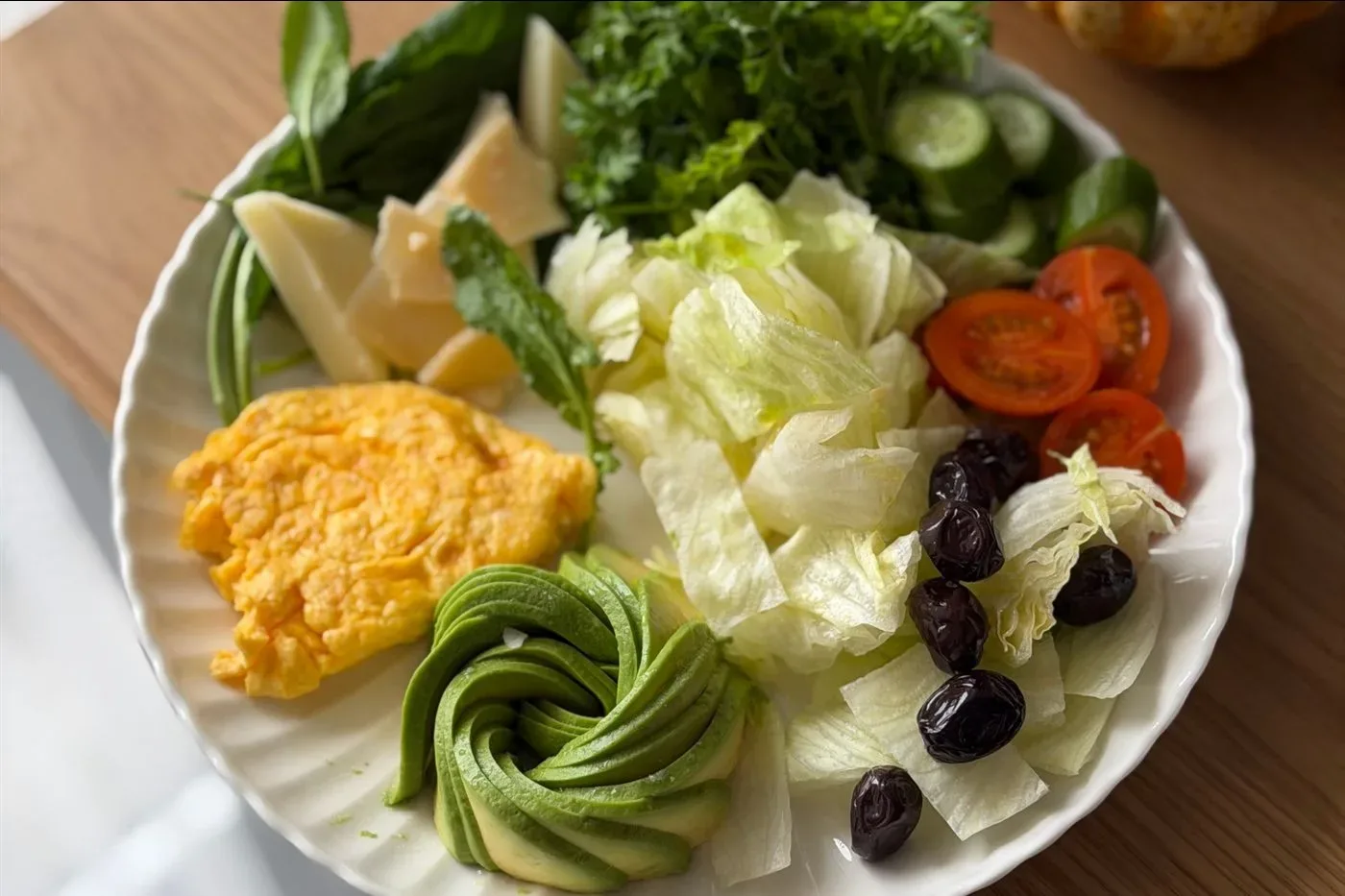
A colourful plate of salad is usually seen as a healthy choice. For oral health, raw vegetables also bring many benefits. However, the way a salad is prepared and dressed can change the result, so it helps to know how to eat it properly. Below we explain the benefits, the risks and some practical habits for everyday meals.
How raw vegetables help teeth and gums
Crisp vegetables such as lettuce, cucumber and carrot need thorough chewing, which stimulates saliva. Saliva rinses away food particles and neutralises acid in the mouth. The fibre also gently scrubs the tooth surface. Leafy greens and fruit supply vitamin C, which supports healthy gums, and you can read more in our article on vitamin C and the gums.
What to watch for when eating salad
- Vinegar, lemon or sugary dressings can wear enamel if eaten often.
- Dried fruit, candied nuts and other toppings often leave sugar stuck on the teeth.
- Stringy vegetables such as celery or herbs easily lodge between teeth.
- Raw vegetables must be washed well to avoid bacteria that upset the stomach.
None of these points means you should avoid salad. They simply mean that a little care with the toppings and the dressing keeps a healthy dish healthy for your teeth as well.
How to eat salad and protect your mouth
Use a moderate amount of dressing and avoid soaking vegetables in vinegar for a long time. After eating, rinse with plain water to wash away some acid, then wait about half an hour before brushing so you do not scrub softened enamel. If vegetables catch between your teeth, use dental floss gently instead of a sharp toothpick, because a toothpick can injure the gum and widen the gap over time.
If you often have sensitive teeth or bleeding gums even though you eat plenty of vegetables, it is worth getting checked so the dentist can look for the cause. You can walk in during working hours or call the hotline 028.3868.1097. Read more in our article on nutrition for strong teeth.
Frequently asked questions
Is eating salad every day bad for teeth?
No, as long as the dressing is not very sour or sweet. Fresh vegetables are generally good for the gums and saliva.
Should I brush right after eating salad?
Rinse with plain water first, wait about half an hour, then brush.
How should I remove vegetables stuck between teeth?
Use floss or a water flosser gently. Avoid sharp objects that can injure the gums.