
A tooth that aches at night or stays sensitive for a long time is often a sign the pulp is inflamed. Timely root canal treatment lets you keep the natural tooth instead of losing it.
- Root canal treatment addresses a condition, so it falls within the covered scope of health insurance when indicated and carried out at a contracted facility such as Ky Hoa Dental.
- The dental crown placed after root canal treatment is a prosthetic restoration, sits outside health insurance, and is paid for by the patient.
- Signs pointing to root canal treatment include spontaneous night-time toothache, lingering sensitivity after eating, a darkening tooth, and gum swelling or a pus-filled spot.
- The process covers examination and X-ray, local anaesthetic, opening and cleaning the pulp, sealing the canals and restoring the crown, over one appointment or several.
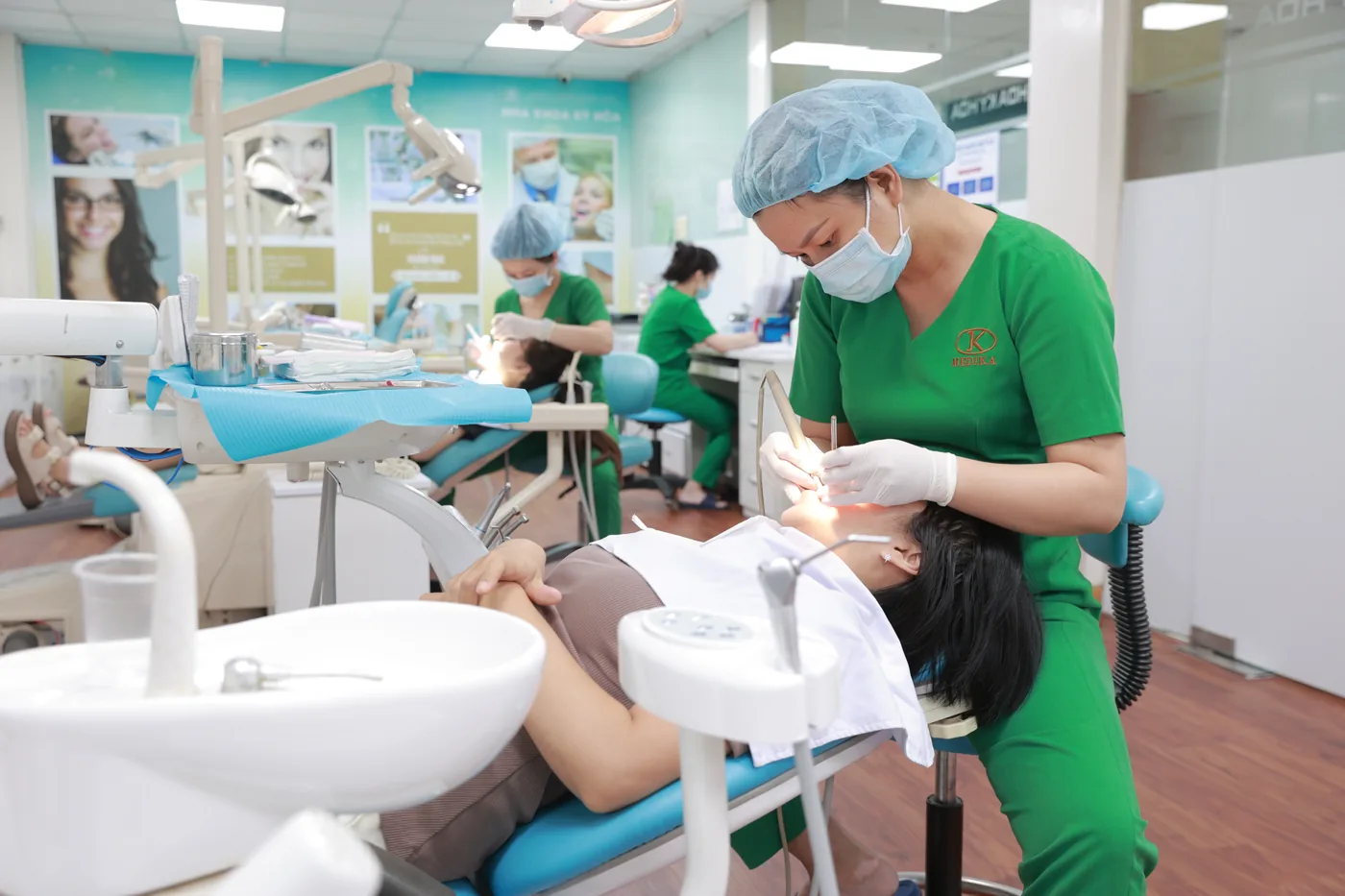
Many of us tend to put up with things: when a tooth aches we take a painkiller and carry on, and only see a dentist when it becomes unbearable. But with an inflamed pulp, the longer you wait the more the pulp deteriorates, the sharper the pain becomes, and the harder it gets to save the tooth. This article explains what root canal treatment is, when it is needed, what the steps involve, and which parts your health insurance (BHYT) card helps with.
What is root canal treatment, and when is it needed?
Inside every tooth is a chamber holding the pulp, made up of the blood vessels and nerves that nourish the tooth. When decay reaches the pulp, or the tooth cracks, bacteria inflame the pulp and it gradually dies. At that point the tooth aches, feels sensitive, and sometimes the gum swells or an abscess forms. Root canal treatment means cleaning out the inflamed pulp, disinfecting the canals and sealing them, so that the tooth can stay in the arch.
A dentist will usually consider root canal treatment when you have the following signs:
- Spontaneous toothache, particularly at night, where painkillers help only briefly before the pain returns.
- Prolonged sensitivity to hot, cold or sweet food, lingering after you stop eating.
- The tooth turning darker than the teeth around it.
- Swelling around the root, a pus-filled spot on the gum, or the tooth loosening from inflammation.
Whether root canal treatment is needed can only be decided after an examination and an X-ray, not guessed at home. The degree of inflammation and the outcome of treatment also differ depending on your condition and your own body.
What steps does root canal treatment involve?
The phrase worries many people, but the process is methodical and includes a local anaesthetic to limit discomfort during the work. It usually runs as follows:
- Examination and X-ray: the dentist identifies which tooth has pulp inflammation, how far it has gone, and measures the length of the canals.
- Local anaesthetic: the area around the tooth is numbed so you are more comfortable while the dentist works.
- Opening and cleaning the pulp chamber: the dentist creates access, removes all the inflamed pulp, then shapes and disinfects the canals.
- Sealing the canals: once the canals are clean and dry, the dentist seals them to limit bacteria getting back in.
- Restoring the crown: the access opening is filled, or the dentist advises a dental crown to protect the tooth over the long term.
Depending on how complex the tooth is and how many canals it has, treatment may take one appointment or several. The dentist will tell you in advance so you can plan.
Is root canal treatment covered by health insurance?
This is the question we hear most. The straight answer: root canal treatment is treatment of a condition (an infected tooth), so it falls within the covered scope of health insurance when it is indicated and carried out at a facility holding a health insurance examination and treatment contract. At Ky Hoa Dental, the Odonto-Stomatology department of Ky Hoa Medical Center, you can use your health insurance card for dental care, because the centre holds such a contract.
Alongside root canal treatment, health insurance also supports examination and treatment of tooth decay, pulpitis, gingivitis and periodontitis; dental fillings for decay caused by disease; and tooth extraction indicated by disease. For the full list, see our article on what insured dental care covers. The benefit level is 80%, 95% or 100% of the cost within the covered scope, depending on the category recorded on your card.
One point is worth stating clearly so there is no confusion later: the dental crown placed after root canal treatment is a prosthetic restoration and sits outside health insurance. A tooth that has had root canal treatment tends to be more brittle, so dentists often recommend a crown to protect it. The root canal treatment itself is supported by insurance, while the crown on top is paid for by you. At Ky Hoa, costs are always quoted clearly before treatment, with nothing left vague.
Why keep the natural tooth rather than remove it?
When a tooth hurts, plenty of people would rather just have it out. But every natural tooth lost leaves a gap that is hard to replace: the neighbouring teeth drift, the bite changes, and restoring the space later with a bridge or an implant is usually far more expensive than saving the tooth with root canal treatment. So when a tooth can still be rescued, keeping the natural tooth is generally the option to prefer.
For older patients, or those with underlying conditions such as diabetes, heart disease or high blood pressure, being treated at a general centre brings a further benefit: an internal medicine doctor can hold a joint consultation within the centre when needed, so treatment is monitored more closely against your general health. If the tooth ultimately has to come out, our article on whether tooth extraction is covered by health insurance will help you understand your entitlements.
A small piece of advice from Ky Hoa
A dull ache or prolonged sensitivity is the moment to arrange a visit, rather than waiting until the swelling and sharp pain arrive. Coming in early usually means a better chance of keeping the natural tooth, and a lighter cost too. Bring your health insurance card, drop in to Ky Hoa Dental, and the dentist will examine you and advise on your particular situation. Read more about our root canal treatment service or call the hotline 028.3868.1097 whenever you need us.
Frequently asked questions
Is root canal treatment covered by health insurance?
Yes. Root canal treatment addresses a condition (an infected tooth), so it falls within the covered scope of health insurance when it is indicated and carried out at a facility holding a health insurance examination and treatment contract. At Ky Hoa Dental you can use your card for dental care, at a benefit level of 80%, 95% or 100% depending on the category on your card.
Is a dental crown after root canal treatment supported by insurance?
No. The root canal treatment itself is supported, but the crown placed afterwards is a prosthetic restoration and sits outside health insurance, so you pay for it yourself. That cost is quoted clearly before the work begins.
Does root canal treatment hurt?
A local anaesthetic is used, which helps limit discomfort while the dentist works. Afterwards the tooth may feel mildly sore for a few days before settling. What you feel varies with your condition and your own body, and the dentist will explain how to care for the tooth afterwards.