
Health insurance pays for treating dental conditions, not for cosmetic wishes. Here is the specific list so you know what to expect before your visit.
- The general rule is that health insurance pays for treating dental conditions, not for appearance-driven services chosen out of personal preference.
- The covered group includes examination of dental conditions, fillings for decay, root canal treatment, care for gingivitis and periodontitis, and extraction indicated by disease.
- Outside the covered scope are teeth whitening, cosmetic dental crowns, orthodontics, dental implants and routine scaling requested for personal care.
- At Ky Hoa Dental, the dentist examines you and then states clearly which items insurance covers and which you pay for yourself, before treatment begins.
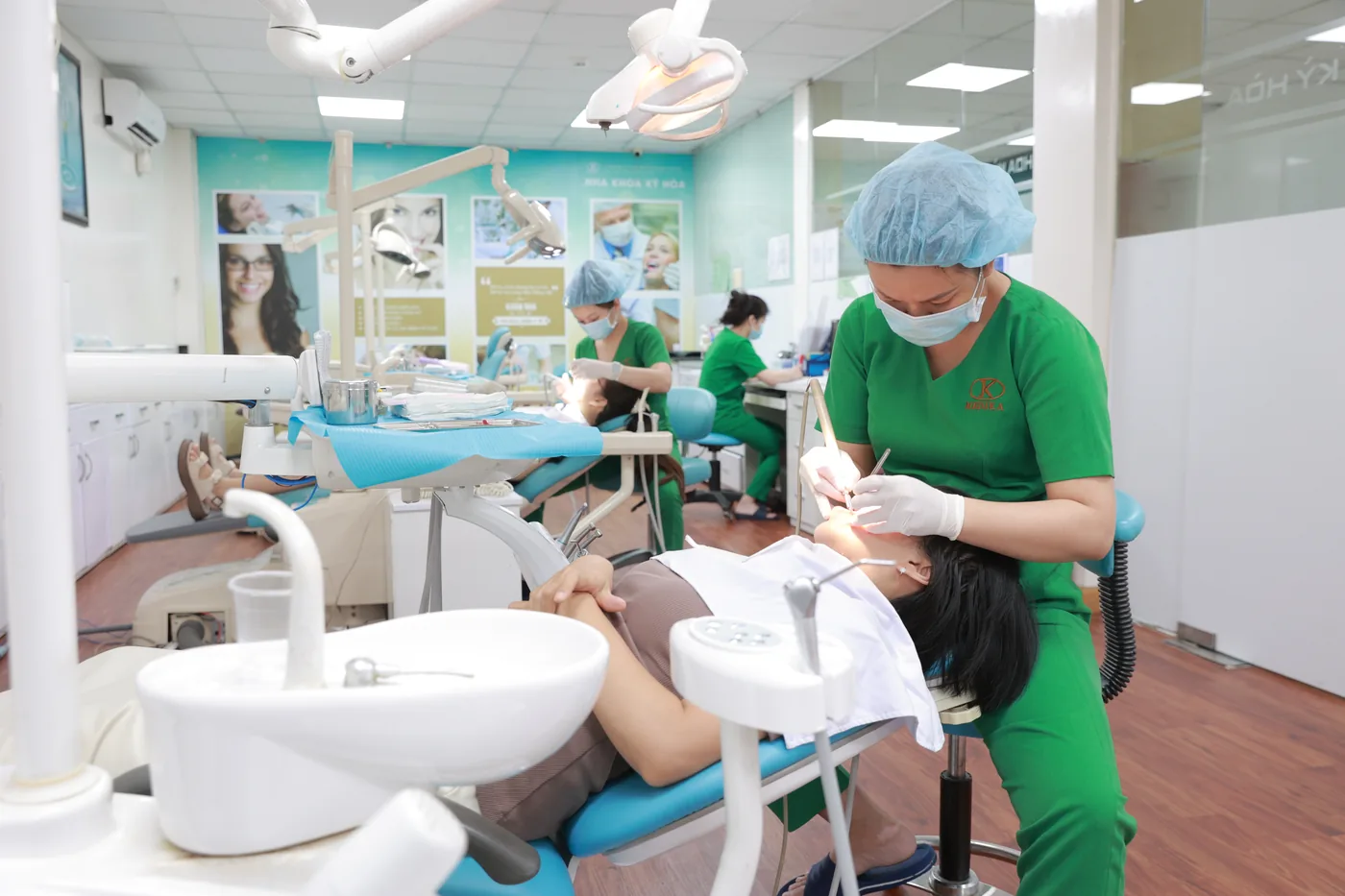
This is the question we hear most often at the front desk. Knowing the list in advance helps you plan for the cost and avoids misunderstandings when you use your health insurance (BHYT) card for dental care.
The general rule: treatment is covered, cosmetics are not
Health insurance exists to share the cost of treating illness, and dentistry is no exception: anything aimed at treating a specific condition falls within the covered scope, while anything aimed at appearance or personal preference does not.
Usually within the covered scope
- Examination and advice for dental conditions
- Treatment of tooth decay and pulpitis
- Dental fillings for decay caused by disease
- Root canal treatment
- Tooth extraction indicated by disease (infected, badly damaged or loose teeth)
- Treatment of gingivitis and periodontitis
- Scaling when prescribed as part of treatment
Usually outside the covered scope
- Teeth whitening
- Cosmetic dental crowns
- Braces and orthodontics
- Dental implants and dentures
- Routine scaling requested for personal care
- Tooth extraction on request when there is no underlying condition
How much does insurance pay?
The benefit level depends on the category recorded on each person's card (80%, 95% or 100% of the cost within the covered scope) under the Law on Health Insurance. Any remaining balance and any services outside the covered scope are explained in detail by our staff before treatment begins.
Not sure which group your case falls into?
Simply come in for an examination. The dentist will assess your condition and tell you clearly which items insurance covers and which you pay for yourself, before anything is done. You are always free to think it over before deciding to go ahead.
Frequently asked questions
Is scaling covered by health insurance?
It is covered when the dentist determines that it forms part of treating a condition, for example tartar causing gingivitis or periodontitis. Routine scaling for ordinary care is a self-paid service.
Is a dental crown after root canal treatment covered?
The root canal treatment itself may fall within the covered scope, but the crown is a prosthetic restoration and sits outside health insurance. The dentist will separate the two clearly when quoting the cost.
What should I bring to an insured dental visit?
Your health insurance card (or the VssID/VNeID app) and a photo ID. If you have earlier dental X-rays or treatment records, bring them so the dentist can review them.