
A familiar question at Ky Hoa Dental is how much it costs to fill one decayed tooth. The honest answer is that it depends, and in this article we set out exactly what it depends on so you can plan ahead.
- The cost of a filling changes with the position of the tooth, the size of the cavity, the material used and whether the tooth has actual disease.
- The two common materials are composite, which closely matches natural tooth colour and suits visible areas, and glass ionomer, which releases fluoride.
- Fillings that treat decay fall within health insurance cover, so you can use your health insurance card for a filling at Ky Hoa Dental; whitening and crowns are not covered.
- Filling a tooth while the decay is still shallow is usually simple and gentle; left alone, decay reaching the pulp requires root canal treatment at considerably greater cost.
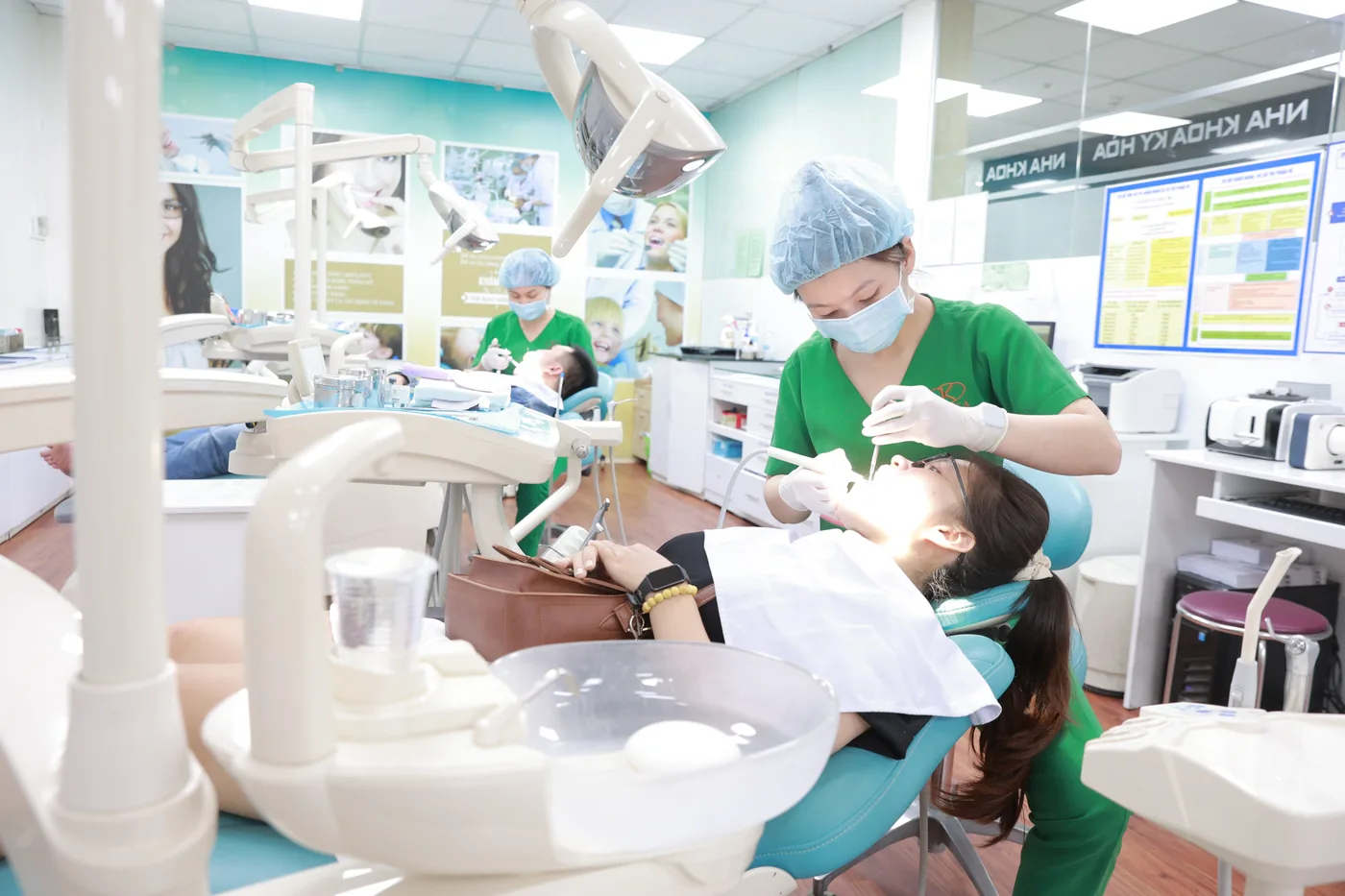
What determines the cost of a filling?
Before we talk about figures, it helps to understand why the same procedure comes with different quotes for different people. The cost is not fixed because it follows the real condition of each individual tooth. The main factors are:
- Position of the tooth: front teeth are easier to work on, while a back molar is both harder to reach and under heavy chewing load, so it demands more care.
- Size of the cavity: a small early cavity is quick to fill and uses little material. A large one that reaches close to the pulp needs more work and sometimes additional steps.
- Type of filling material: each material has its own properties and its own price, which we explain below.
- Whether the tooth has actual disease: this matters a great deal, because it decides whether your health insurance card applies.
For this reason an exact figure only exists once a dentist has seen your tooth with their own eyes, and it varies with each person's condition. At Ky Hoa we give you a clear quote before treatment starts, so you know what you will be paying and there are no surprises afterwards.
Common filling materials
The two materials most often used for decayed teeth are composite and glass ionomer. The reference price for filling or restoring a tooth with either material is published on our price list, and the final figure still depends on what the dentist finds.
Composite (tooth-coloured resin)
Composite closely matches the colour of natural teeth, so the finished filling looks discreet. It is often chosen for front teeth or anywhere visible when you smile and talk. The material bonds well and holds its appearance, which suits people who would rather the filling not show.
Glass ionomer
Glass ionomer releases fluoride and is considered for certain decayed teeth, particularly in positions that do not take heavy chewing load. Your dentist will advise which material suits your tooth based on its position, how deep the decay goes and your individual situation.
What matters is that no single material suits every case. The choice should come from an actual examination rather than from what you have heard from others.
Fillings for tooth decay fall within health insurance cover
This is the part that surprises people most. If your tooth is decayed and the dentist indicates a filling as treatment for that disease, then the cost of filling a decayed tooth falls within the scope covered by health insurance (BHYT). Put simply: you can use your health insurance card for the examination and for fillings on decayed teeth at Ky Hoa, because the centre holds a health insurance examination and treatment contract.
The benefit level is usually 80%, 95% or 100% of the cost within the entitled scope, depending on the category recorded on your card. As a result, cardholders generally pay less out of pocket than the self-pay figures on the price list.
There is an important distinction to keep in mind. Health insurance helps when the filling treats decay or another disease. Cosmetic services such as whitening, crowns or veneers are not covered. If you would like more detail, see our article on what health insurance covers for dental visits.
Why it pays to fill a tooth while the decay is still small
Many people put it off and only come in once the tooth aches. In reality, while the decay is still shallow, filling it is usually straightforward and the cost is lower. Left alone, the cavity works deeper and can lead to pulp inflammation, at which point root canal treatment becomes necessary, and that costs considerably more than a single filling.
If a tooth has broken down too far to save, extraction may have to be considered. If that is a concern for you, our article on the cost of wisdom tooth extraction covers it in more detail. The point is simple: attending to your teeth early is both easier and less expensive.
For those living with an underlying condition such as diabetes or heart disease, dental treatment calls for extra care. A practical advantage at Ky Hoa is that the dental clinic sits inside a general medical centre, so when needed we can arrange a joint consultation with an internal medicine doctor on the spot, which makes treatment more reassuring depending on each person's condition.
A gentle word from Ky Hoa
Fillings are one of the basic pieces of dental care that almost everyone needs at some point. Rather than worrying about the figure, come in for an examination so the dentist can see the tooth and give you a clear quote before anything is done. To book or to ask a question, call our hotline 028.3868.1097 or message Zalo 082.299.3377. Ky Hoa Dental is open Monday - Saturday, 06:30 - 17:00 (closed Sunday), and we see health insurance patients all day Saturday for those who are busy during the week.
Frequently asked questions
How much does it cost to fill one decayed tooth?
The reference price for filling or restoring a tooth with composite or glass ionomer is published on our price list, and the final figure depends on the position of the tooth, the size of the cavity and your individual situation. If the filling treats decay and you hold a health insurance card, what you pay out of pocket is usually lower. The dentist gives you a clear quote before starting.
Can I use my health insurance card for a filling?
Yes. When a tooth is decayed and the dentist indicates a filling as treatment for that disease, the cost falls within the scope covered by health insurance. You can use your card for the examination and for fillings on decayed teeth at Ky Hoa. Cosmetic services such as whitening, crowns and veneers are not covered.
Should I choose composite or glass ionomer?
It depends on the position of the tooth, how deep the decay goes and your individual situation. Composite closely matches natural tooth colour and usually suits areas visible when you smile. Glass ionomer is considered for certain other cases. No material suits every case, so let the dentist examine the tooth and recommend what fits.