
A cracked or broken denture worries older adults because they cannot chew. This article explains the causes, what not to do at home and how to bring the denture in for repair.
- Removable dentures often crack or break because of drops, chewing hard food, old plastic or a loose fit.
- Do not glue the denture at home or bend the clasps yourself, because it can leave the denture misaligned and harder to repair.
- Take the denture out, collect all the pieces and bring them to the clinic for assessment.
- The dentist will tell you whether the denture can be repaired or whether a new one is better, because not every case can be repaired.
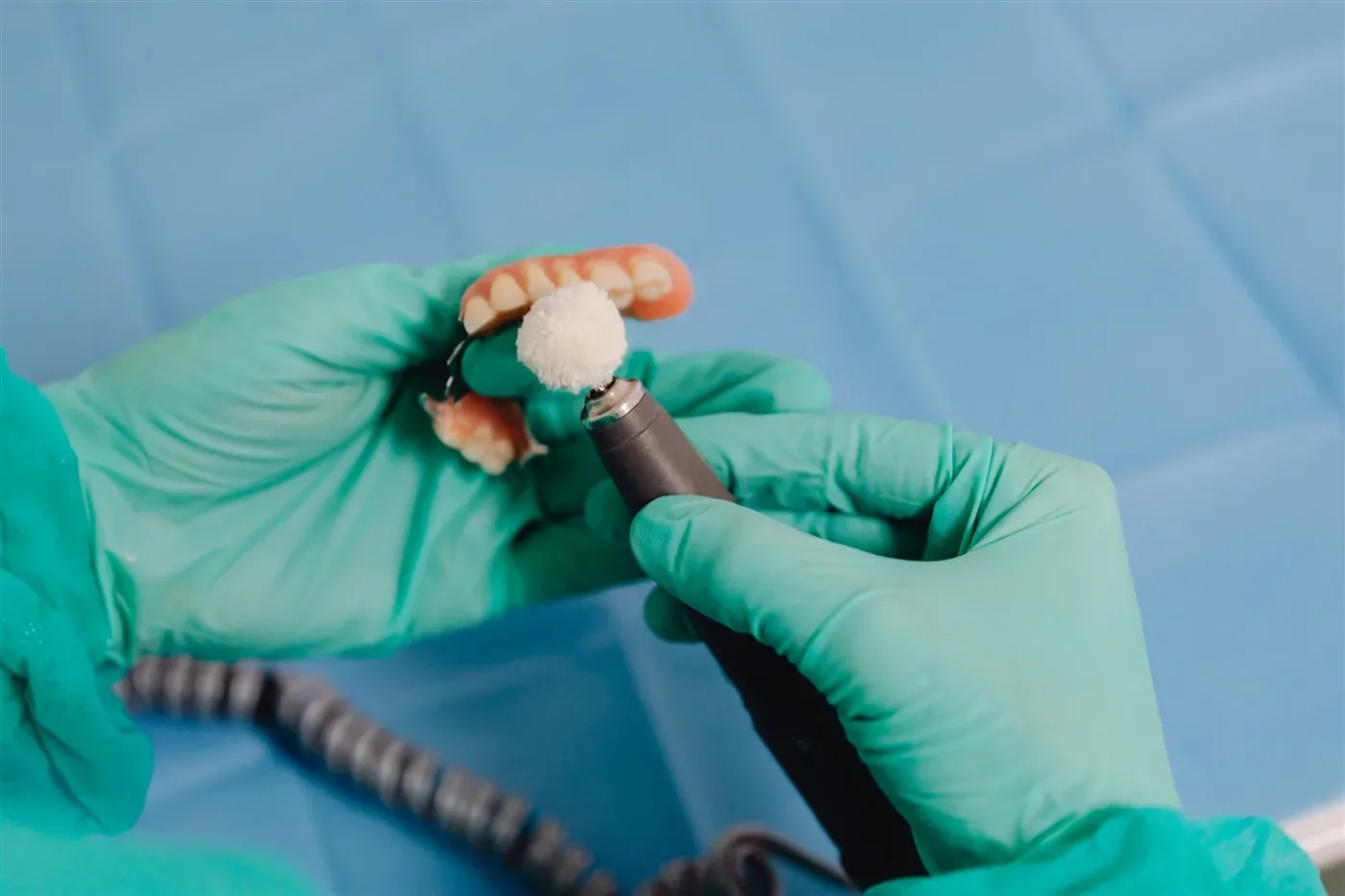
After years of use, a removable denture can crack in its plastic base, lose a clasp, have a tooth pop out, or break when it is accidentally dropped. When this happens, many people panic and want to fix it at home with glue. This article helps you know what to do and what not to do.
Why do removable dentures crack or break?
- Falling onto a hard floor while being taken out for cleaning.
- Chewing food that is too hard or sticky, or biting hard on one side.
- A denture that is old, with plastic that has aged and worn down.
- A loose denture, because the bone and gum have changed, so the base is pressed unevenly when chewing and cracks easily. Our article on a loose denture and sore gums explains more.
- Soaking the denture in water that is too hot, or in strong cleaning agents that warp the plastic.
What not to do at home
- Do not glue it with general purpose glue, because it is not meant for the mouth and may leave the denture misaligned and harder to repair.
- Do not bend the clasps or grind the denture with household tools.
- Do not keep wearing a cracked denture, because sharp edges can scratch the gum and tongue and cause sores.
What should you do when a denture cracks or breaks?
- Take the denture out and do not wear it.
- Gently collect all the pieces, rinse them with clean water and put them in a box.
- Bring the whole denture and all the pieces to the clinic so that the dentist can examine it.
Depending on the condition, the dentist will tell you whether the denture can be repaired, whether a clasp can be re-attached or a tooth added, or whether it is better to make a new one. Not every case can be repaired, especially when the denture is old and no longer fits the gum.
Making your denture last longer
- Clean the denture over a basin of water or a soft towel so that it will not break if it drops.
- Do not soak it in hot water or strong cleaning agents.
- Have regular checkups so that the dentist can check the fit and adjust the denture when needed.
You can read more about caring for a removable denture the right way and storing a denture overnight.
You can call the hotline 028.3868.1097 or bring your denture to us in person during working hours at 266A - 268, 3 Thang 2 Street, Hoa Hung Ward, Ho Chi Minh City.
Frequently asked questions
Can a cracked denture be glued at home?
No. Ordinary glue is not meant for the mouth, can leave the denture misaligned and makes later repair more difficult. Please bring the denture to the clinic.
Can a broken denture be repaired?
Many mild cracks or broken clasps can be repaired, but it depends on the condition of the denture and the gum. The dentist will examine it and tell you whether to repair it or make a new one.
Should I keep wearing the denture while waiting for repair?
No, because sharp edges can scratch the gum and tongue. Take the denture out, eat soft food and bring it to the clinic early.