
Denture adhesive can help a removable denture hold more firmly and give you more confidence when eating and speaking. But if you need more and more adhesive to keep the denture in place, it is a sign the fit has changed and a dentist should check it.
- Adhesive helps removable dentures grip better, especially when new or with low jaw ridges.
- Needing more and more adhesive means the denture is loose and needs relining or replacing.
- Apply only a small amount to a clean, dry denture and remove all adhesive each evening.
- Never use household or craft glue on a denture.
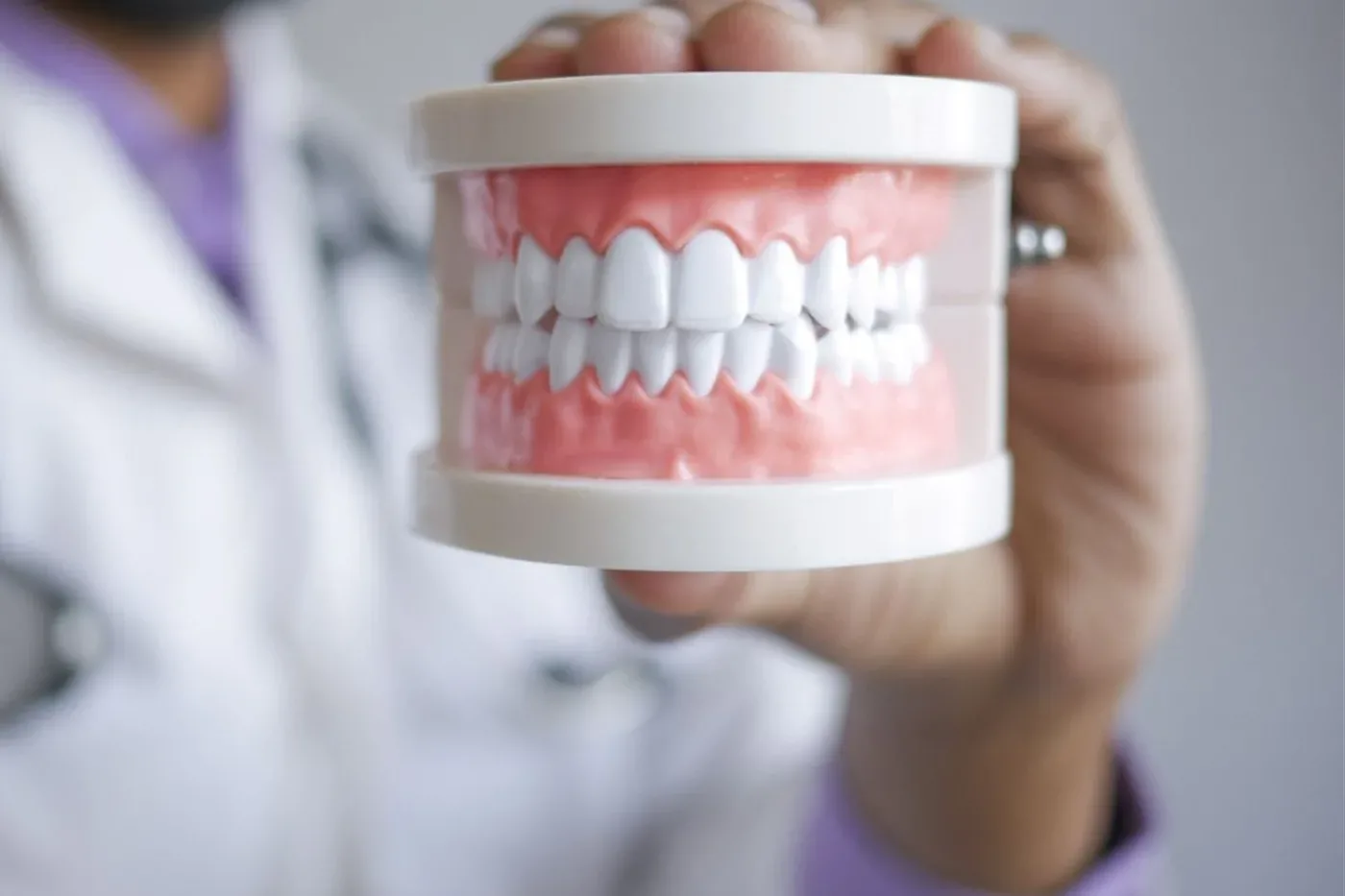
Many older adults who wear removable dentures, especially a full lower denture, complain that it lifts when they chew, laugh or talk. Denture adhesives in cream, powder or strip form are widely sold. So should you use them?
When does denture adhesive help?
- With a new denture, while you are still getting used to it and need extra confidence.
- When the jaw ridges are low and flat after many years of tooth loss, so even a well-made denture struggles to stay in place.
- When you have a dry mouth and less saliva, so the denture does not grip well.
- For important occasions such as parties or speaking in front of people.
Adhesive forms a thin layer between the denture base and the gums, improving grip and reducing food slipping under the denture.
When is adhesive not the answer?
Over the years, the jawbone under the denture keeps shrinking, so an older denture becomes loose. If you find yourself applying thicker and thicker layers of adhesive, the denture rocks a lot, or your gums are sore or have ulcers, the adhesive is only hiding the problem. A loose denture rubbing over time causes sores, gum overgrowth and faster bone loss. In this case the dentist needs to reline the denture or make a new one. See loose dentures and sore gums.
How to use adhesive correctly
- Clean the denture and dry the fitting surface before applying.
- Use a small amount: a few dots or short strips away from the edges. Too much adhesive oozes out and props the denture up unevenly.
- Place the denture, press and hold for a few seconds, then bite gently.
- In the evening, remove the denture, scrape off any leftover adhesive from the denture and gums, and rinse your mouth with warm water.
- Soak and brush the denture as instructed; see caring for removable dentures.
Things to avoid
- Never use household glue, super glue or other craft adhesives on a denture. They are toxic and damage the denture.
- Do not leave adhesive on for days without cleaning, as this can lead to oral thrush.
- Do not grind or bend your denture yourself at home.
- Do not wear the denture overnight, so your gums can rest.
If you are new to dentures, see also getting used to a new denture. Have your denture checked once a year even if it does not hurt, so the dentist can check the fit and the lining of your mouth.
Nha Khoa Ky Hoa is at 266A - 268, 3 Thang 2 Street, Hoa Hung Ward, Ho Chi Minh City. Hotline 028.3868.1097, Zalo 082.299.3377.
Frequently asked questions
Is it harmful to use denture adhesive every day?
Using a small amount and cleaning it off every evening is usually safe. If you need a lot every day to keep the denture in, have the fit checked.
Can adhesive be used with a metal-framed partial denture?
Metal-framed dentures use clasps on natural teeth, so they usually do not need adhesive. If one feels loose, the dentist can adjust the clasps.
Can a loose denture be relined?
In many cases the dentist can reline the base so it fits snugly again. If the denture is very old or worn, a new denture may be recommended.