
An impacted tooth is trapped under the gum or inside the jawbone and cannot fully come through. Many people have one without knowing until an X-ray is taken.
- An impacted tooth is trapped under the gum or in the jawbone; wisdom teeth are the most common type.
- Many cases have no symptoms, so an X-ray is the only way to know for sure.
- Dentists consider removal when the tooth causes pain, repeated swelling or harm to the next tooth; otherwise it may only be monitored.
- If you notice a dull ache at the back of the jaw or gum swelling that keeps returning, it is wise to be examined early.
What is an impacted tooth?
An impacted tooth is a tooth that stays trapped under the gum or inside the jawbone. At the age it should have appeared, it either does not come through at all or only breaks through partly. Wisdom teeth are the most common to be impacted, but canines and premolars can occasionally be affected too.
What makes many people careless is that the mouth looks normal from the outside. An impacted tooth can stay quiet for years and then suddenly cause pain or gum swelling.
Why do teeth become impacted?
- Not enough room: a narrow jaw leaves no space for the tooth to come through.
- An unusual angle: the tooth lies tilted or sideways and is blocked by the neighbouring tooth.
- Baby teeth lost late or too early: this can change the path of the permanent tooth.
- A cyst or small growth in the jaw: less common, but it can block the way.
Signs worth noticing
Sometimes an impacted tooth causes no symptoms at all. When there are signs, the most common are:
- A dull ache at the back of the jaw or in the gum, sometimes spreading to the ear or temple.
- Gum swelling and redness that keeps coming back in the same place.
- Bad breath or an unpleasant taste at the back of the mouth.
- A neighbouring tooth with decay between the teeth, sensitivity or looseness for no clear reason.
How is an impacted tooth found?
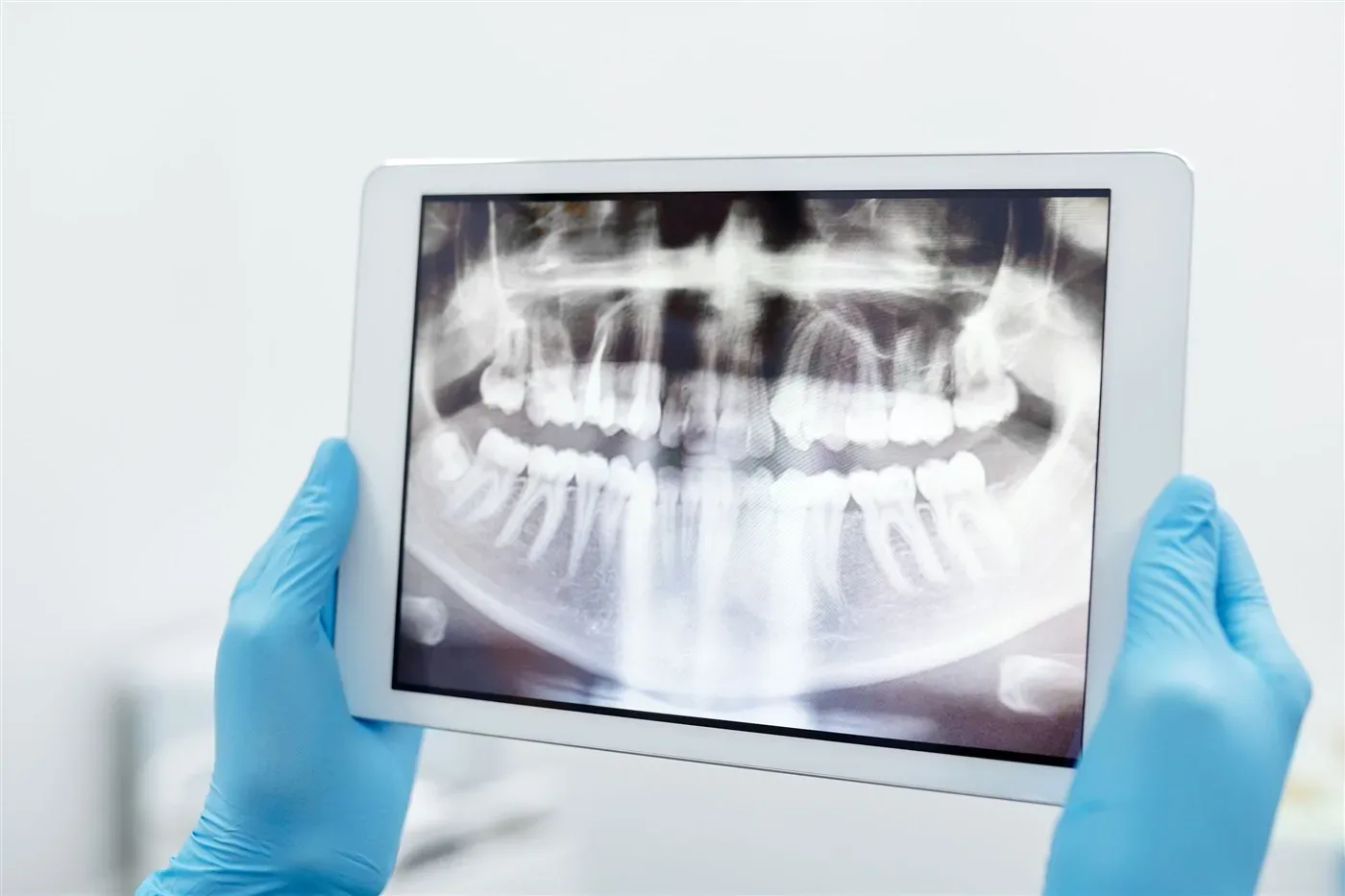
Looking in the mouth is not enough, because the tooth lies below the gum. The dentist needs an X-ray to see the position, the direction the tooth lies in and how close it is to the neighbouring tooth and nerve. You can read our article on whether dental X-rays are harmful for peace of mind when a film is recommended.
When is removal needed, and when is watching enough?
Not every impacted tooth must be taken out. Dentists usually consider removal when the tooth causes pain, repeated swelling, damage to the next tooth, or a risk of a cyst forming. If the tooth lies deep, causes no symptoms and affects nothing else, the dentist may suggest regular check-ups with periodic X-rays instead.
For impacted wisdom teeth, you may also read about tilted wisdom teeth and whether wisdom tooth removal hurts.
You are welcome to walk in during opening hours at Nha Khoa Kỳ Hòa, 266A - 268, 3 Tháng 2 Street, Hòa Hưng Ward, Ho Chi Minh City, or call the hotline 028.3868.1097 (Zalo 082.299.3377) to ask about quieter time slots.
Frequently asked questions
Can an impacted tooth come through by itself?
Sometimes a tooth appears late, but if it lies tilted or is blocked it usually will not come through alone. An X-ray is needed for the dentist to judge your case.
Does a painless impacted tooth need to be removed?
Not always. If it does not affect the neighbouring tooth and shows no sign of inflammation, the dentist may suggest watching it with regular check-ups.
Is removing an impacted tooth harder than a normal one?
It is often more involved because the tooth lies deep in the gum or bone. That is why the dentist studies the X-ray carefully before deciding how to proceed.