
Many people assume that once an implant is placed, there is nothing more to worry about. In fact an implant cannot decay, but the gum and bone around it can still become inflamed if care is not enough.
- An implant post does not decay, but the gum and bone around it can become inflamed when plaque builds up.
- Common signs include red, swollen or bleeding gum, bad breath, pus and later a loose feeling.
- Smoking, poorly controlled diabetes and a history of gum disease raise the risk.
- Careful cleaning and regular check-ups are the most important ways to keep an implant lasting.
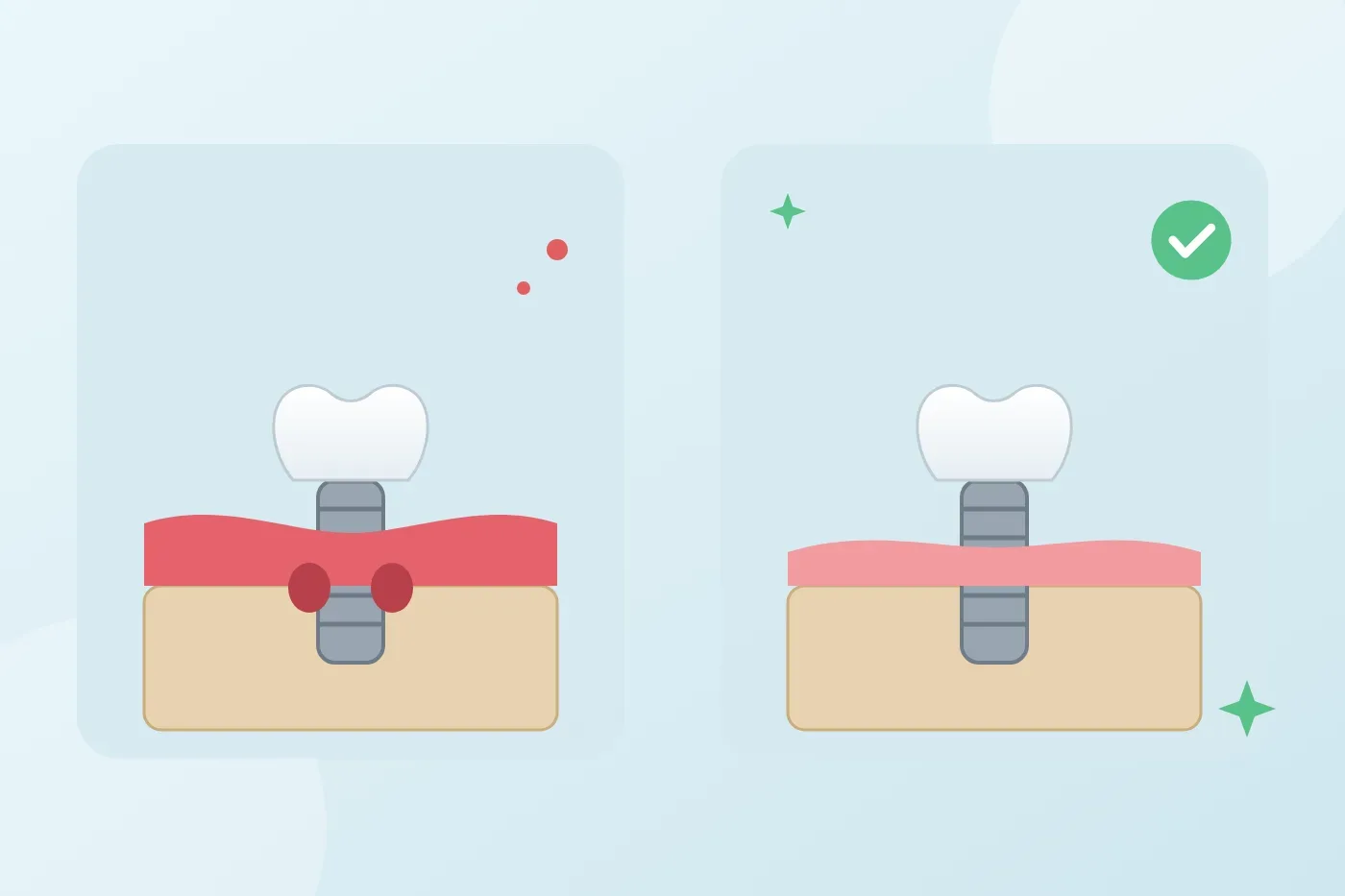
What is peri-implantitis?
The implant post is made of a material that does not decay, but the gum and bone right around it are still living tissue. When plaque and bacteria build up around an implant, the gum can become inflamed, and if this continues the inflammation can spread down and cause bone loss. This is called peri-implantitis.
Signs to look for
- Red, swollen gum around the implant that bleeds when brushing.
- Bad breath or an unpleasant taste around the implant.
- Pus from the gum or a pimple-like bump near the implant.
- Tenderness or pain when chewing on the implant area.
- Gum that recedes and exposes part of the implant post.
- In later stages, the implant may feel loose.
The early stage is often painless and easy to overlook. What matters is catching it early, while it is still only gum inflammation.
Common causes
- Incomplete cleaning, so plaque collects around the implant.
- Smoking.
- Poorly controlled diabetes.
- A history of gum disease.
- Not returning for regular check-ups after the implant.
You can read how smoking affects the mouth and diabetes and gum disease.
How is it treated?
If found early, the dentist usually cleans the plaque around the implant and guides you in home care. When inflammation has spread and caused bone loss, deeper treatment may be needed and the outcome is not always what we hope for. That is why prevention and early check-ups always come first.
How to keep an implant lasting
- Brush carefully twice a day, paying attention to the gum line around the implant.
- Use floss or interdental brushes as your dentist advises.
- Have regular check-ups and scaling.
- Quit smoking and keep blood sugar under control if you have diabetes.
- Do not bite hard objects with the implant tooth.
When should you get checked?
Please see a dentist if the gum around an implant is red, swollen, bleeding, has pus or the implant feels loose. Read more in whether an implant hurts and how to care for it. Call the hotline 028.3868.1097 or visit Nha Khoa Kỳ Hòa at 266A - 268, Đường 3 Tháng 2, Phường Hòa Hưng, Ho Chi Minh City.
Frequently asked questions
Can an implant get cavities?
The implant post itself does not decay, but the gum and bone around it can become inflamed if plaque builds up. That is why careful cleaning and regular check-ups are still needed.
Does peri-implantitis hurt?
The early stage usually shows only red or bleeding gum with little pain, so it is easy to miss. Pain, pus or a loose feeling usually appears in later stages.
How often should an implant be checked?
Follow the schedule your dentist gives, usually every few months to once a year depending on the person. People who smoke or have diabetes should be checked more often.