
Many people know smoking harms the lungs but rarely think of teeth and gums. Smoke touches the mouth with every puff, and the changes add up over the years.
- Smoke stains teeth, causes bad breath and makes gums inflame and recede more easily.
- Smokers have a higher risk of gum disease and wounds in the mouth heal more slowly.
- Cutting down or quitting helps gums become healthier and breath more pleasant.
- A sore or abnormal patch that has not healed after about three weeks needs to be examined.
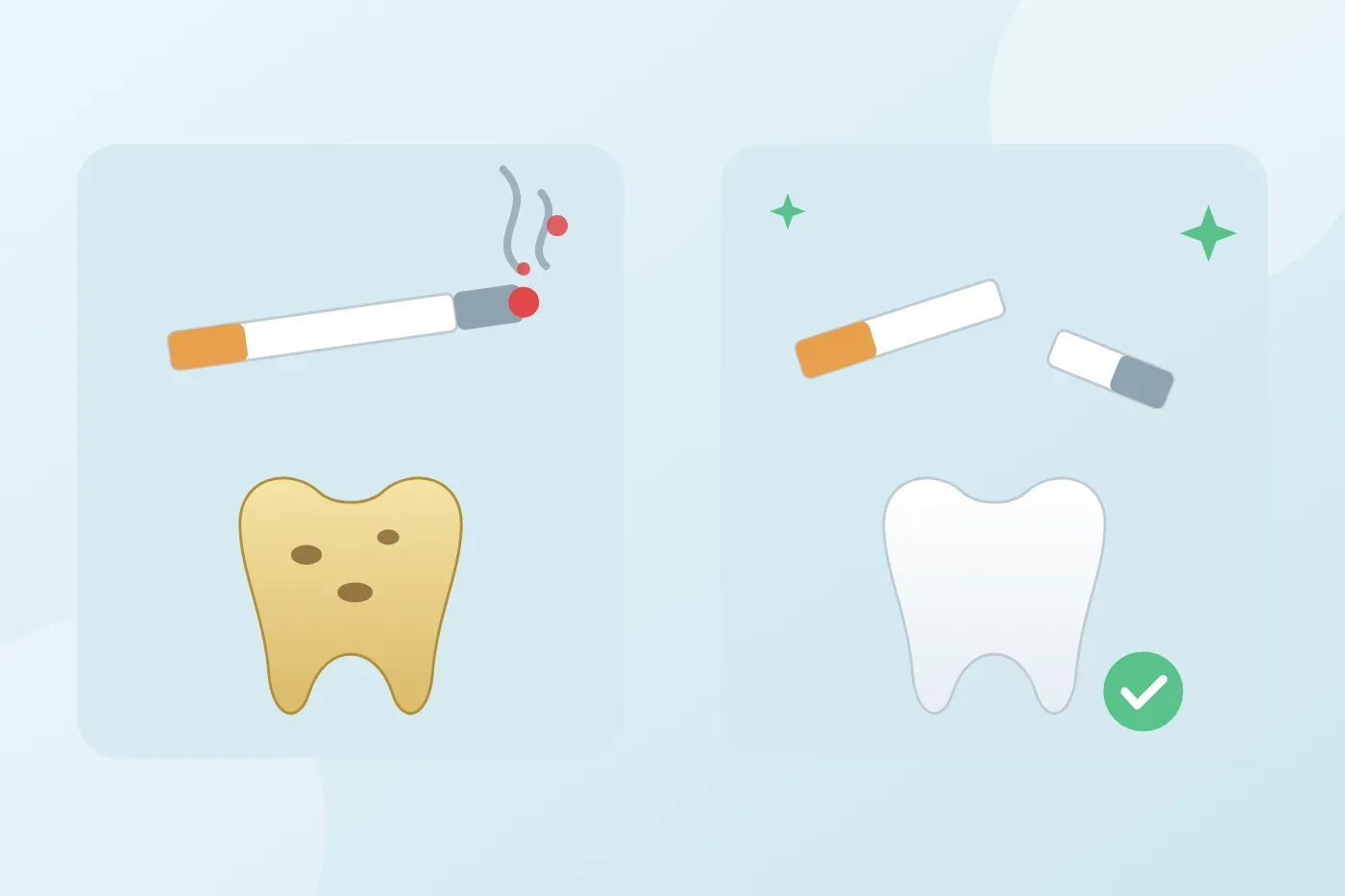
The mouth is the first place smoke passes through. Chemicals in the smoke cling to teeth, gums and the lining of the mouth, changing the environment in the mouth and the body's ability to protect itself.
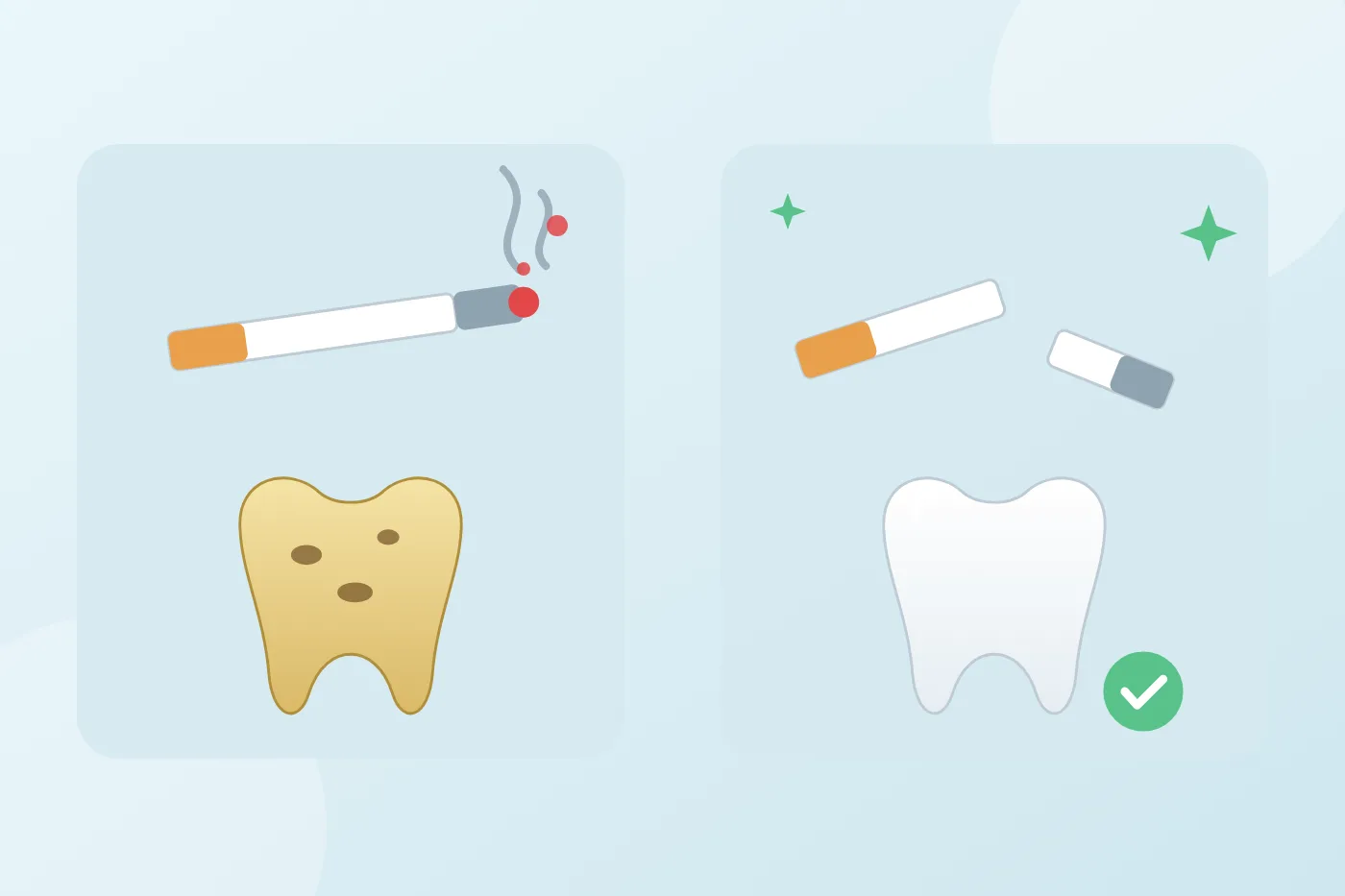
Common effects
- Yellow or brown teeth: tar sticks to the tooth surface and to tartar and is hard to brush away.
- Bad breath that lasts even after brushing.
- Gums that inflame easily and more severe gum disease. Smokers' gums may bleed less, so the disease is easier to miss.
- Gum recession, exposed roots and, later, loose teeth.
- Slower healing after extractions and other procedures in the mouth.
You may also read can gum disease be treated and why teeth turn yellow.
Are e-cigarettes safer for the mouth?
It should not be assumed they are harmless. These products still bring chemicals into the mouth and can dry it out and irritate the gums. The safest approach for the mouth is to cut down as much as possible and work toward stopping completely.
Does cutting down or quitting help?
Yes. When smoking is reduced, gums often become healthier, breath is more pleasant and wounds in the mouth heal more smoothly. Deeply stained teeth may not return to their old colour, but tartar and surface plaque will no longer build up as quickly.
While you are not yet able to quit, brush properly twice a day, use floss and have regular check-ups so the dentist can monitor your gums. See how often to have a dental check-up.
When should you be examined right away?
- A sore, or a white or red patch in the mouth, that has not healed after about three weeks.
- Gums that bleed, swell or recede, or teeth that start to loosen.
- Bad breath that lasts despite careful cleaning.
You can visit in person during working hours at 266A - 268, Đường 3 Tháng 2, Phường Hòa Hưng, Ho Chi Minh City, or call the hotline 028.3868.1097 (Zalo 082.299.3377) to ask about quieter hours.
Frequently asked questions
Does smoking stain teeth?
Yes. Tar sticks to the tooth surface and to tartar, so teeth turn yellow or brown. Scaling and polishing remove the outer stain, but you need to cut down or quit to keep it from coming back.
Are smokers more likely to get gum disease?
The risk of gum disease is usually higher and it can be more severe. Gums may bleed less so signs are easily missed, which is why regular check-ups are advised.
Will teeth whiten again after quitting?
Tartar and surface plaque will not build up as fast and can be cleaned off, but deeply stained teeth may not return to their old colour. The dentist will examine you and advise.