
Knowing what is covered is useful. Knowing exactly what is not covered is what saves you from a surprise at the payment desk.
- The governing principle: health insurance pays for treating a condition, not for cosmetic or prosthetic work chosen out of personal preference.
- Outside cover: whitening, crowns, veneers, braces, dental implants, removable dentures and night guards.
- Which group scaling falls into depends on the reason for it: tied to treating a condition it is assessed for cover; routine cleaning is self-paid.
- Many cases split into two parts, for example root canal treatment assessed under health insurance with the crown self-paid.
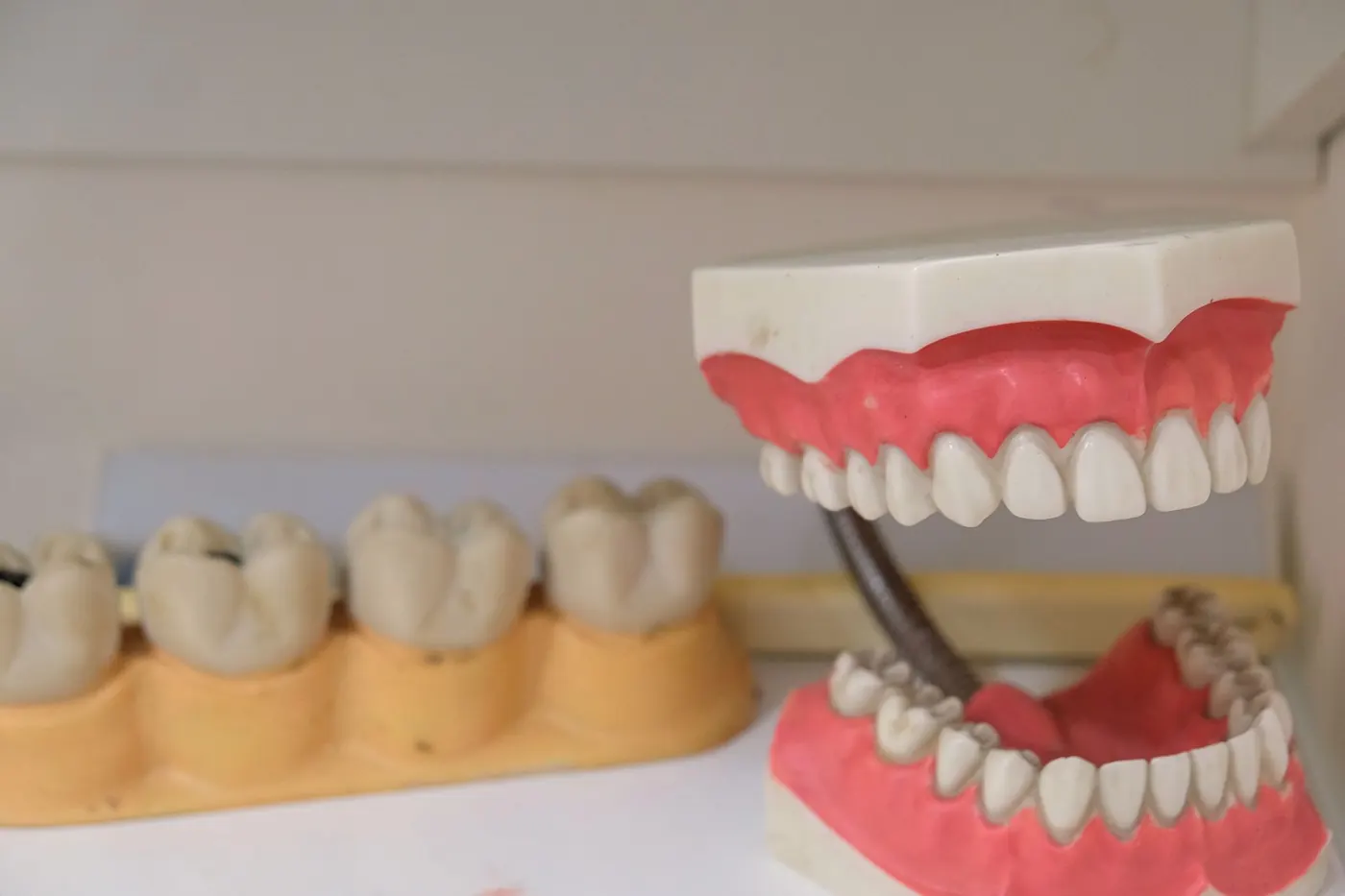
Most articles about health insurance and dentistry describe what is covered. This one does the opposite, because in practice this is where misunderstandings arise: you attend expecting your card to cover most of it, then discover at the quote stage that the service you need falls outside the scope.
The governing principle
One principle covers nearly all of it: health insurance pays for treating a condition, not for cosmetic work or prosthetic replacement chosen out of personal preference.
Put differently, the question to ask is: is this treating a disease, or is it improving appearance and replacing missing teeth? Treating disease falls within scope. Cosmetic and prosthetic work does not.
Services outside the covered scope
Cosmetic group:
- Tooth whitening, both in-clinic and take-home tray systems.
- Cosmetic crowns of all materials.
- Porcelain veneers and composite veneers.
- Orthodontics, that is braces. This question comes up constantly: braces are not covered by health insurance, being classed as cosmetic alignment chosen out of personal preference.
Replacement of missing teeth:
- Dental implants and implant-supported dentures.
- Partial and complete removable dentures.
- Repairing a fractured denture, relining, adding teeth or clasps to a removable denture.
- Removing an existing crown or denture.
Care chosen out of preference:
- Routine scaling for personal cleanliness, where it is not tied to treatment of a condition. This is the most common point of confusion and is covered in detail below.
- Night guards for teeth grinding.
Certain other procedures also fall outside cover under current rules, including some surgical and imaging procedures. The Ky Hoa Dental price list marks which group each item belongs to.
The most misunderstood item: scaling
The same scaling procedure can fall into either group, depending on why it is being done.
Covered where removing tartar forms part of treating a condition, for instance where tartar is causing gingivitis or periodontitis and the dentist prescribes cleaning as treatment.
Not covered where you attend for routine scaling to freshen up, with healthy gums showing no sign of inflammation.
The distinction rests on the dentist's assessment after examining you, not on how you would prefer it classified. So the correct approach is to be examined first and let the dentist tell you which applies.
What is covered, for comparison
For contrast, the covered group typically includes: examination and treatment of dental conditions; treatment of dentine decay with a restoration; cervical restorations; fissure sealants; root canal treatment and retreatment; periodontal treatment; scaling where prescribed as treatment; extractions for disease, including surgical removal of impacted wisdom teeth; operculectomy for a lower wisdom tooth; and paediatric procedures such as extracting baby teeth and root canal treatment on baby teeth.
The benefit level depends on the category recorded on your card under the Law on Health Insurance. This is why we always suggest calling our hotline and reading out the details on your card before visiting, rather than assuming what you are entitled to.
Most cases involve both
In practice many treatments split into two parts calculated differently. The most common example is a tooth decayed into the pulp: the root canal treatment is assessed under health insurance, while the crown that follows is self-paid. Similarly with extracting a retained root before making a prosthesis: the extraction is assessed under health insurance, the prosthetic work is not.
At Ky Hoa Dental the dentist separates the two clearly and quotes before starting. You agree first, then treatment proceeds; there is no question of being presented with a total only afterwards.
What to bring
- Your health insurance card, or the VssID or VNeID app on your phone.
- Photo identification.
- Any previous x-rays or dental records, if you have them.
Ky Hoa Dental is the dental department of Ky Hoa Medical Centre, a general clinic holding a health insurance examination and treatment contract, so your card applies when treating dental conditions here. The centre operates under licence number 00449/HCM-GPHD at 266A - 268, Duong 3 Thang 2, Hoa Hung Ward, Ho Chi Minh City, Monday to Saturday.
Frequently asked questions
Are braces covered by health insurance?
No. Orthodontics is classed as cosmetic alignment chosen out of personal preference and falls outside health insurance cover, including when carried out at a facility holding a health insurance examination and treatment contract.
Why is scaling sometimes covered and sometimes not?
Because the classification depends on the reason for the procedure. Scaling as part of treating a condition, for instance where tartar is causing gingivitis or periodontitis, is assessed for cover. Routine scaling chosen for cleanliness with healthy gums is self-paid. The dentist will tell you which applies after examining you.
How can I confirm my own entitlement?
The most reliable way is to call our hotline and read out the details on your health insurance card so we can confirm your specific position before you visit, rather than assuming. A short call saves a wasted trip and avoids surprises over cost.