
Many people notice a yellow layer building up again not long after scaling. It is quite common, has clear causes, and you can take steps to slow it down.
- Tartar is plaque hardened by minerals in saliva, and since plaque forms continuously, tartar returns gradually.
- Some people see it return faster because of mineral-rich saliva, missed brushing spots, not cleaning between teeth, or smoking.
- Scaling with correct technique does not make tartar return faster.
- Careful brushing twice a day, cleaning between teeth and regular check-ups help limit buildup.
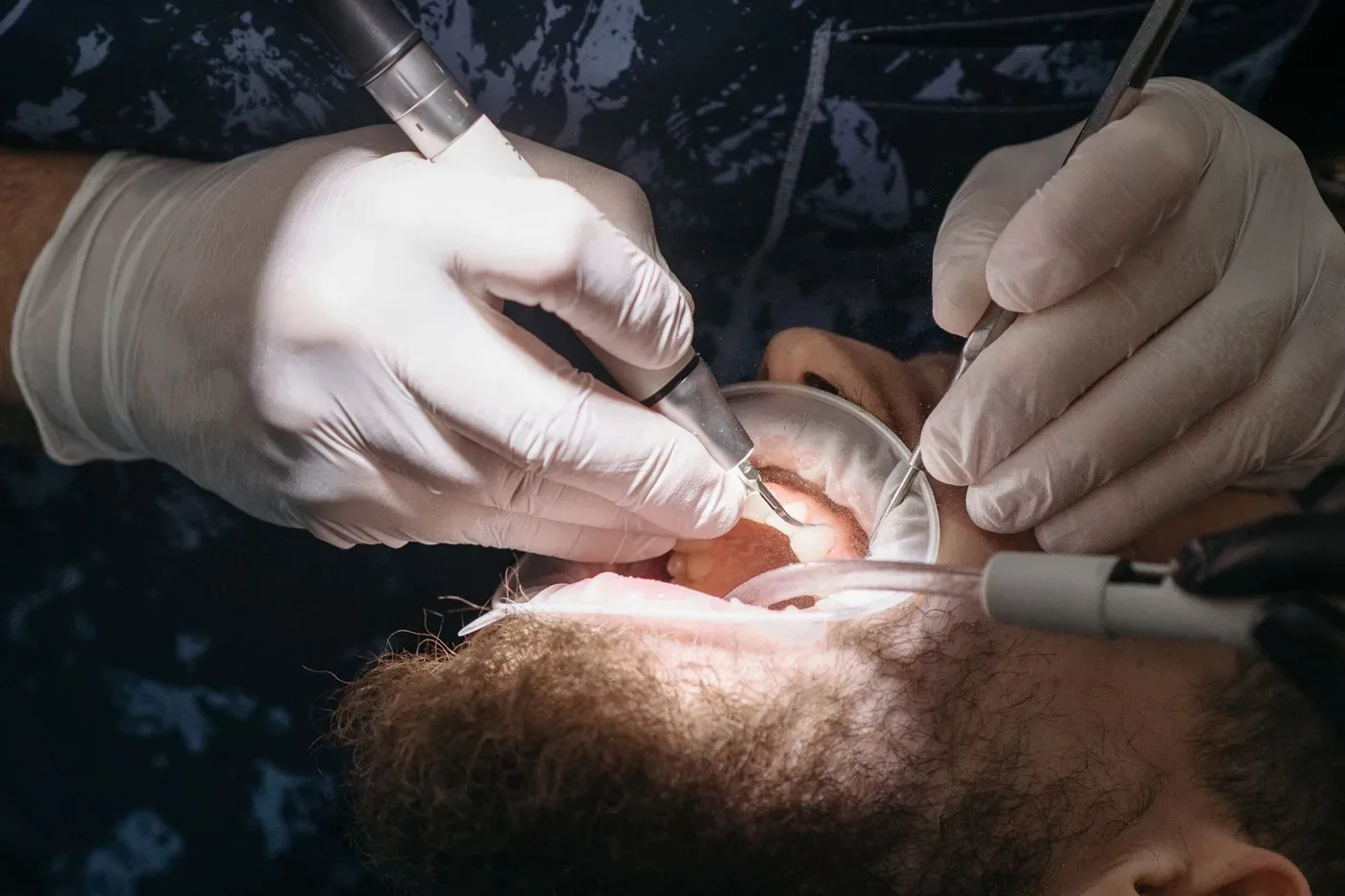
How does tartar form?
Every day, a soft film called plaque builds up in the mouth. If it is not brushed away, plaque combines with minerals in saliva and hardens into tartar. At that point a toothbrush can no longer remove it.
This process never stops, so tartar gradually returns over time even after a thorough cleaning. You may also read our article on whether scaling hurts and how often to have it done.
Why does tartar return faster in some people?
- Mineral-rich saliva: saliva differs from person to person, and plaque hardens more easily in people with more minerals.
- Brushing that misses spots: the inner surface of the lower front teeth and the outer surface of the upper back teeth are often missed, and they sit near the salivary glands.
- Not cleaning between the teeth: plaque between teeth cannot be reached by a brush.
- Smoking, tea and coffee: these make the tooth surface pick up plaque and stains more easily.
- Crowded teeth or ill-fitting dentures: they create many places that are hard to clean.
How to limit it
- Brush twice a day for about two minutes each time, paying attention to the inner surface of the lower front teeth and the outer surface of the upper back teeth.
- Clean between the teeth every day with floss, or with a water flosser as a helper.
- Brush gently along the gum line, where tartar likes to form.
- Cut down on smoking and on drinks that stain the teeth.
Does scaling make tartar return faster?
No. Scaling done with correct technique does not make teeth collect tartar faster. Tartar returns because plaque forms all the time. You can read our article on whether scaling wears away enamel for peace of mind.
How often should you have scaling?
Many people scale about every six months. People whose tartar returns quickly, smokers or people with gum inflammation may need to be examined and scaled more often, as the dentist advises.
You are welcome to walk in during opening hours at Nha Khoa Kỳ Hòa, 266A - 268, 3 Tháng 2 Street, Hòa Hưng Ward, Ho Chi Minh City, or call the hotline 028.3868.1097 (Zalo 082.299.3377) to ask about quieter time slots.
Frequently asked questions
How soon does tartar come back after scaling?
Plaque forms every day, so tartar can return gradually within weeks to months. The speed differs by person and by how well the teeth are cleaned.
Does frequent scaling harm tooth enamel?
Scaling done with correct technique does not harm enamel. Follow the interval your dentist recommends for your own situation.
Is careful brushing enough to prevent tartar?
Careful brushing and cleaning between teeth help a great deal, but once tartar has hardened it can only be removed with dental instruments.