
Many people think that once a crown is placed there is nothing more to worry about. In fact the porcelain does not decay, but the natural tooth beneath it and the gum around it still need careful care.
- The porcelain itself does not decay, but the natural tooth beneath and the gum around it can still be harmed.
- Brush twice a day and clean between teeth daily, including under bridges.
- Avoid biting hard objects, using crowned teeth as tools, and protect against grinding.
- Regular check-ups let the dentist inspect the crown edge, gum and tooth beneath.
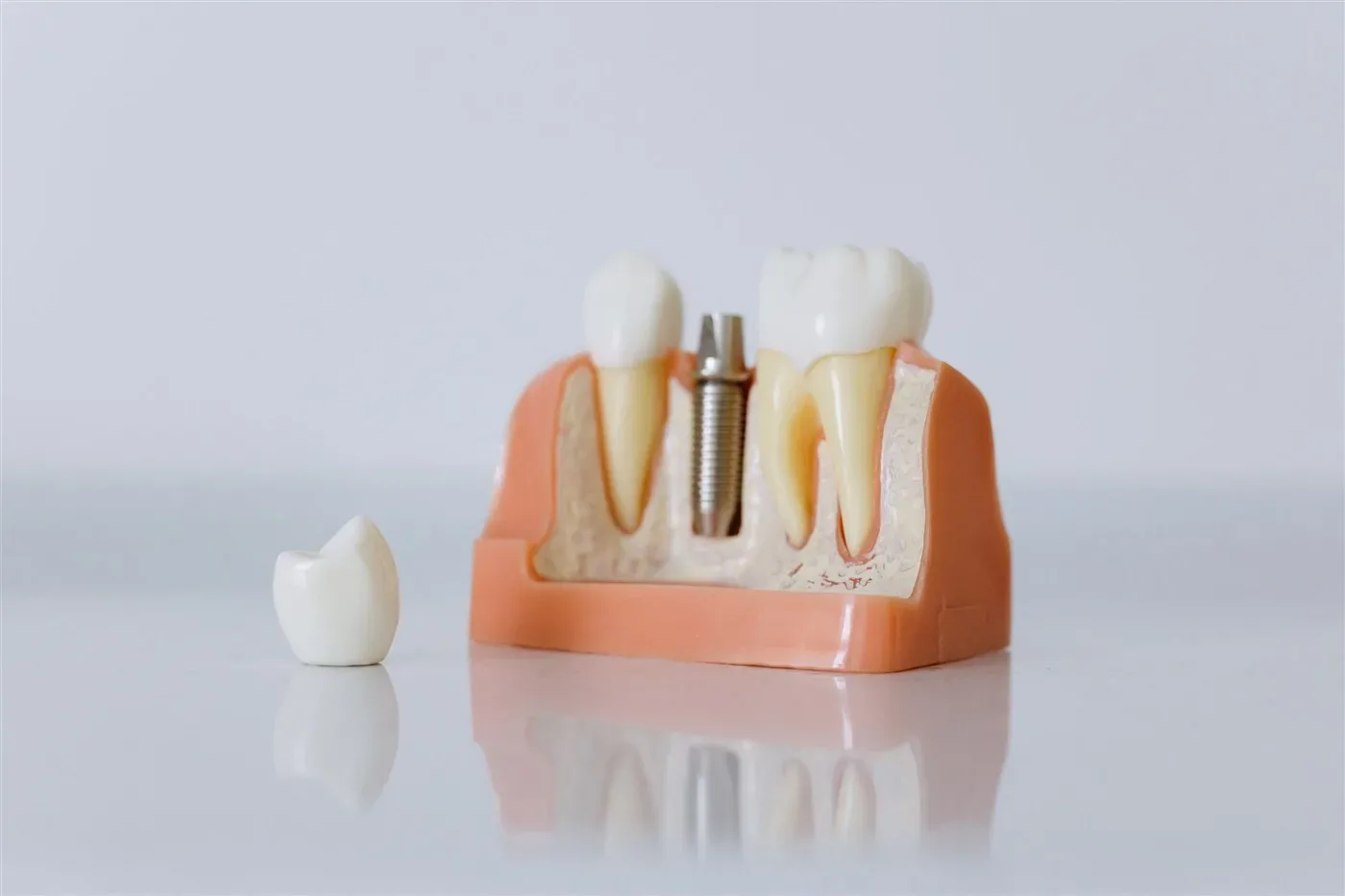
Can a porcelain crown decay?
The outer porcelain layer does not decay, but the natural tooth underneath, especially at the edge where porcelain meets the gum, can still decay if cleaning is poor. The gum around a crown can also become inflamed. For that reason crowns need the same care as natural teeth. You can read our article on whether porcelain crowns harm teeth.
Brushing and cleaning between teeth
- Brush twice a day with a soft brush, paying attention to the gum line around the crown, because plaque collects most easily where the porcelain meets the gum.
- Clean between your teeth every day with floss, interdental brushes or a water flosser. If you have a porcelain bridge, floss needs to be threaded under the bridge as your dentist shows you. See our article on what a porcelain bridge is.
- Rinse with water after meals when you cannot brush, so that food does not sit around the crown for long.
Habits that can damage a crown
- Biting hard things such as ice, bones or hard nuts.
- Using the crowned tooth to open bottles, bite pens or tear packaging.
- Grinding teeth in sleep without protection. If you grind, ask your dentist about a night guard.
Porcelain is strong but it is also brittle under a sudden hard bite, so even a small habit like chewing ice can chip it over time.
Looking after the gum around the crown
If the gum around a crown looks red, swollen or bleeds when you brush, do not simply brush less. Bleeding usually means plaque is sitting there, and gentle but thorough cleaning, together with a dental check, helps the gum settle. Healthy gum is what keeps the crown edge protected.
Regular check-ups
The dentist will check whether the crown edge has opened, whether the gum around it is inflamed, and whether the tooth underneath has decayed. Check-ups about every six months are usually suitable. If a crown feels loose, chips, or the gum becomes swollen and red, please have it examined soon, and you may read about what to do when a crown comes off or breaks.
You are welcome to walk in during opening hours at Nha Khoa Kỳ Hòa, 266A - 268, 3 Tháng 2 Street, Hòa Hưng Ward, Ho Chi Minh City, or call the hotline 028.3868.1097 (Zalo 082.299.3377) to ask about quieter time slots.
Frequently asked questions
How long does a porcelain crown last?
It depends on hygiene, chewing habits and the condition of the gum and underlying tooth. Regular check-ups help problems be found early.
Does porcelain stain?
Porcelain picks up stains less than natural teeth, but plaque and tartar can still collect and dull its look. Regular cleaning helps.
What if a tooth with a crown becomes sensitive?
Sensitivity is often due to the natural tooth beneath or to receding gum. Please be examined so the dentist can find the cause.