
A porcelain bridge replaces a missing tooth with a connected row of porcelain teeth that rest on the two natural teeth on either side. It helps to understand the pros and cons before deciding.
- A bridge is a connected row of porcelain teeth resting on the two natural teeth beside a gap to replace the missing tooth.
- The two anchor teeth must be reduced to take crowns, so a bridge suits cases where they are firm and the gums are healthy.
- A bridge is fixed and chews fairly firmly, but bone under the pontic can still shrink and cleaning is harder.
- Clean under the pontic daily, avoid very hard food and have a check-up every six months.
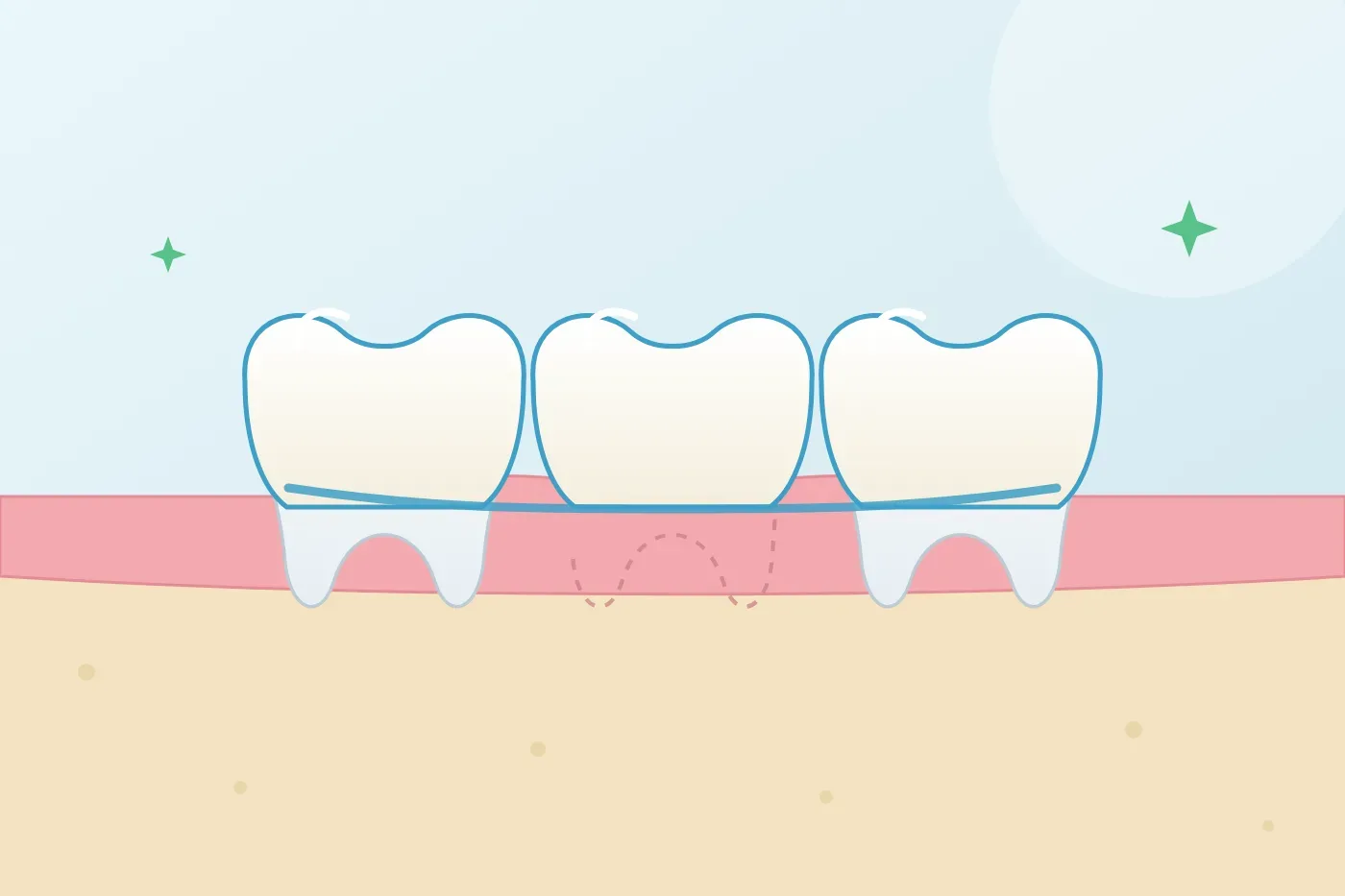
When one tooth or a few teeth in a row are missing, besides implants and removable dentures you can also have a porcelain dental bridge. This article explains what a bridge is, when it suits you and how to care for it.
What is a dental bridge?
A bridge is a row of porcelain teeth joined together. The two natural teeth on either side of the gap are reduced slightly and covered with porcelain crowns to act as anchor teeth. The porcelain tooth in the middle, called the pontic, replaces the missing tooth and is joined to the two crowns.
When should a bridge be considered?
Dentists usually consider a bridge when:
- One to a few teeth in a row are missing.
- The neighboring teeth are firm, the gums are healthy and any decay or infection has been treated.
- You want fixed teeth that you do not take out every day.
- An implant is not suitable or not wanted.
Advantages and points to note
- Advantages: fixed teeth, fairly firm chewing, a relatively short treatment time and no surgery into the bone.
- Points to note: the two natural teeth next to the gap must be reduced, so some enamel is lost. The bone under the pontic can still shrink because there is no tooth root, and cleaning under the pontic is harder.
See do porcelain crowns harm teeth to understand tooth reduction, and what you need to know about dental implants for comparison.
How do I care for a bridge?
- Brush twice a day with a soft brush, paying attention to the gum line around the crowns.
- Clean under the pontic with bridge floss threaders or interdental brushes.
- Avoid biting very hard things such as bones and ice so the porcelain does not crack.
- Have a check-up every six months to examine the anchor teeth, gums and how well the bridge fits.
Bridges and health insurance
Under the current scope of coverage, cosmetic services such as porcelain crowns are not covered by health insurance. See which dental services health insurance does not cover and the price page.
Nha Khoa Ky Hoa is at 266A - 268, 3 Thang 2 Street, Hoa Hung Ward, Ho Chi Minh City. You can walk in during working hours, or call the hotline 028.3868.1097 (Zalo 082.299.3377) to ask about quieter hours first.
Frequently asked questions
Does a bridge mean grinding down natural teeth?
Yes, the two natural teeth on either side of the gap are usually reduced and covered with crowns to support the pontic, so it needs thought when the neighboring teeth are healthy.
How long does a bridge last?
It varies from person to person depending on cleaning, chewing habits and the condition of the anchor teeth. Good care and regular check-ups help a bridge last longer.
How is a bridge different from an implant?
A bridge rests on the two neighboring teeth and requires reducing them, while an implant has its own post in the jawbone. Each has pros and cons and the dentist will advise based on your situation.
How do I clean under a bridge?
Use bridge floss threaders or interdental brushes to clean under the pontic every day. If it is not cleaned, plaque builds up and can inflame the gums.