
Many people wonder why some extractions are very quick while others take much longer. One reason is the shape and number of roots of the tooth.
- The root is the part of the tooth in the jaw bone that holds it with ligament fibres.
- Front teeth usually have one root, upper molars three, lower molars two, and wisdom teeth vary a lot.
- Several roots, curved roots or roots fused to bone make extraction harder.
- An X-ray helps the dentist predict the difficulty and choose a suitable method.
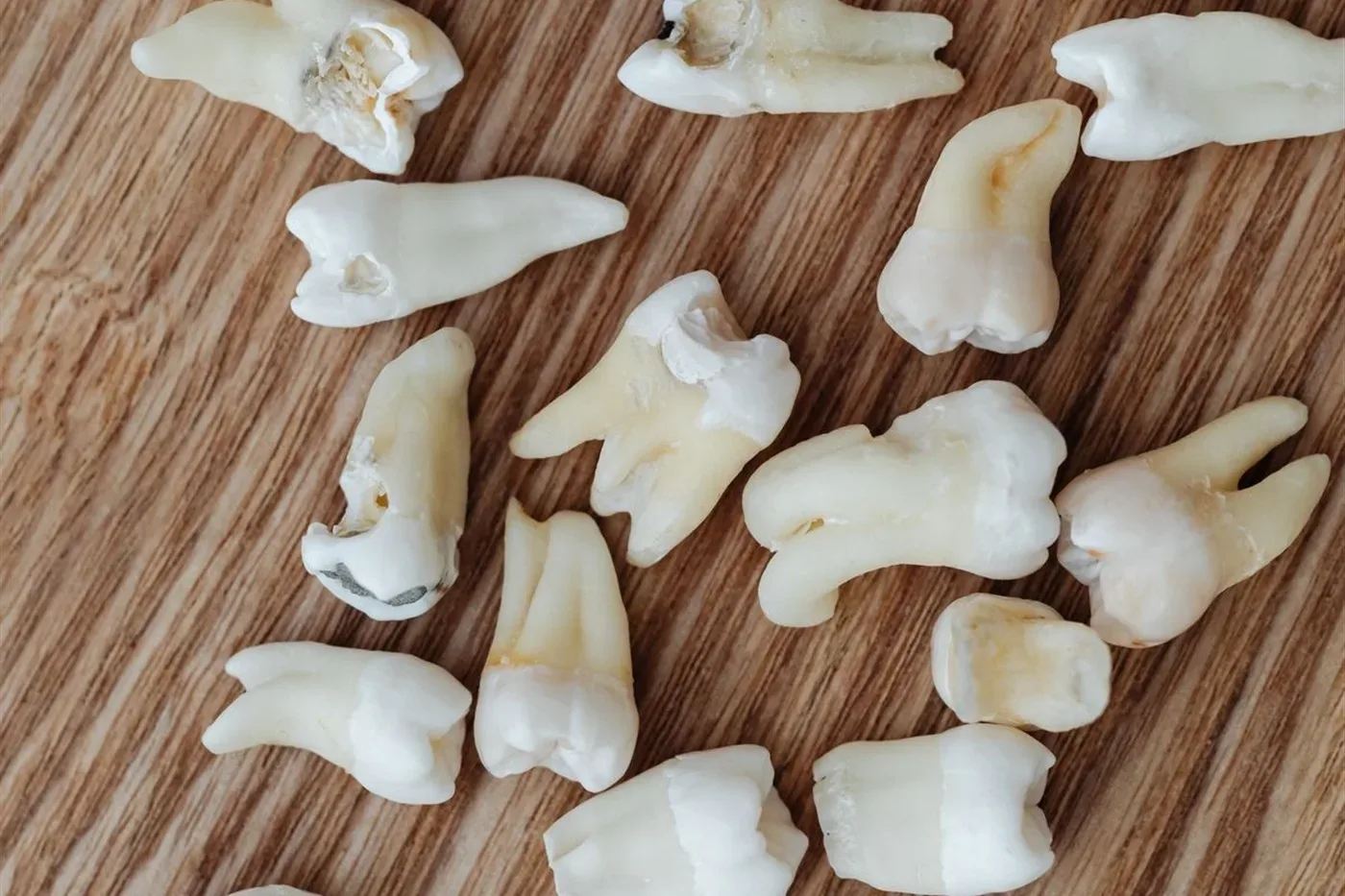
The root is the part of the tooth that sits deep in the jaw bone, holding the tooth firmly with its ligament. Each type of tooth has a different number and shape of roots, and this affects how hard it is to remove or treat.
How many roots does each tooth have?
- Front teeth and canines usually have one root.
- Small premolars usually have one or two roots.
- Upper molars usually have three roots, while lower molars usually have two.
- Wisdom teeth vary a lot, from one to several roots, and sometimes the roots are fused together.
The number of roots can differ from person to person, so the dentist usually needs an X-ray to know exactly.
Why do the roots affect how hard an extraction is?
- A tooth with several roots is gripped more firmly in the bone than a single rooted tooth.
- Long, curved or spread out roots are harder to remove than straight ones.
- Roots fused to the bone or lying close to a nerve need more careful technique.
- A tooth that is already weak or has had root canal treatment may break more easily, see loose teeth: keep or extract.
How does an X-ray help?
The film shows the dentist the number, shape, length and position of the roots relative to the bone and nerve. From that the dentist can predict the difficulty and choose a suitable way to remove it, see how upper and lower wisdom tooth removal differ and what instruments are used to remove a tooth.
What should you understand?
- A quick or slow extraction does not reflect the dentist's skill but depends a great deal on the tooth.
- If the dentist says the case is difficult, you can ask why and how it will be handled, see whether wisdom tooth removal hurts.
When should you visit Ky Hoa Dental Clinic?
Nha Khoa Ky Hoa is at 266A - 268, 3 Thang 2 Street, Hoa Hung Ward, Ho Chi Minh City. You can walk in during opening hours, or call the hotline 028.3868.1097 to ask about quieter times first, so the dentist can examine you and look at an X-ray before an extraction.
Frequently asked questions
How many roots do back teeth have?
Upper molars usually have three roots and lower molars usually have two. Wisdom teeth vary a lot from person to person.
Why are some teeth quick to remove and others slow?
Because the number of roots, their curve, length and position relative to the bone differ from tooth to tooth.
How does an X-ray help before an extraction?
It shows the number, shape, length and position of the roots, so the dentist can predict the difficulty and choose a suitable way to remove the tooth.