
Local anesthesia keeps the treated area from hurting, yet many patients worry about safety and a numb lip that lingers afterwards. This article explains it in plain terms so you can feel at ease before your visit.
- Local anesthesia temporarily removes pain from the treated area while you stay awake.
- It is generally safe when the dentist knows your medical conditions, allergies and regular medicines.
- Numbness in the tooth usually fades after one to a few hours, while the lip and cheek can stay numb longer.
- Avoid chewing and hot food until feeling returns to prevent biting or burning yourself.
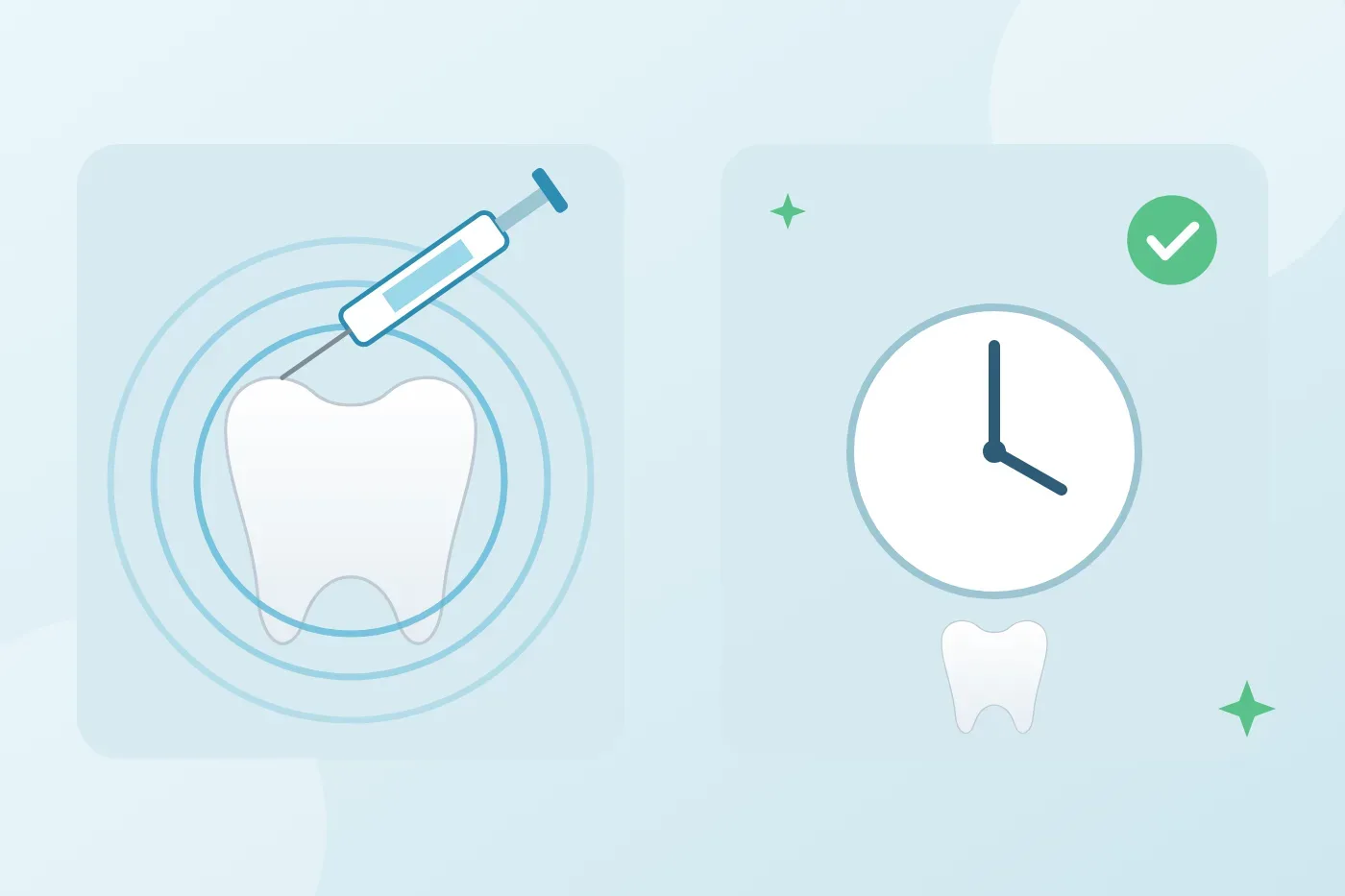
What is dental anesthesia and how does it work?
Local anesthesia temporarily removes pain from a small area of the mouth so the dentist can extract a tooth, place a filling or treat a nerve more gently. You stay awake and can still feel touch or pressure, but not sharp pain. The effect stays in the treated area, which is completely different from general anesthesia.
Dentists usually use two approaches: topical numbing (applied to the gum to soften the feeling of the needle) and injected anesthesia (placing the numbing solution near the nerve of the tooth). The right choice depends on the procedure and the position of the tooth.
Is it safe?
Dental local anesthesia has been used widely for many years and is generally safe when the dentist takes a careful medical history first. Before the injection, please tell the dentist about:
- Any long-term conditions such as heart disease, high blood pressure or diabetes.
- Any allergy you have ever had to anything.
- The medicines you take regularly (bring the prescription or the boxes if you do not remember the names).
- Pregnancy or breastfeeding.
If you have ever felt nervous, had a racing heart or felt dizzy after an injection, say so clearly so the dentist can adjust the approach. Pregnant patients can also read our article on extractions and fillings during pregnancy.
How long does the numbness last?
Numbness in the tooth usually fades after roughly one to a few hours. The lip, cheek and tongue may stay numb longer, especially after an injection in the lower jaw. The exact time differs from person to person and depends on the area and the procedure, so please do not worry if yours lasts a little longer than someone else's.
What to avoid while you are still numb
- Do not chew until the lip, cheek and tongue have recovered, because it is very easy to bite yourself without noticing.
- Avoid hot food and drinks, as the numb area cannot sense temperature and may be burned.
- Do not bite, pinch or keep touching the numb area, especially in young children.
- Drink cool water and choose soft food once feeling returns.
When should you contact the clinic?
Tell us right away if the numbness lasts unusually long into the next day, or if you develop an itchy rash, marked swelling or any unusual discomfort. If you have trouble breathing or chest tightness, go to the nearest emergency department. For other questions, call the hotline 028.3868.1097 or visit Nha Khoa Kỳ Hòa in person at 266A - 268, Đường 3 Tháng 2, Phường Hòa Hưng, Ho Chi Minh City. You can also read whether wisdom tooth removal hurts to see how an extraction goes.
Frequently asked questions
Does the injection hurt?
Most people feel only a light prick or a feeling of tightness for a few seconds. Topical numbing first helps reduce this. Once the area is numb, the treated tooth no longer causes sharp pain.
How long after the injection can I eat?
Wait until the lip, cheek and tongue are no longer numb before chewing, to avoid biting yourself. You can sip cool water in the meantime. The exact time differs for each person.
Can people with heart disease or high blood pressure have anesthesia?
Usually yes, but you need to tell the dentist about your condition and medicines so the most suitable approach is chosen. Please bring your prescription to the visit.