
Many people lose a molar, keep chewing on the other side and leave the gap for years. That gap does not stay still; it slowly changes the whole bite.
- A molar gap left empty lets the neighbouring tooth tilt, the opposing tooth drift down and the jawbone shrink.
- Replacement does not have to happen on the day of extraction, but it should not be left indefinitely.
- Common options are an implant, a porcelain bridge or a removable denture, each suited to a different situation.
- Ask the dentist about the restoration plan at the time of extraction.
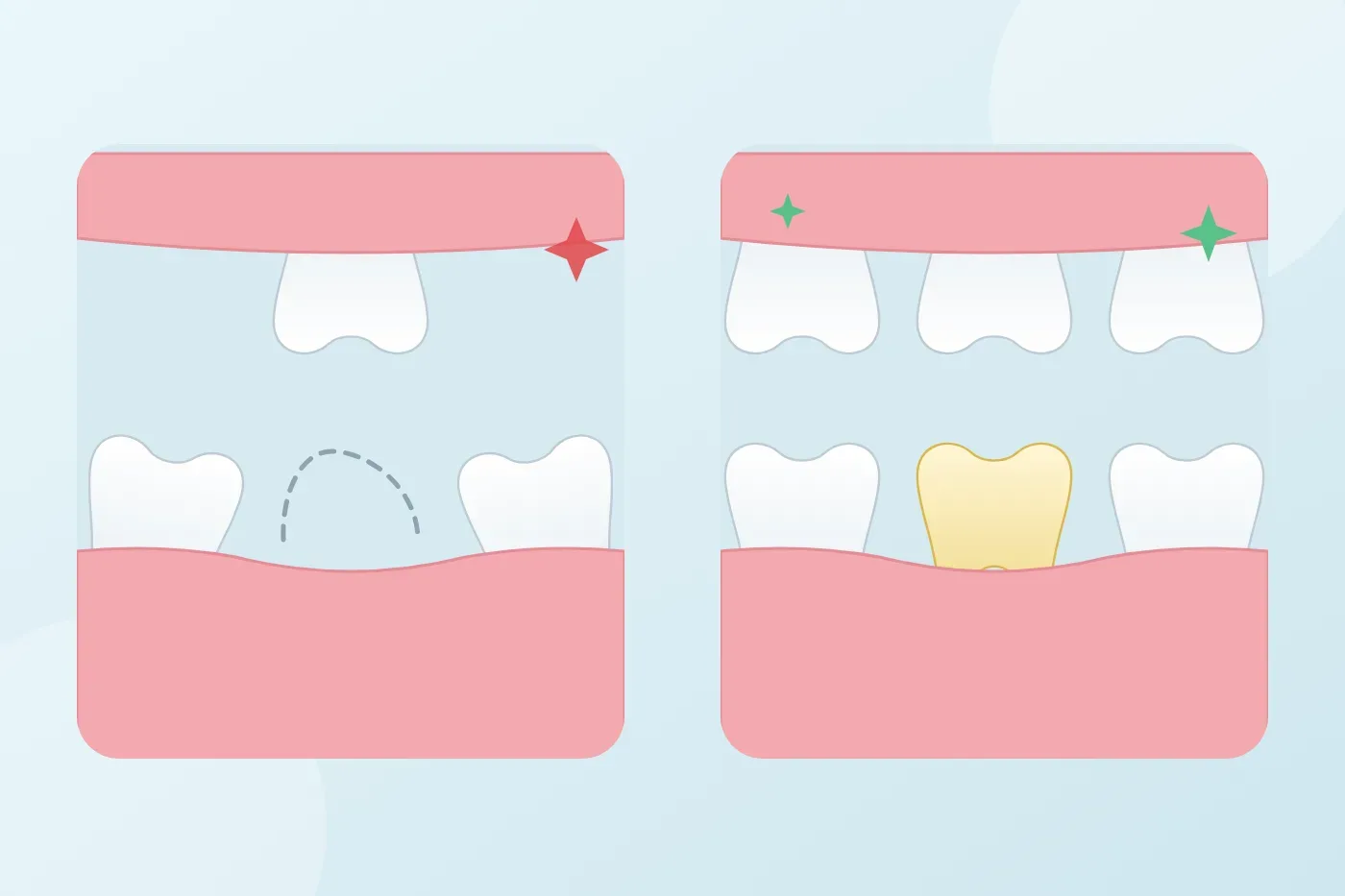
Molars carry most of the chewing force of the whole mouth. When one is lost, it is easy to think it is fine and simply chew on the other side. But the teeth work as one interlocking group, so when one is missing the others slowly shift to fill the space.
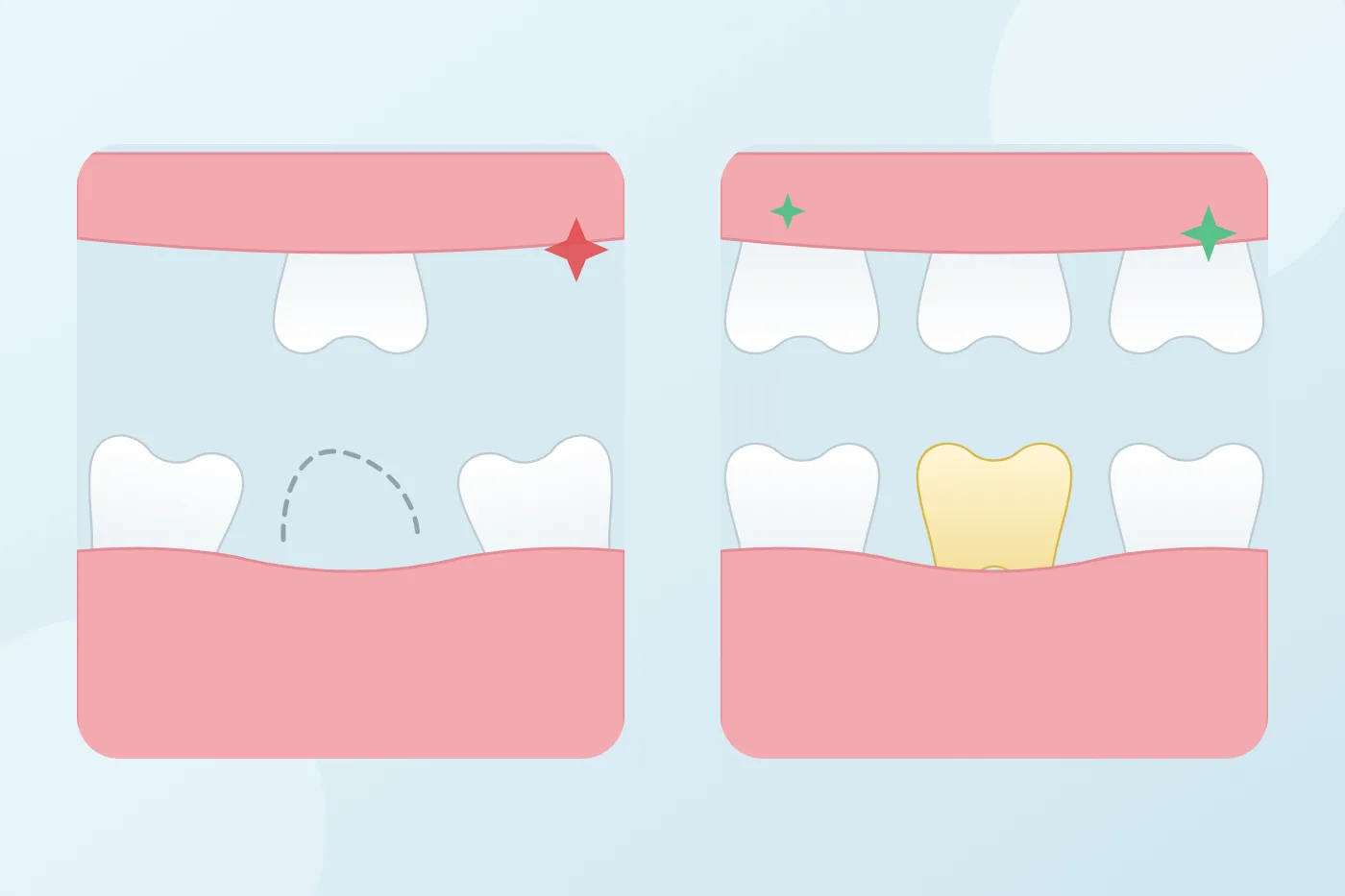
Why should a missing molar not stay empty for long?
Over time the gap sets off a chain of changes that people often do not notice at first:
- The neighbouring tooth tilts toward the gap, creating a space where food gets trapped.
- The opposing tooth grows longer because nothing meets it any more, which makes later restoration harder.
- The jawbone shrinks in the area because it is no longer stimulated by chewing.
- Chewing becomes one-sided, so the other side wears faster and some people get jaw fatigue or joint pain.
- More trapped food means a higher chance of decay and gum inflammation in nearby teeth.
Do you have to replace it on the day of extraction?
Not always on the same day. If the tooth was removed because of infection, the dentist usually lets the gum and bone heal for a while before restoring it. How long depends on the person and the method, so the dentist will examine you and advise.
What matters is not leaving it empty indefinitely. Ask about the restoration plan at the time of extraction so the gap has no time to cause changes.
Options for replacing a lost molar
There are three common options, each suited to a different situation:
- Dental implant: replaces the root as well and puts less load on neighbouring teeth. See what to know about dental implants.
- Porcelain bridge: uses the two neighbouring teeth as anchors, and those teeth must be reduced in size.
- Removable denture: simple and quick to make, but needs regular care and checks.
You can read the comparison in removable denture or implant to get an idea before your visit.
When should you see a dentist?
If you have been missing a molar for some time and notice a tilting neighbour, food trapping or uneven chewing, it is worth being examined early so the dentist can take an X-ray, assess the bone and advise a suitable option. Visit in person during working hours at 266A - 268, Đường 3 Tháng 2, Phường Hòa Hưng, Ho Chi Minh City, or call the hotline 028.3868.1097 to ask about quieter hours. Reference costs are on the price page.
Frequently asked questions
Can a molar still be replaced after being missing for a while?
Yes, but the longer it is left, the more the neighbouring tooth tilts and the more bone is lost, so restoration can be more complex. The dentist will take an X-ray and assess each case.
Does one missing molar affect chewing?
Yes. The missing side chews less well, so many people chew on one side only, which over time wears the other side and tires the jaw.
How soon after extraction should the tooth be replaced?
It depends on the gum, the bone and the method chosen. Ask the dentist about the plan at the time of extraction so the gap is not left for too long.