
For the same decayed tooth, one clinic says a filling will do and another recommends a crown. The difference comes down to how much sound tooth is left, not to preference.
- The general principle is to preserve as much natural tooth as possible, so a filling is preferred where it will do the job.
- A crown requires removing sound tooth, which is irreversible; a filled tooth can still be crowned later.
- Crowns are considered where too little structure remains, for root-treated back teeth, or where a crack needs encircling.
- Fillings placed as treatment are covered by health insurance, whereas crowns are a self-paid service.
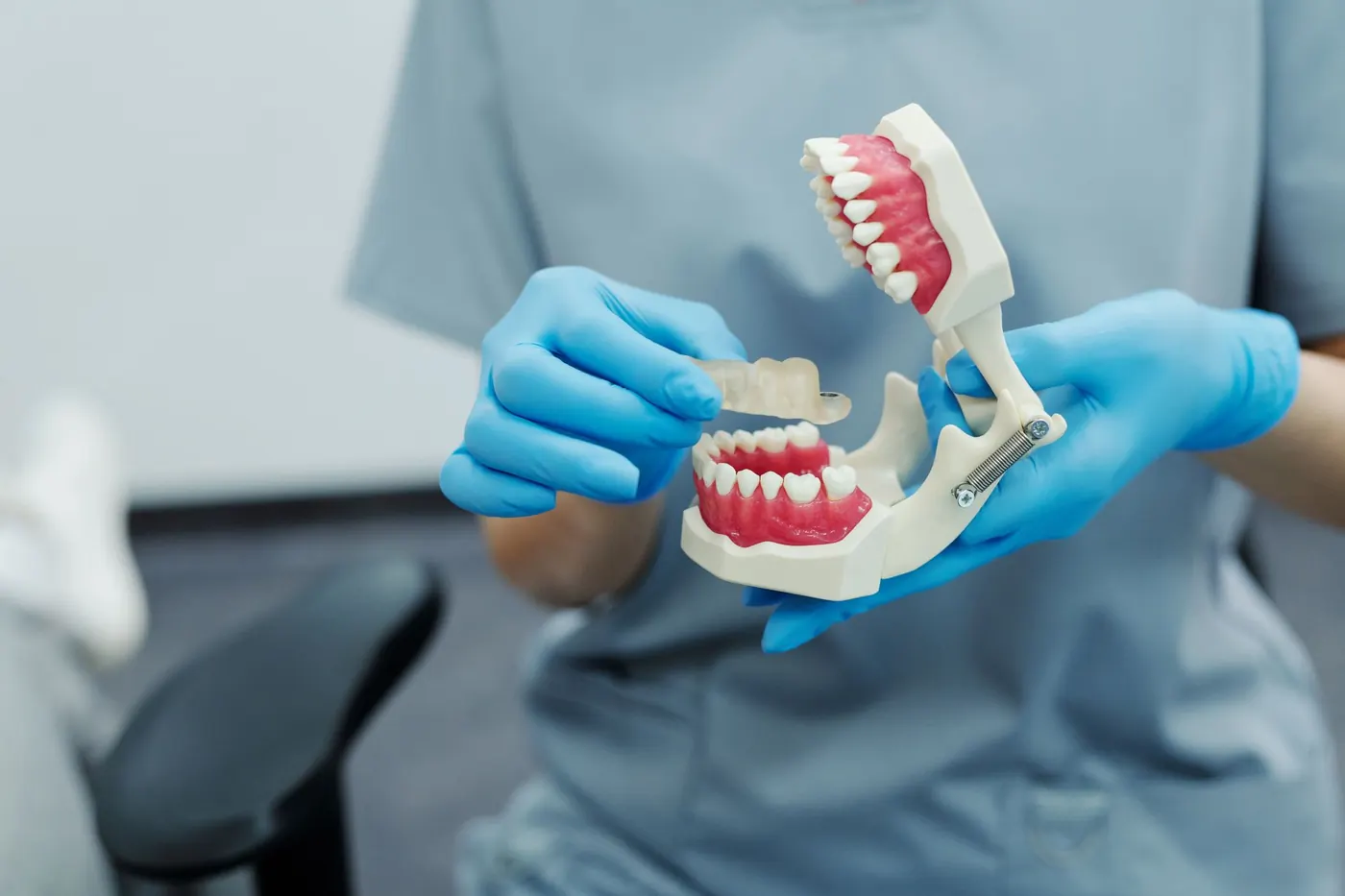
This is one of the most confusing points for patients, because two different recommendations for the same tooth can both sound reasonable. This article explains the principle dentists work from, so you can understand the advice you are given and know what else to ask.
The short answer
The general principle is to preserve as much natural tooth structure as possible. So where a filling can deliver adequate function and durability, a filling is the more appropriate choice. A crown is considered when the remaining tooth structure is insufficient to hold a filling securely, or when the tooth needs protecting against fracture.
How the two differ
A filling means removing the damaged tissue and rebuilding the defect with a restorative material bonded directly to the tooth during the same appointment. The surrounding sound tooth is left intact. It is the less invasive intervention.
A crown means reducing the tooth and fitting a cap that covers it completely. Because sound tooth must be removed to make room for the crown, this is irreversible: a prepared tooth cannot be returned to its original shape.
When a filling is enough
- Small to moderate cavities with plenty of sound tooth remaining.
- Wear at the neck of the tooth near the gum line.
- Small chips at an incisal edge or corner.
- Moderate rebuilding of tooth shape.
The advantages of a filling are that it is completed in one visit, preserves more natural tooth, costs less, and importantly leaves the option open: if the tooth later needs a crown, that is still possible. A tooth already prepared for a crown cannot go back.
When a crown is considered
- Too little sound tooth remains, so a large filling would not be stable and could debond or split the tooth.
- The tooth has had root canal treatment, particularly a back tooth carrying heavy chewing load. A root-treated tooth is more brittle and more prone to fracture.
- The tooth already has a crack and needs to be encircled to distribute chewing forces.
- The tooth is extensively broken through trauma.
- Requirements for shape and colour that a filling cannot meet.
Worth noting about root-treated teeth: not every one requires a crown. It depends on the tooth position and how much structure remains. Ask your dentist for the specific reasoning for your own tooth.
The health insurance difference
This is a major distinction many people are not aware of, and it directly affects what you pay:
Fillings placed to treat a condition are covered by health insurance. That includes treatment of dentine decay with a restoration, cervical restorations and fissure sealants, where prescribed by the dentist. Root canal treatment is also in this group.
Crowns fall outside health insurance cover, being prosthetic work. They are a self-paid service.
In practice, a deeply decayed tooth is usually split into two parts: the root canal treatment is assessed under health insurance, while the crown that follows is self-paid. The dentist at Ky Hoa Dental will separate these clearly when quoting, so you know what you are paying before anything starts.
What to ask if a crown is recommended
- Why can my tooth not be filled - what specifically rules it out?
- If it were filled, what is the risk, and could we monitor it for a while?
- How much tooth structure has to be removed?
- Which crown material is proposed, and how do the options on the price list differ?
- What does the total cost include, which parts are covered by health insurance and which are self-paid?
- What is the warranty, and how should I care for it afterwards?
A dentist who can explain the reasoning in terms of your specific tooth, rather than in general terms, is a good sign.
Aftercare
Both fillings and crowns have a margin where they meet natural tooth, and that is where bacteria can enter if it is not kept clean. So whichever route you take, correct brushing, daily interdental cleaning and regular check-ups matter equally.
Recurrent decay at the margin of an old filling or beneath a crown is common and usually not visible to the naked eye, which is why regular checks catch it early.
If you are weighing up the two options, visit Ky Hoa Dental at 266A - 268, Duong 3 Thang 2, Hoa Hung Ward, Ho Chi Minh City for an assessment of your specific tooth.
Frequently asked questions
Does a root-treated tooth always need a crown?
Not in every case. It depends on the tooth position and how much structure remains after treatment. A back tooth carrying heavy chewing load with substantial loss of structure is a common reason to consider a crown, to reduce the risk of fracture. Ask your dentist for the specific reasoning for your tooth.
So fillings are covered by health insurance but crowns are not?
Correct. Treatment of dentine decay with a restoration, cervical restorations, fissure sealants and root canal treatment are covered when prescribed as treatment for a condition. Crowns are prosthetic work, so they fall outside cover and are self-paid.
Are large fillings durable?
The larger the filling, the less sound tooth supports it, so the risk of debonding or splitting the tooth rises. That is precisely why a crown is considered when too little structure remains. Where exactly the line falls varies by tooth and needs an examination.