
Many people assume that any scaling appointment is paid for by insurance, but it actually depends on the reason for the scaling. Here is the clear picture.
- Scaling is covered by health insurance when the dentist identifies a condition such as gingivitis or periodontitis and tartar removal forms part of the treatment.
- Routine scaling requested while the gums are healthy counts as personal care, sits outside the covered scope, and is settled by the patient.
- The same scaling procedure may be supported for one person and not another; the difference lies in whether there is a condition requiring treatment.
- Ky Hoa Dental holds a health insurance examination and treatment contract, quotes costs clearly before treatment, and is open Monday to Saturday from 06:30 to 17:00.
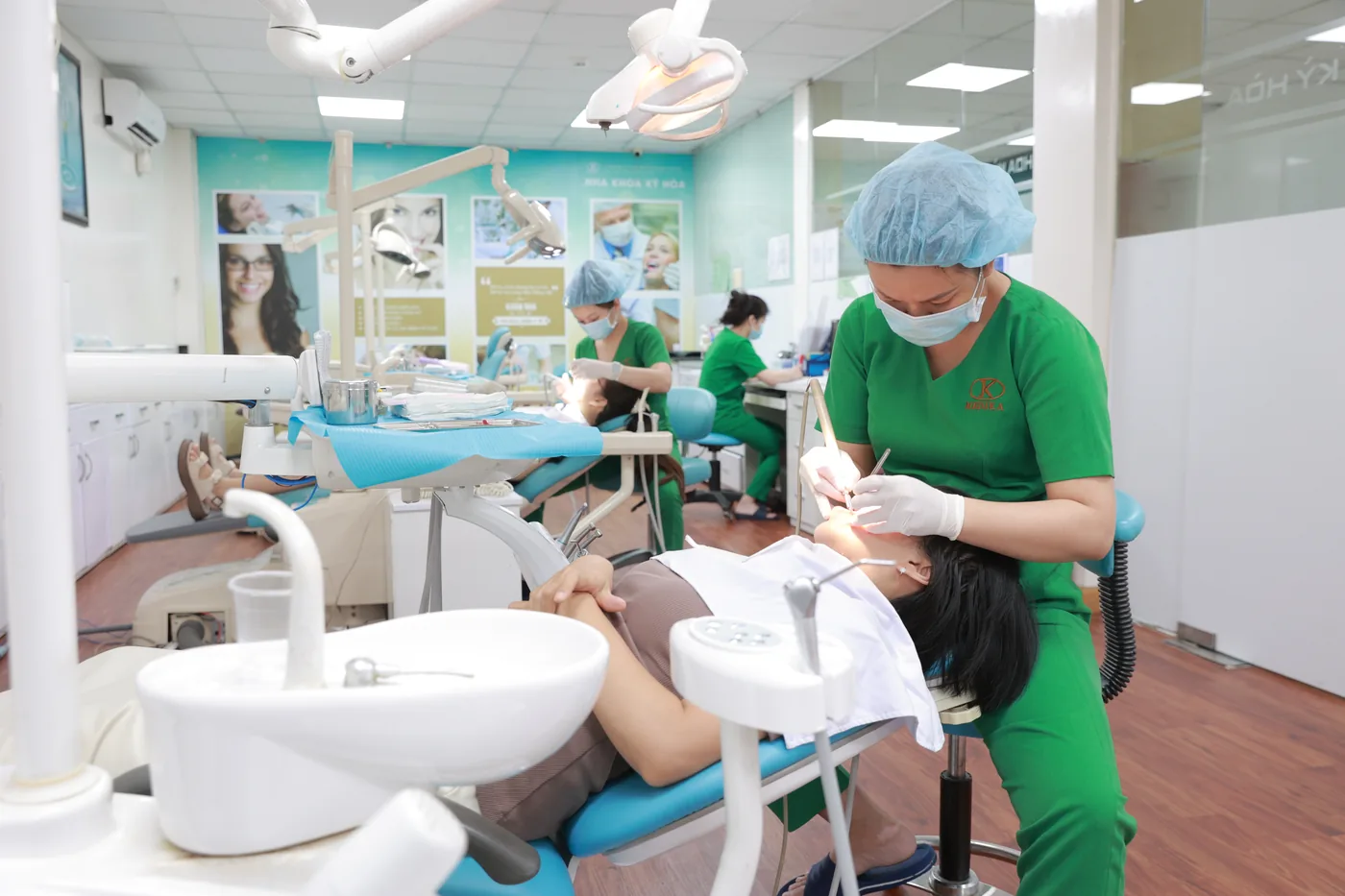
"Is scaling covered by insurance?" is one of the most common questions we hear at the dental clinic. Some people assume that any scaling appointment is settled by health insurance, so hearing a self-paid quote comes as a surprise. In fact the rule is clear, and once you understand it you can plan your care with far more confidence.
When does health insurance pay for scaling?
The core principle of health insurance (BHYT) is that it pays for treating a condition, not for care or cosmetic work chosen out of personal preference. Scaling is no exception.
Scaling is covered when the dentist examines you and determines that you have a condition requiring treatment, with tartar removal forming part of the treatment plan. Specifically, that means cases of:
- Gingivitis (red, swollen gums that bleed easily when you brush)
- Periodontitis (heavy tartar causing gum recession, bad breath and loose teeth)
In these cases the tartar itself is the cause of the disease, so removing it becomes a treatment step. If you are then seen at a facility holding a health insurance examination and treatment contract, such as Ky Hoa Dental, your card contributes at the benefit level recorded on it.
When is scaling NOT covered?
By contrast, if you come in simply because you want routine scaling for cleaner, more comfortable teeth while your gums are healthy and show no sign of inflammation, this counts as care chosen out of personal preference. In that case health insurance does not pay and you settle the cost yourself.
Put another way, the same scaling procedure may or may not be covered depending on whether there is a condition requiring treatment, which only an examination can establish. This is exactly where people assume, wrongly, that scaling is always covered.
For the wider picture, you may also want to read our article on what insured dental care covers to see which dental services fall inside and outside the covered scope.
What is the benefit level?
When scaling counts as treatment of a condition and insurance contributes, the benefit level is usually 80%, 95% or 100% of the cost within the covered scope, depending on the category recorded on each person's card. Bring your card and a photo ID to your appointment and our staff will check your entitlements and explain them to you.
One thing you can count on at Ky Hoa is that costs are always quoted clearly before treatment. What insurance contributes and what you pay yourself are both spelled out, so you can plan ahead and are never surprised after the fact.
How the examination establishes your case
So how do you find out whether your case is covered? The answer lies in the examination. A visit usually runs like this:
- The dentist examines your teeth and gums overall, looking at how much tartar has built up and whether there are signs of inflammation.
- The dentist determines whether you have a condition (gingivitis, periodontitis) requiring treatment, or are simply requesting routine scaling.
- You are advised on the approach and given the cost in advance, including what insurance contributes.
- Scaling and treatment go ahead. The procedure is carried out gently to limit sensitivity, though what you feel can differ depending on your condition and your own body.
Some people also worry that scaling harms the teeth. If that is on your mind, our article on whether scaling wears down enamel explains it in more detail.
For older patients and those with underlying conditions such as diabetes or heart disease, scaling and gum treatment call for extra care. Because Ky Hoa Dental is the Odonto-Stomatology department within a general medical centre, the dentist can hold a joint consultation with an internal medicine doctor whenever needed, so treatment is monitored closely and matched to each person's general health.
A small piece of advice
If your gums bleed often, your breath has an odour, or it has simply been a long time since your last check-up, it is worth booking a visit. The dentist will tell you exactly where you stand and whether your scaling falls within insurance support. You can read more about the service on our dental scaling page, or call our hotline 028.3868.1097 or message Zalo 082.299.3377 for guidance. Ky Hoa is open Monday - Saturday, 06:30 - 17:00 (closed Sunday).
Frequently asked questions
Will health insurance pay for my scaling appointment?
Yes, but only when the dentist examines you and determines that you have a condition requiring treatment, such as gingivitis or periodontitis, with tartar removal forming part of that treatment. Routine scaling requested while your gums are healthy is not covered.
Why is scaling covered for one person and not another?
Because health insurance pays for treating a condition, not for care chosen out of personal preference. The procedure is the same, but someone with gingivitis or periodontitis receives support while someone who simply wants a routine clean pays for it. The examination settles the question.
What should I bring to a scaling appointment at Ky Hoa?
Bring your health insurance card and a photo ID so our staff can check your benefit level. After the examination, the cost is quoted clearly before treatment, with what insurance contributes and what you pay yourself both stated openly.