
The words root canal make many people wince, mostly from stories they have heard rather than experience. This article addresses that fear directly: what the treatment actually is, what it feels like, and why it is sometimes the way to keep a tooth.
- The severe pain people remember for years is usually the pain of an inflamed tooth before treatment, not the sensation while the dentist is working.
- Badly inflamed pulp does not heal on its own; left alone it travels to the root apex, forms an abscess and can end in the loss of the tooth.
- Once the pulp is removed the tooth is no longer nourished as before, so it becomes more brittle and prone to cracking, which is why the dentist usually recommends restoring the crown solidly.
- Root canal treatment is treatment for disease, so you can use your health insurance card at Ky Hoa Dental according to the scope and benefit level recorded on it.
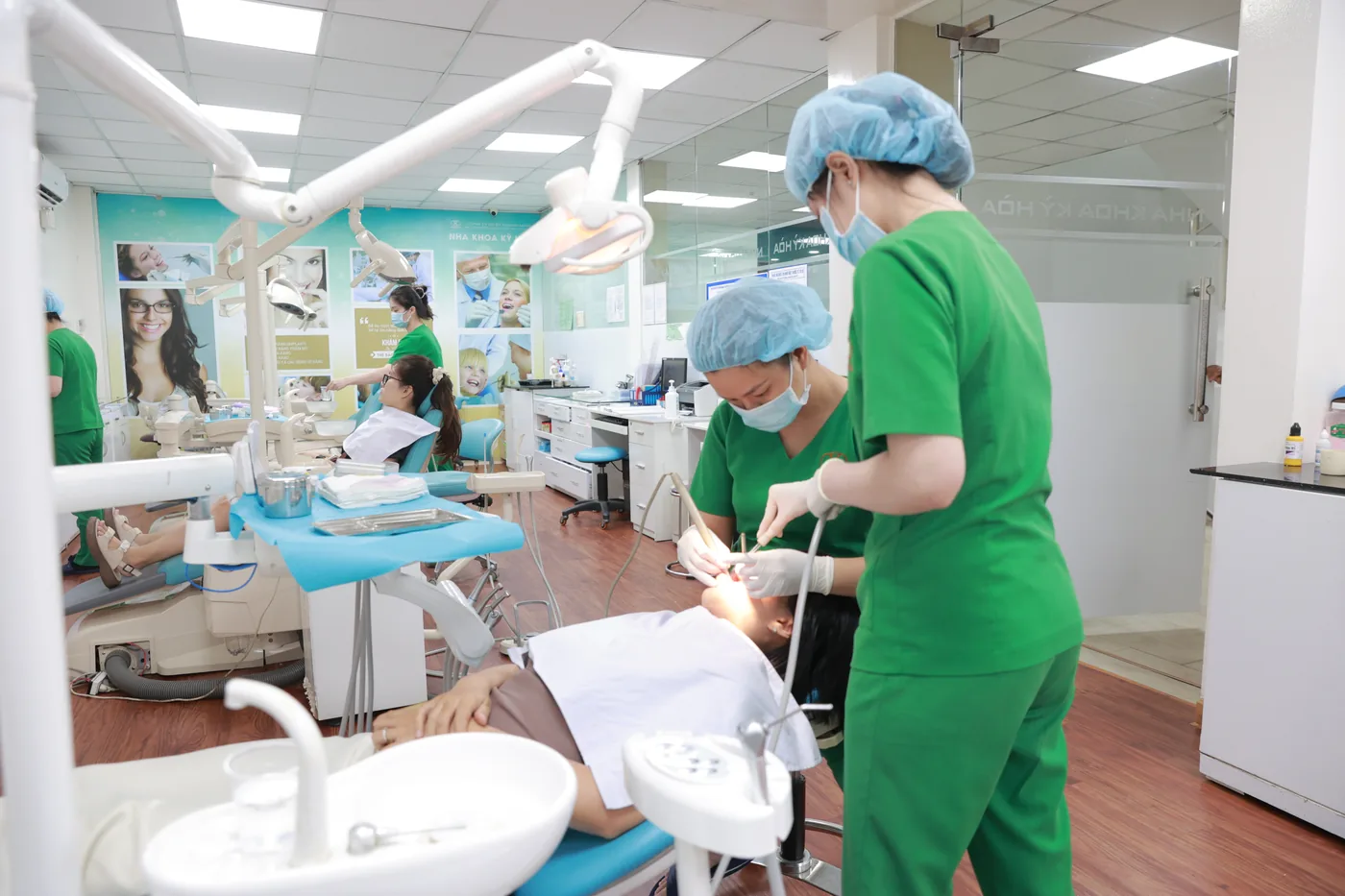
At the clinic, when a dentist says "this tooth needs root canal treatment", the usual reaction is a pause followed by: "Is it going to hurt a lot?" The fear has roots going back years, to a time when anaesthesia and instruments were not what they are today, and it is kept alive by stories passed between people. Here Ky Hoa Dental explains it clearly so you understand what you are about to have done.
What is the pulp, and why does it need treating?
Inside every tooth is a hollow space running from the crown down through the root, called the pulp chamber and root canals. It contains blood vessels and nerves, the living core of the tooth, which lets it sense hot and cold and nourishes it while it develops.
When decay works through the enamel and dentine and bacteria reach the pulp chamber, the pulp becomes inflamed. Trauma that cracks or fractures a tooth leads to the same result. At that point you usually notice familiar signs:
- Spontaneous pain, especially at night, coming in waves.
- Sensitivity to hot, cold or sweet food that lingers after you have stopped eating.
- Pain radiating to the temple or the ear on the same side.
- Swollen gum around the root, a small pus-filled spot, or the tooth darkening in colour.
An important point to remember: badly inflamed pulp does not heal on its own. Left alone, the inflammation travels down to the root apex, forms an abscess, causes facial swelling and can end in the loss of the tooth. Root canal treatment removes the damaged pulp, cleans and seals the canal system, so the usable part of the tooth can be kept.
Does root canal treatment hurt?
This is the central question, so here is a straight answer.
The pain people remember for years is usually the pain of an acutely inflamed tooth before treatment, not the sensation while the dentist is working. A tooth with acute pulpitis throbs in waves and leaves you unable to eat or sleep. That is the severe pain in this story.
During the appointment, the dentist gives local anaesthetic before opening the pulp chamber. Once it has taken effect, you generally feel only pressure, the sound of the equipment and numbness in the lip and cheek, not the sharp pain of an inflamed tooth. The dentist always tests the anaesthesia before starting and can add more if needed.
Even so, we are not saying you will feel nothing at all. How much you feel varies with the degree of inflammation, the position of the tooth and each person's individual response; a tooth with acute inflammation or an abscess can be harder to anaesthetise fully. If you feel uncomfortable during the appointment, raise your hand so the dentist can stop and address it rather than enduring it and carrying the memory afterwards.
What happens during root canal treatment?
Knowing the steps in advance takes away much of the apprehension. The sequence is usually:
- Examination and imaging. The dentist identifies the tooth, sees the number and shape of the canals and assesses the area around the root apex.
- Local anaesthetic and a test of the anaesthesia.
- Isolating the tooth. The tooth is isolated from saliva, usually with a rubber dam, so bacteria in the mouth cannot enter the open canals.
- Opening the chamber and removing the pulp. The dentist makes an access opening and removes the inflamed or necrotic pulp.
- Measuring the length and cleaning the canals. The canals are shaped and irrigated repeatedly with antiseptic solution. This is the most time-consuming step and the one that most determines the long-term result.
- Filling the canals with a dedicated material, then restoring the crown of the tooth.
- A check x-ray after the canals are sealed.
The number of appointments depends on the tooth and the situation. A front tooth with a single canal is usually quicker than a molar with several, and a tooth with an infection at the apex may need an extra visit for medication and monitoring. The dentist will estimate and arrange a specific schedule for you after the examination.
What is the tooth like after treatment?
For the first few days the tooth may feel slightly tender and sensitive when tapped, particularly when chewing firmly. That usually settles. Take your medication as prescribed and go easy on chewing with the treated tooth until the crown has been properly restored.
One point many people overlook: a tooth that has had its pulp removed is no longer nourished as before, so it is more brittle and can crack when biting hard food. That is why the dentist usually recommends restoring the crown solidly once the canals are sealed, for instance a large filling with a post or a crown, depending on how much tooth structure remains. If that interests you, see our article on how much dental crowns cost and the price list.
Please contact the clinic if pain increases rather than eases after treatment, if there is facial swelling or fever, or if the filling comes away and the tooth cracks. A root-treated tooth also needs the same regular check-ups as any other.
Keep the tooth, or take it out and be done?
Quite a few people feel it would be simpler to have the tooth out and avoid a string of appointments. This is a decision worth thinking through with your dentist rather than rushing.
A natural tooth, even one that has had root canal treatment, keeps its root in the jawbone, holds the space so neighbouring teeth do not drift, and preserves a familiar chewing pattern. Once it is removed, a gap left for long enough allows the opposing tooth to over-erupt, the adjacent teeth to tilt in and the bone in that area to resorb, making any later replacement more complicated.
Not every tooth can be saved, of course. A tooth broken well below the gum, a vertically fractured root or too little remaining tooth structure will lead the dentist to discuss other options. The right approach is to come in, have an x-ray and hear the dentist weigh up each option for your particular tooth.
Root canal treatment at Ky Hoa Dental
Ky Hoa Dental is the dental specialty department of Ky Hoa Medical Center, under Operating licence No. 00449/HCM-GPHĐ, at 266A - 268, Duong 3 Thang 2, Hoa Hung Ward, Ho Chi Minh City. The dentist examines you, takes imaging and explains both the situation and the cost before beginning, so you can plan.
Because root canal treatment is treatment for disease, you can use your health insurance (BHYT) card according to the scope and benefit level recorded on it. For details, see our article on root canal treatment and costs with health insurance, or visit our root canal treatment service page. To book, call our Hotline 028.3868.1097 or message Zalo 082.299.3377. The centre is open Monday - Saturday, 06:30 - 17:00 and closed on Sunday.
In short, root canal treatment is not as frightening as its reputation, and it is often the way to keep a tooth that was otherwise on its way out. If toothache is keeping you awake at night, do not endure it any longer; come in early so the dentist can look and advise on the approach that suits your situation.
Frequently asked questions
Does root canal treatment hurt?
The severe pain people remember is usually the pain of an inflamed tooth before treatment. During the appointment the dentist gives local anaesthetic, so you generally feel only pressure and numbness, though how much you feel varies with the degree of inflammation and with each person. If you feel uncomfortable, simply signal so the dentist can stop and address it.
How many appointments does root canal treatment take?
It depends on the tooth and the situation. A front tooth with a single canal is usually quicker than a molar with several, while a tooth with an infection at the root apex may need an extra visit for medication and monitoring. The dentist will estimate and arrange a specific schedule after examining you and taking an x-ray.
Is a tooth weaker after root canal treatment?
A tooth that has had its pulp removed is no longer nourished as before, so it is more brittle and can crack when biting hard food. That is why the dentist usually recommends restoring the crown solidly once the canals are sealed, with a large filling and a post or a crown, depending on how much tooth structure remains.