
Feeling teeth sting with cold water right after a scaling worries many people. Most of the time it is a temporary reaction and eases within a few days.
- Sensitivity for a few days after scaling is fairly common because the tooth neck and root area have just been exposed.
- Most cases ease within a few days, and may last about one to two weeks in sensitive people.
- Brushing gently with a soft brush and avoiding very hot, cold or sour food helps.
- Lasting sensitivity, spontaneous pain or swollen gums with pus need a return visit.
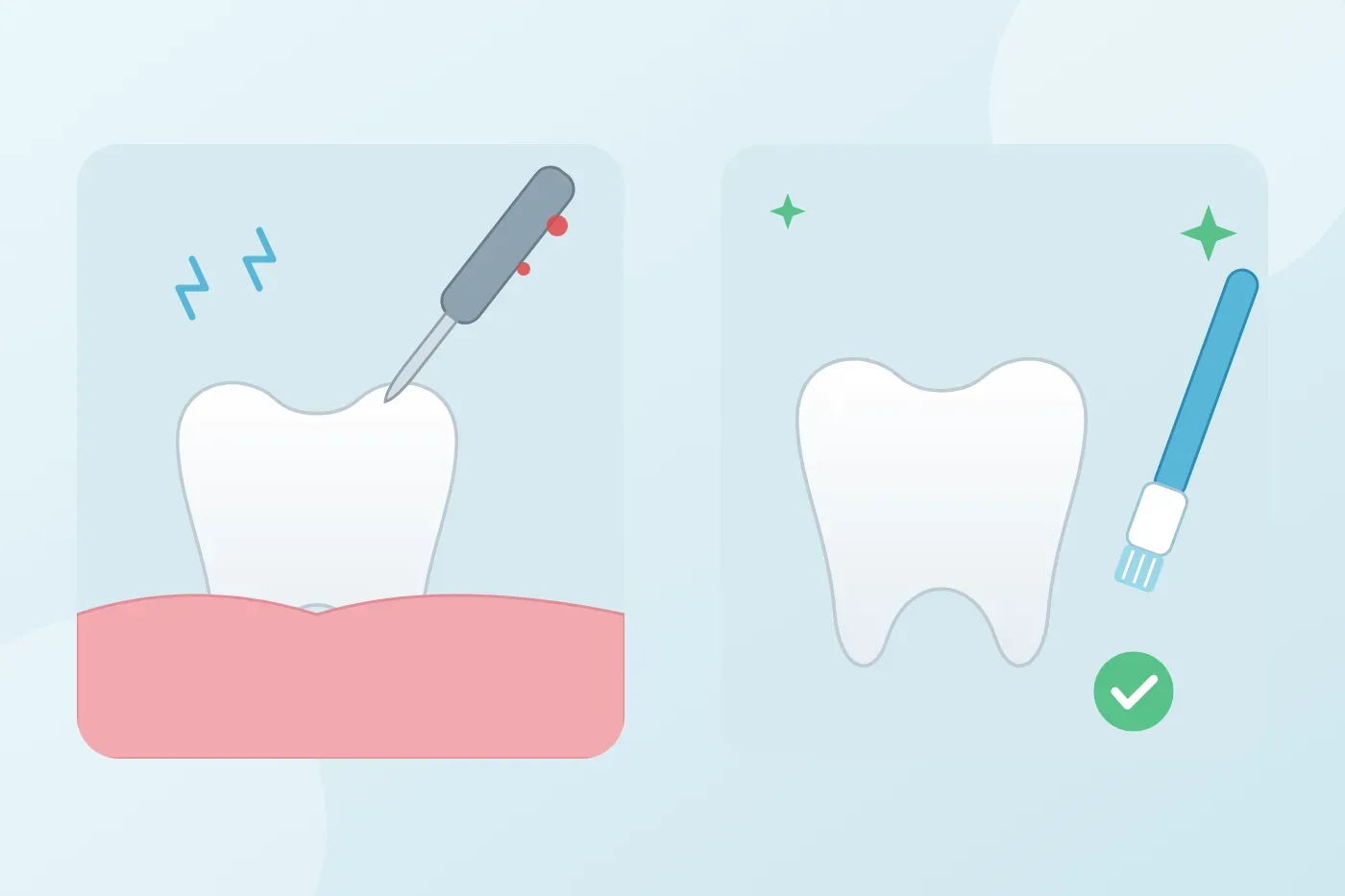
Tartar that has built up for a long time can cover the neck and root area of the teeth. Once it is removed, the surface that was covered is exposed, so teeth are sensitive to heat, cold and sour food for a while.
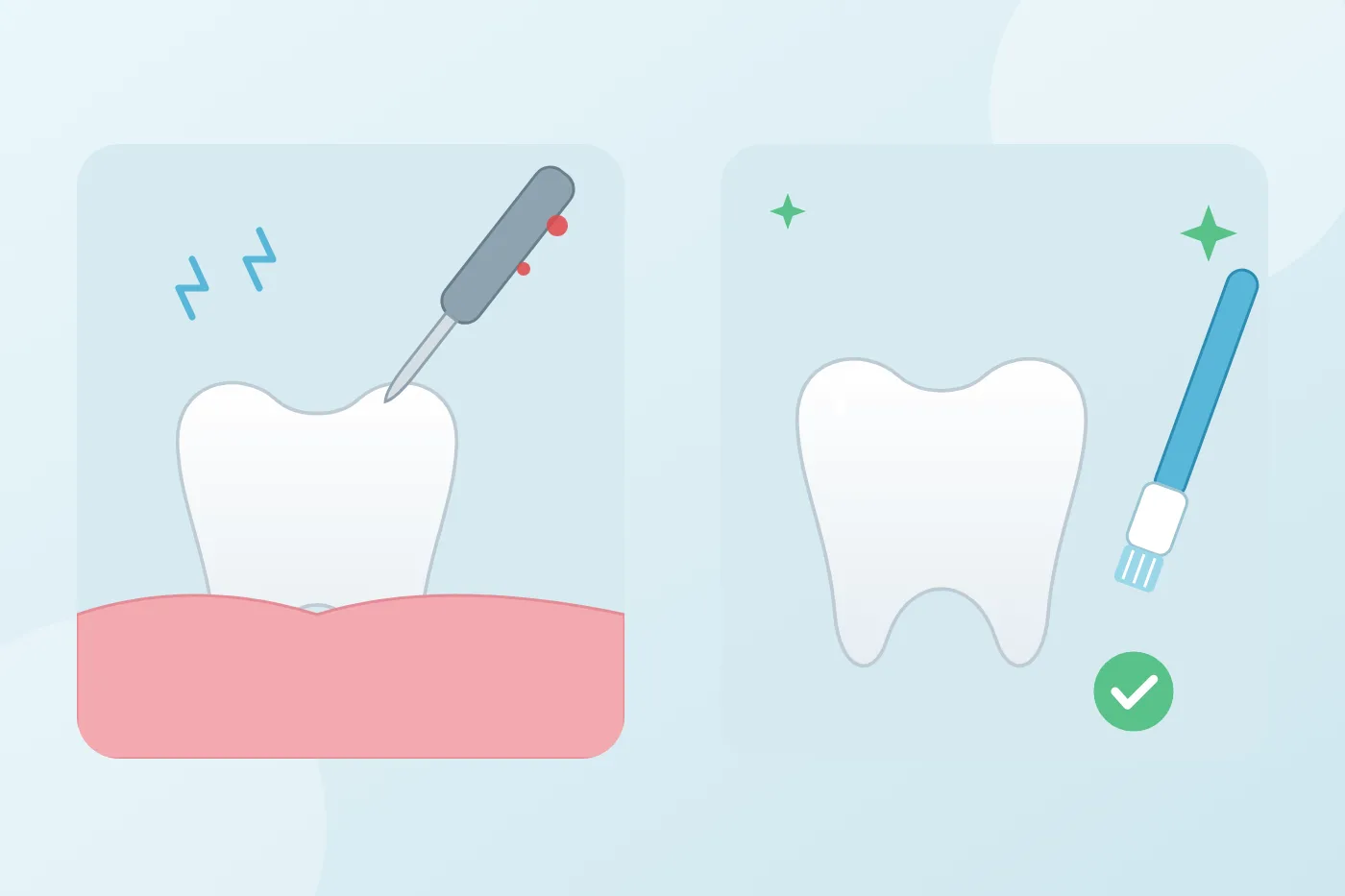
Why do teeth feel sensitive after scaling?
- Tartar used to cover the tooth neck, and once removed the area is exposed.
- The gum may be a little swollen, and may recede slightly once inflammation settles, making the root more visible.
- The vibration of the instrument can make some teeth temporarily sensitive.
This is not because scaling wears away enamel. You can read does scaling wear away enamel.
How long does sensitivity last?
Most of the time it eases within a few days and may last about one to two weeks in sensitive people. In the meantime you can:
- Brush gently with a soft brush and do not scrub sideways.
- Use a toothpaste made for sensitive teeth as directed on the pack.
- Avoid very hot, very cold or very sour food for a few days.
- Keep cleaning between the teeth carefully so the gums heal quickly.
When should you go back?
- Sensitivity has not eased after about two weeks, or keeps getting worse.
- Spontaneous pain, pain at night or a sharp pain when biting.
- Swollen gums, pus or heavy bleeding.
- One tooth is sensitive in a way quite different from the others.
These could be wear at the tooth neck, decay or gum inflammation that the dentist needs to check. See what to do about sensitive teeth with cold food and does scaling hurt.
You can visit in person during working hours at 266A - 268, Đường 3 Tháng 2, Phường Hòa Hưng, Ho Chi Minh City, or call the hotline 028.3868.1097 (Zalo 082.299.3377) to ask about quieter hours. Service details are on the scaling page.
Frequently asked questions
Is sensitivity after scaling a problem?
It is usually a temporary reaction because the tooth neck and root area have just been exposed, and it eases after a few days. If it lasts or there is spontaneous pain, go back for a check.
How long does sensitivity after scaling last?
Most cases ease after a few days; in sensitive people it can last about one to two weeks. If it lasts longer or gets worse, get it checked.
Should I stop scaling because of the sensitivity?
No. Leaving tartar makes gums inflame and recede more. If you are often sensitive, tell the dentist before scaling so they can be gentle and advise on aftercare.