
Yellowing teeth make many people self-conscious when they smile. Not all yellow teeth are alike, and scaling only solves part of the cause.
- Yellow teeth can come from surface stains or from colour inside the tooth, and the two are handled differently.
- Scaling and polishing remove surface stains from coffee, tea, smoking and tartar.
- Scaling cannot make teeth whiter than the natural colour of dentine and enamel.
- A single tooth that changes colour unusually, with pain or sensitivity, should be checked early.
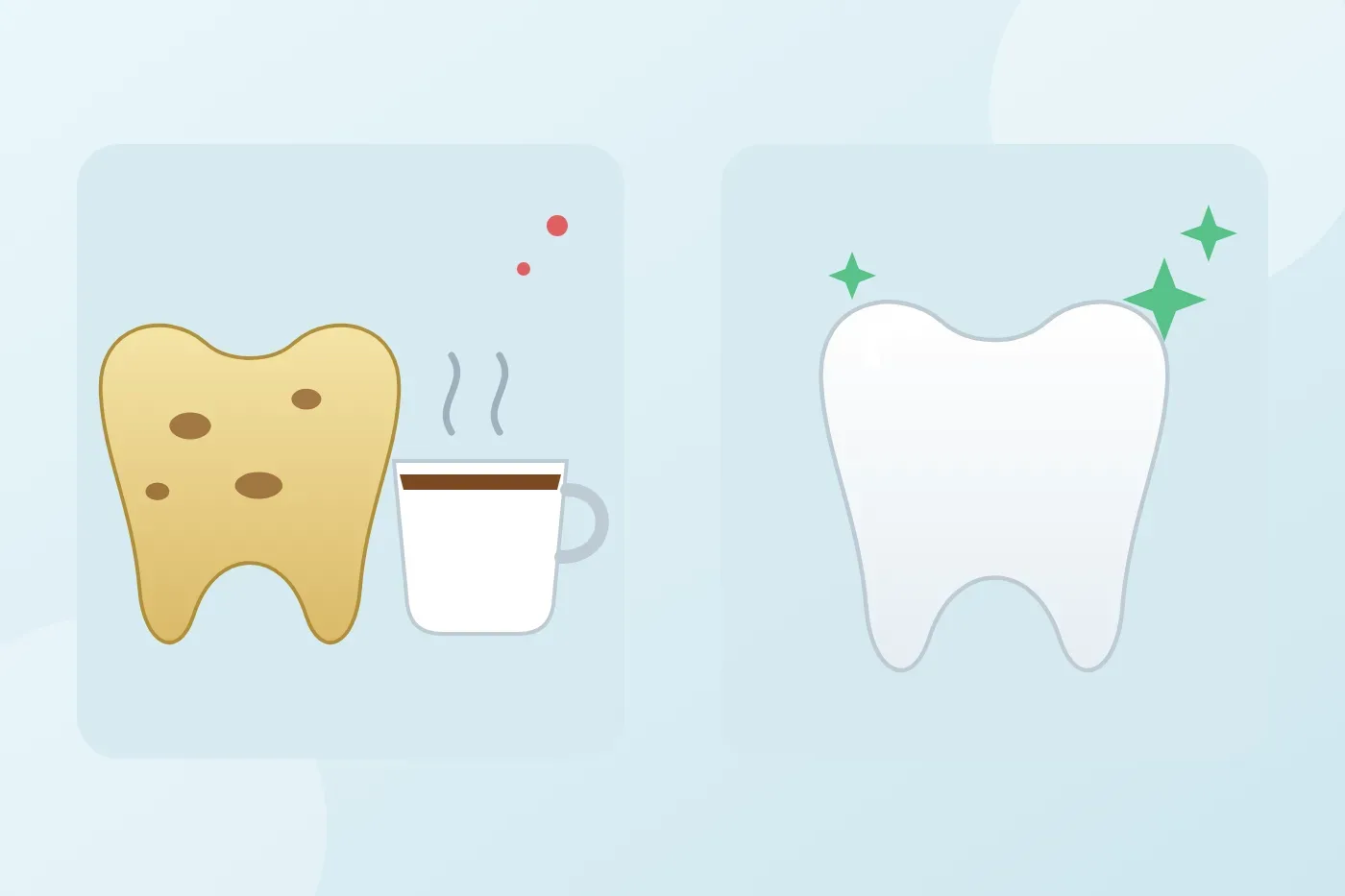
Yellow or stained teeth are very common in adults. To know how to deal with them, first tell apart surface stains from colour that comes from inside the tooth, because the two are handled differently.
Yellowing from surface stains
This colour change sits on the tooth surface and usually comes from:
- Drinking a lot of coffee, tea or coloured soft drinks, or eating deeply coloured food.
- Smoking.
- Plaque and tartar building up over time, especially near the gum line and behind the lower front teeth.
For this group, scaling and polishing usually leave the teeth visibly cleaner and brighter, because the tartar and stains are removed. See also does scaling hurt.
Yellowing from colour inside the tooth
Sometimes yellow teeth are not caused by dirt:
- Enamel thins with age or wear, showing the yellow dentine underneath.
- A tooth that was injured or has had root canal treatment can change colour.
- Decay or old fillings can discolour.
- Some cases of discolouration date from when the teeth were forming.
For this group, scaling cannot make the tooth whiter than its own colour. The dentist needs to examine to find the cause and advise a suitable direction.
How can you limit yellowing?
- Brush properly twice a day and use floss. See how to brush properly.
- Rinse with plain water after coffee or tea.
- Cut down on or stop smoking.
- Have scaling at intervals advised by your dentist.
When should you be examined?
If a single tooth changes colour unusually, with pain, sensitivity or brown-black spots, get it checked early, as it may be decay or damage inside. You can visit in person during working hours at 266A - 268, Đường 3 Tháng 2, Phường Hòa Hưng, Ho Chi Minh City, or call the hotline 028.3868.1097 to ask about quieter hours. Details of the scaling service are on the scaling page.
Frequently asked questions
Does scaling make teeth whiter?
Scaling removes plaque and surface stains, so teeth look cleaner and brighter, but it does not change the natural colour of the dentine and enamel.
Are yellow teeth caused by not brushing enough?
Not always. Poor brushing increases plaque and tartar, but yellow teeth can also come from dentine colour, age, injury or decay.
How often should I have scaling?
Usually about every six months, though people who build up tartar quickly may need it more often. The dentist will advise based on your condition.