
Gum recession is when the gum line pulls back and gradually exposes the part of the root that was once covered. This article helps you understand the causes, recognise it early and know when to see a dentist.
- Gum recession is when the gum line pulls back and exposes the tooth root, causing sensitivity and making wear and decay more likely.
- Common causes are brushing too hard, periodontal disease, grinding, naturally thin gums, smoking and age.
- Gum that has receded does not grow back, so treatment aims to find the cause, prevent further recession and protect the exposed root.
- Gentle brushing, regular scaling and early check-ups help limit gum recession.
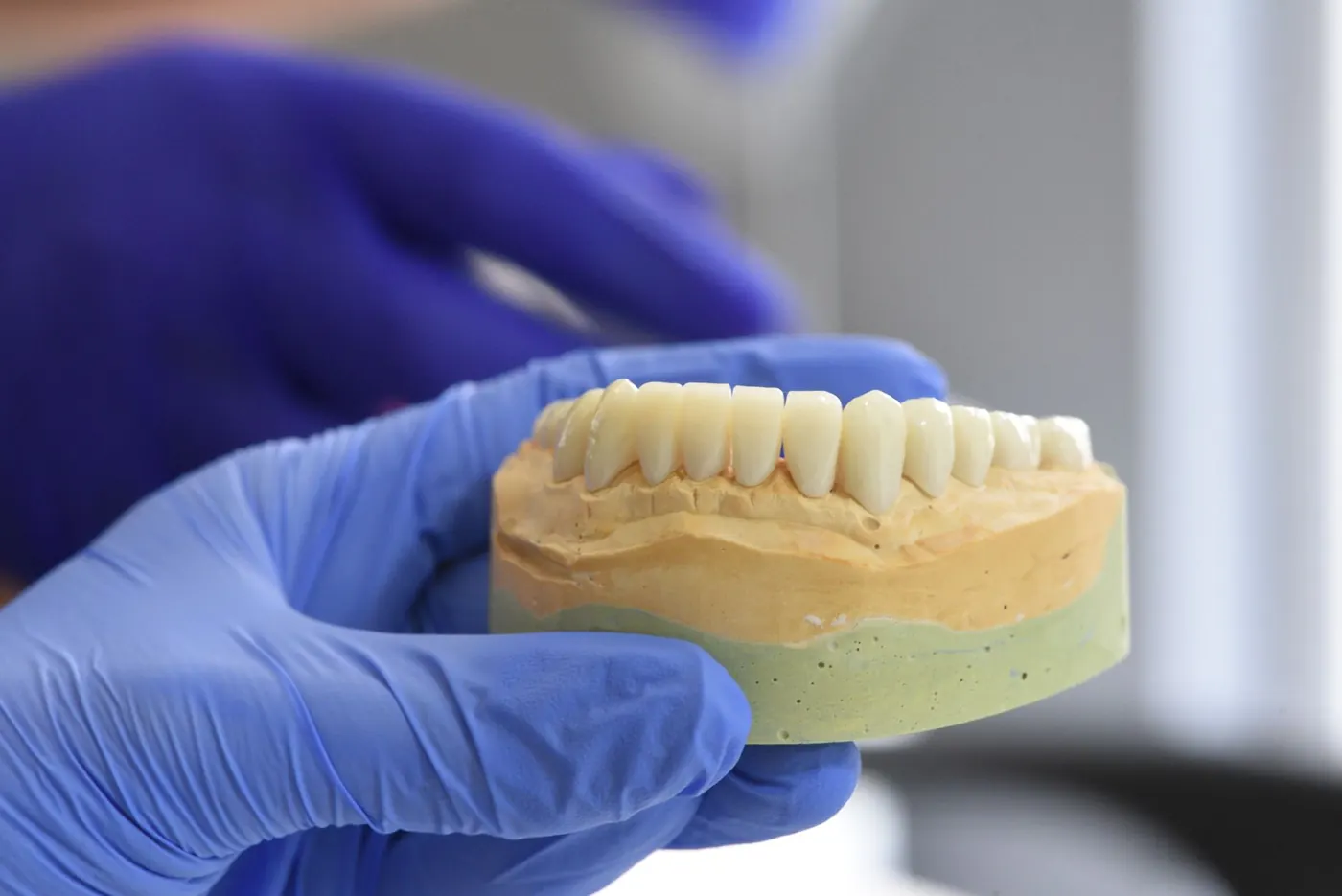
Many people notice that their teeth look "longer" than before, feel sensitivity near the base of a tooth and see the gum line moving down. This is usually a sign of gum recession, a condition that develops slowly and is easily overlooked until the teeth become very sensitive.
What is gum recession?
A healthy gum fits snugly around the neck of the tooth and covers the root. When the gum line pulls back, the root is exposed. The root does not have the thick enamel that protects the crown, so it becomes sensitive and is more prone to wear and decay.
Why do gums recede?
Usually several causes act together:
- Brushing too hard: scrubbing sideways, using strong pressure or a hard-bristle brush for a long time thins the gum and makes it pull back.
- Periodontal disease: plaque and tartar cause inflammation that destroys the tissue supporting the teeth. See can periodontal disease be treated.
- Grinding or an uneven bite: excess force on some teeth.
- Naturally thin gums: some people have thin gum and bone, so recession happens more easily.
- Smoking: weakens the gum and makes it prone to inflammation.
- Age: gums recede over the years, especially when cleaning is not thorough.
Signs and effects to know
- Teeth look longer and the exposed root appears dark yellow.
- Sensitivity to cold drinks, brushing or cold air. See what to do about sensitivity to cold.
- The exposed root wears into a notch, see what is cervical tooth wear.
- Root decay is more likely and food catches between teeth.
- If recession comes with severe periodontal disease, the teeth may gradually become loose.
Can gum recession be treated?
Gum that has receded does not grow back on its own. So the goal of treatment is to find the cause, prevent further recession and protect the exposed root. Depending on the case, the dentist may advise:
- Scaling and cleaning plaque to control inflammation. See does scaling hurt.
- Changing how you brush and using a soft-bristle brush.
- Reducing sensitivity of the exposed root and filling when a notch has formed.
- Managing related causes such as grinding and periodontal disease.
- For severe cases, the dentist will explain suitable options after an examination and X-ray.
Prevention and when to see a dentist
Brush gently with a soft-bristle brush, clean between your teeth every day, have scaling done regularly, do not smoke and have regular check-ups. If your teeth look longer, your gum line is moving down, sensitivity lasts or your gums bleed, see a dentist early so the gum and the bone around the teeth can be checked.
You are welcome to walk in during working hours at Ky Hoa Dental Clinic, 266A - 268 Duong 3 Thang 2, Hoa Hung Ward, Ho Chi Minh City, or call the hotline 028.3868.1097 to ask about quieter hours. If you have BHYT, you can also read is scaling covered by BHYT.
Frequently asked questions
Can receded gums grow back on their own?
No. Gum that has receded does not grow back by itself. What you can do is find the cause, control inflammation and prevent further recession as the dentist advises.
Can gum recession lead to tooth loss?
If recession is caused by periodontal disease and is left untreated, the bone around the teeth can gradually be lost and the teeth may become loose. So you should see a dentist early when you notice the signs.
Can brushing too hard cause gum recession?
Yes, it can. Scrubbing sideways, using strong pressure or a hard-bristle brush for a long time easily thins the gum and makes it recede. Use a soft-bristle brush and brush gently.
What should you do about sensitivity from receded gums?
Sensitivity from an exposed root can be reduced by changing how you brush, using toothpaste for sensitive teeth or having the dentist treat it at the clinic. If it lasts, please come in for an examination.