
As gums recede with age, the tooth root is exposed and decays easily. Root decay is often silent, so it helps to know how to spot and prevent it early.
- Root decay occurs when receding gums expose the root, which has no hard enamel and so decays quickly.
- Older adults are prone because of gum recession, dry mouth and difficulty cleaning thoroughly.
- Gentle brushing with a soft brush, daily cleaning between teeth and keeping the mouth moist all help prevent it.
- Regular check-ups catch decay while it is still small and easier to treat.
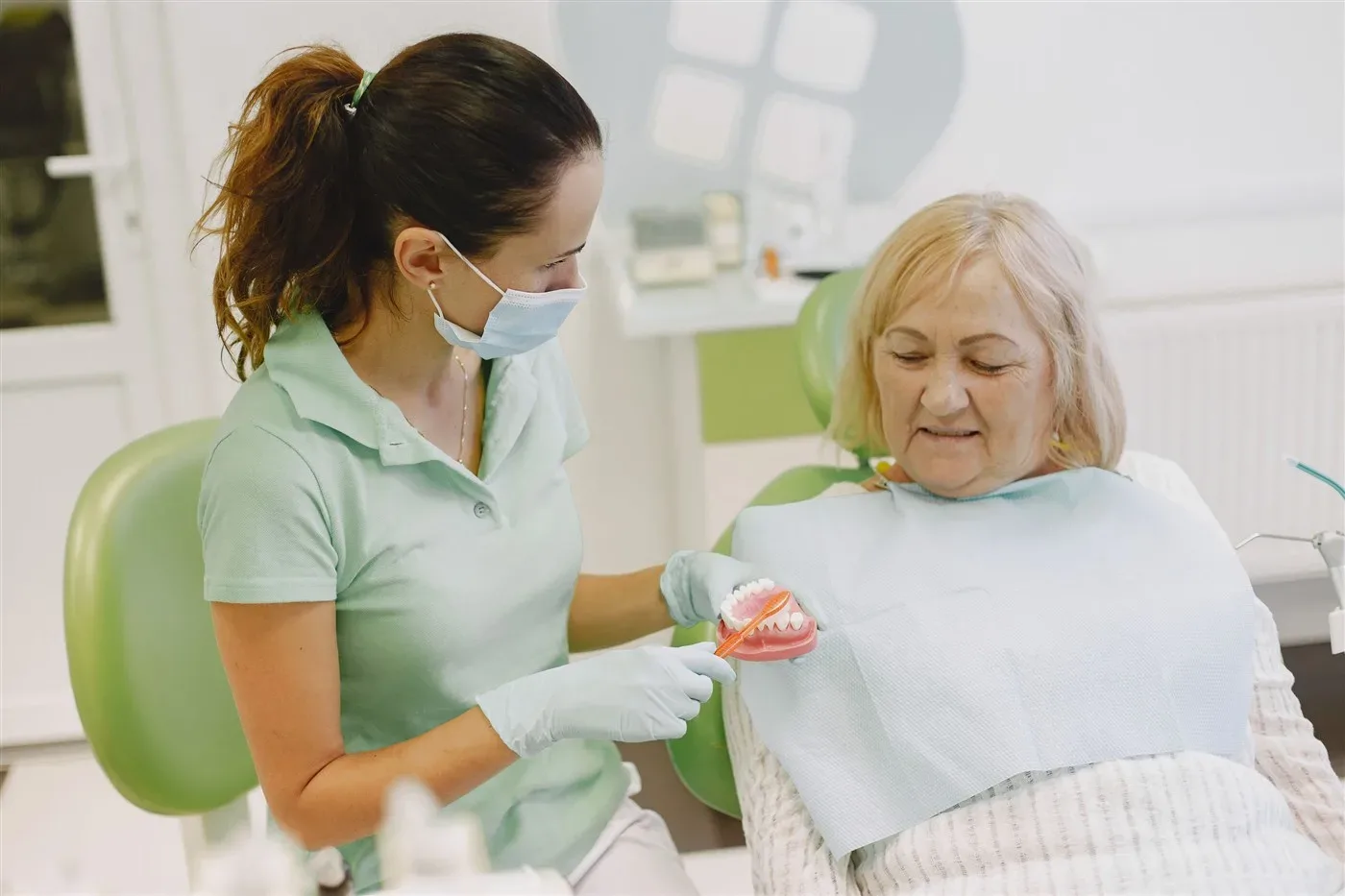
What is root decay?
Root decay happens when the tooth root is exposed because the gum has receded, and bacteria then soften it. The root does not have the hard enamel layer that protects the crown, so it is softer and decays much faster.
That is why older adults are the group most often affected. You can also read our article on why older adults' teeth deteriorate faster to understand the wider picture.
Why are older adults more prone to it?
- Gum recession with age: the gum shrinks and exposes the root. See our article on whether receding gums can be treated.
- Dry mouth: less saliva means the mouth cannot clean itself or neutralise acids as well. Many people have a dry mouth because of daily medicines.
- Difficulty cleaning: shaky hands, weaker eyesight or painful joints make careful brushing harder.
- Frequent sugary snacks: teeth stay bathed in sugar for long periods.
Signs to look for
- Brown, dark yellow or black spots near the gum line with a soft surface.
- Sensitivity to hot, cold or sweet food.
- A tooth that looks worn all the way round at the gum line, and may chip or snap off sideways.
Prevention and daily care
- Brush twice a day with a soft-bristled brush and fluoride toothpaste, using gentle angled strokes along the gum line.
- Clean between the teeth every day with floss or small interdental brushes.
- Drink water often, and sip water or chew sugar-free gum if the mouth feels dry.
- Cut down on sweet food, especially snacking between meals.
Treatment and when to see a dentist
Small areas of root decay are usually cleaned of soft material and then filled to protect the tooth. If decay reaches the pulp or the tooth breaks at the gum line, treatment becomes more involved. Regular check-ups let problems be found early.
You are welcome to walk in during opening hours at Nha Khoa Kỳ Hòa, 266A - 268, 3 Tháng 2 Street, Hòa Hưng Ward, Ho Chi Minh City, or call the hotline 028.3868.1097 (Zalo 082.299.3377) to ask about quieter time slots.
Frequently asked questions
Does root decay hurt?
At first it often causes only mild sensitivity or none at all, so many people do not notice. Pain usually comes when it goes deeper, which is why regular check-ups matter.
Can root decay be filled?
Many small cases can be cleaned and filled. The dentist decides the level of treatment and the material after an examination.
How often should older adults have a dental check-up?
Usually every six months, or sooner if there is sensitivity, discolouration or receding gums.