
An implant is not finished in a single visit. It goes through several steps, including a waiting period while the post fuses firmly with the jawbone. Knowing each step helps you plan with confidence.
- A dental implant is a multi-step process: exam and imaging, placing the post, waiting for bone fusion, then the connector and crown.
- The wait for the post to fuse with the bone usually lasts a few months and is the longest part.
- Weak bone, long-term tooth loss, inflamed gums or uncontrolled underlying conditions can make it take longer.
- The dentist can only give an estimated time after an exam and imaging, so it is best to come in for a check.
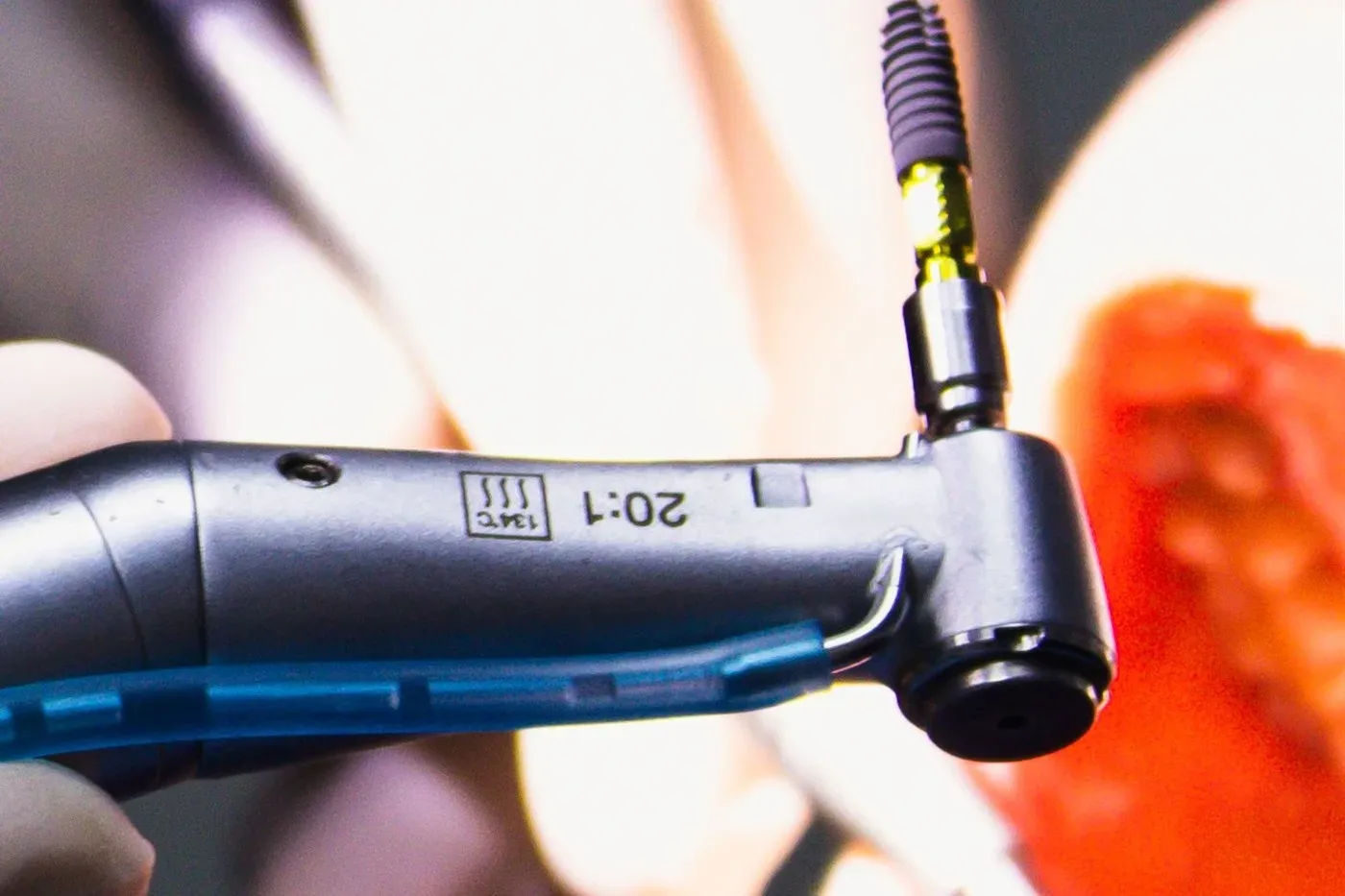
Many people think an implant is one visit: the post goes in and you have a tooth right away. In reality it is a process with several steps, and most of the time is spent waiting for the post to fuse with the jawbone. This article explains each step so you know what to expect.
What are the steps of a dental implant?
- Exam and imaging. The dentist takes your history, examines your teeth and gums and takes images to assess bone volume and the position of nerves and sinuses. This step decides whether and how an implant can be placed.
- Treating existing dental problems. Cavities, gum inflammation and tartar are treated first so the implant site is clean and at lower risk of infection.
- Placing the implant post. This is done under local anesthesia. The dentist prepares a site in the jawbone and places the post, and most people do not feel pain during the procedure. See whether a dental implant hurts.
- Waiting for the post to fuse with the bone. The jawbone needs time to grip the post firmly. This is the longest phase.
- Attaching the connector and taking an impression. Once the post is stable, the dentist attaches a connector and takes an impression to make the porcelain crown.
- Fitting the crown and follow-up. The crown is fixed onto the post, and you return for follow-up visits to check the gums and your bite.
How long does an implant take to finish?
It differs from person to person. Usually the waiting period for the post to fuse with the bone lasts a few months, and only then does the crown stage begin. With good bone and a favorable site the process can be shorter, while other cases need longer. The dentist can give an estimated time after reviewing your images and examining you, because no single figure fits everyone.
What makes the process longer?
- Not enough bone or weak bone, which may require a bone graft or waiting for the bone to heal before placing the post.
- A tooth missing for many years, when the jawbone has shrunk. Read long-term tooth loss and jawbone shrinkage.
- Inflamed gums or poor oral hygiene, which must be stabilized first.
- Uncontrolled underlying conditions such as diabetes or high blood pressure, or smoking, which slow healing.
What should you prepare?
Bring your health check results, a list of the medicines you take if you have an underlying condition, and tell the dentist clearly about past illnesses. After the post is placed, keep your mouth clean, eat soft food for the first few days and come back for follow-up on schedule. You may also like to read what you need to know about dental implants and whether health insurance covers tooth replacement to understand the costs.
You are welcome to walk in during working hours at Nha Khoa Kỳ Hòa, 266A - 268, Đường 3 Tháng 2, Phường Hòa Hưng, Ho Chi Minh City, or call the hotline 028.3868.1097 to ask about quieter hours first.
Frequently asked questions
Can an implant be finished in a single day?
Usually not. After the post is placed, the jawbone needs a few months to grip it firmly before the crown is fitted. The dentist will give an estimated time after the exam and imaging.
How many visits does an implant need?
Usually several: exam and imaging, placing the post, checks while the bone heals, impression, fitting the crown and follow-up. The exact number depends on your bone and gums.
Do I need to avoid anything while the post fuses with the bone?
Keep your mouth clean, avoid chewing hard on the implant side and come back for follow-up on schedule. Smokers should quit or cut down because smoking slows healing.
Can people with diabetes get an implant?
Possibly, if blood sugar is well controlled. Please tell the dentist about your condition so it can be considered and monitored more closely.