
Many people have heard that fluoride is harmful and feel unsure when choosing toothpaste. This article explains what fluoride does for the teeth, when to be careful and the right amount for each age.
- Fluoride makes enamel stronger and lowers the risk of cavities when used in the right amount.
- The problem usually lies in swallowing too much toothpaste, especially in small children whose teeth are still forming.
- Adults use an amount about the size of a little fingertip, while small children use only a grain of rice or a pea.
- Spit out the foam after brushing and do not rinse with too much water so that the fluoride stays on the teeth longer.
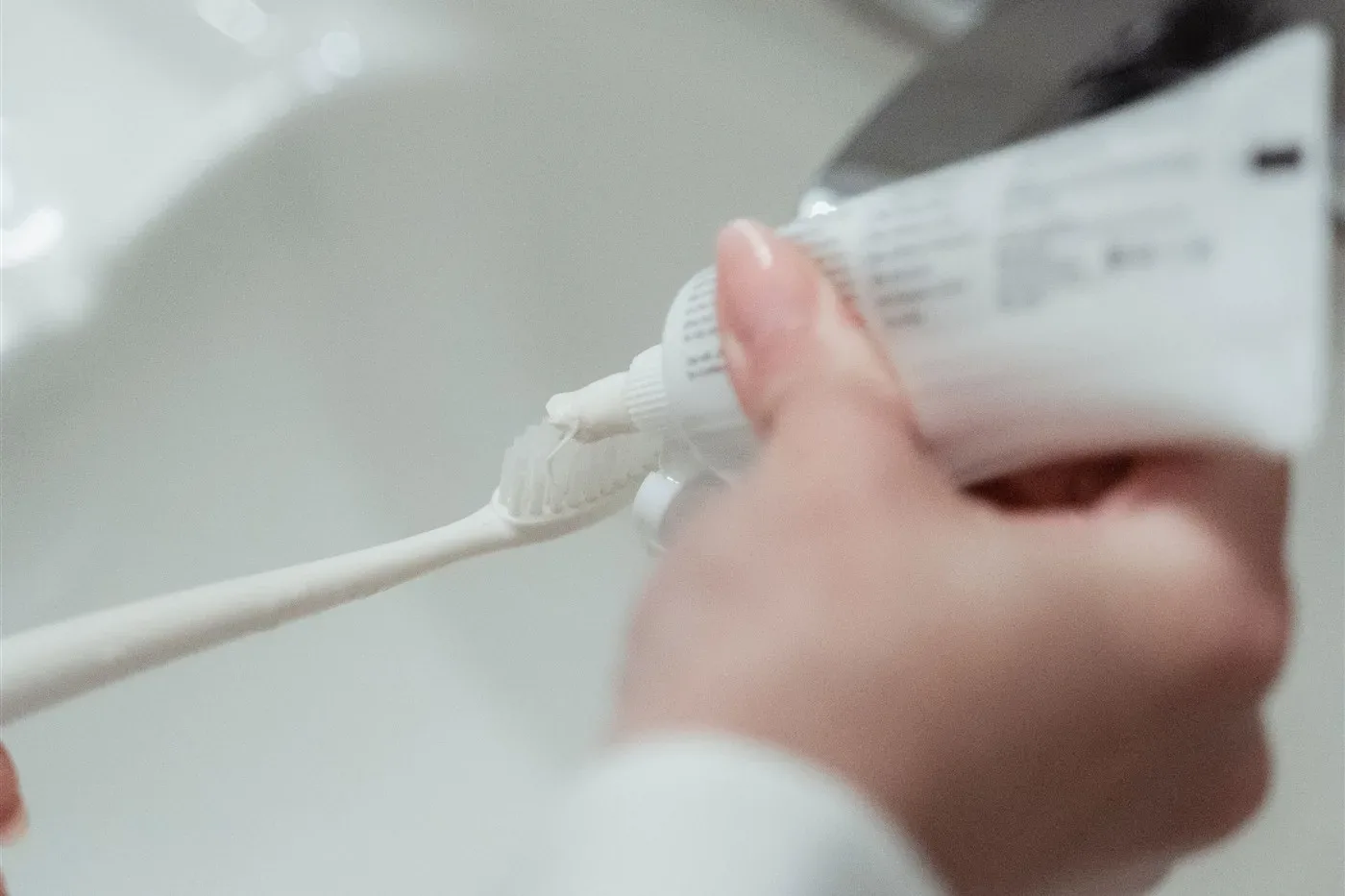
When choosing a toothpaste, many people notice the word fluoride on the box and begin to wonder: is fluoride good, is it toxic, and is it safe for small children? This article gives short and easy answers.
What does fluoride do for the teeth?
Fluoride is a mineral that helps make enamel stronger and more resistant to the acids from food and the damage caused by bacteria. It also gives areas of enamel that have just lost minerals a chance to take them back, which lowers the risk of cavities. This is why most common toothpastes contain fluoride.
Is fluoride safe?
Used in the right amount as directed, fluoride in toothpaste is regarded as safe for adults. The problem usually lies in swallowing too much toothpaste, especially in young children whose teeth are still forming, which can cause white spots or cloudy marks on the enamel. That is why the amount of toothpaste should be controlled and children should be taught to spit it out rather than swallow.
How much toothpaste to use at each age
- Adults: about the size of a little fingertip, brushing twice a day.
- Young children: only a tiny amount, like a grain of rice or a pea. Parents should brush for the child and remind them to spit. For details, see at what age children use toothpaste and how much.
- Do not let a small child hold the tube and brush alone.
A few tips when using fluoride toothpaste
- Spit out the foam after brushing and do not rinse with too much water, so that the fluoride stays on the teeth a little longer.
- Brush properly for at least two minutes, see how to brush correctly every day.
- People who often get cavities or have a dry mouth can ask the dentist about additional fluoride that suits them.
- Mouthwash is only a support and does not replace brushing, see do you need mouthwash.
Still unsure which toothpaste suits your family? You can call the hotline 028.3868.1097 or visit us in person during working hours at 266A - 268, 3 Thang 2 Street, Hoa Hung Ward, Ho Chi Minh City for advice from the dentist.
Frequently asked questions
Is toothpaste without fluoride better?
Toothpaste without fluoride does not help enamel resist cavities in the same way as fluoride toothpaste. Which one to choose depends on your teeth, so please ask the dentist.
Is it a problem if a child swallows some toothpaste?
Swallowing a small amount once in a while is usually not dangerous, but using a lot and swallowing it often is not good. Parents should use only a tiny amount and brush for the child.
Should I rinse with a lot of water after brushing?
It is better to spit out the foam and rinse lightly. Rinsing too much washes away the fluoride that remains on the teeth.