
Many people brush every day and still have bleeding gums, bad breath and tartar. The problem is usually how you brush, not how often.
- Brush twice a day for about 2 minutes each time, and the bedtime brushing matters most.
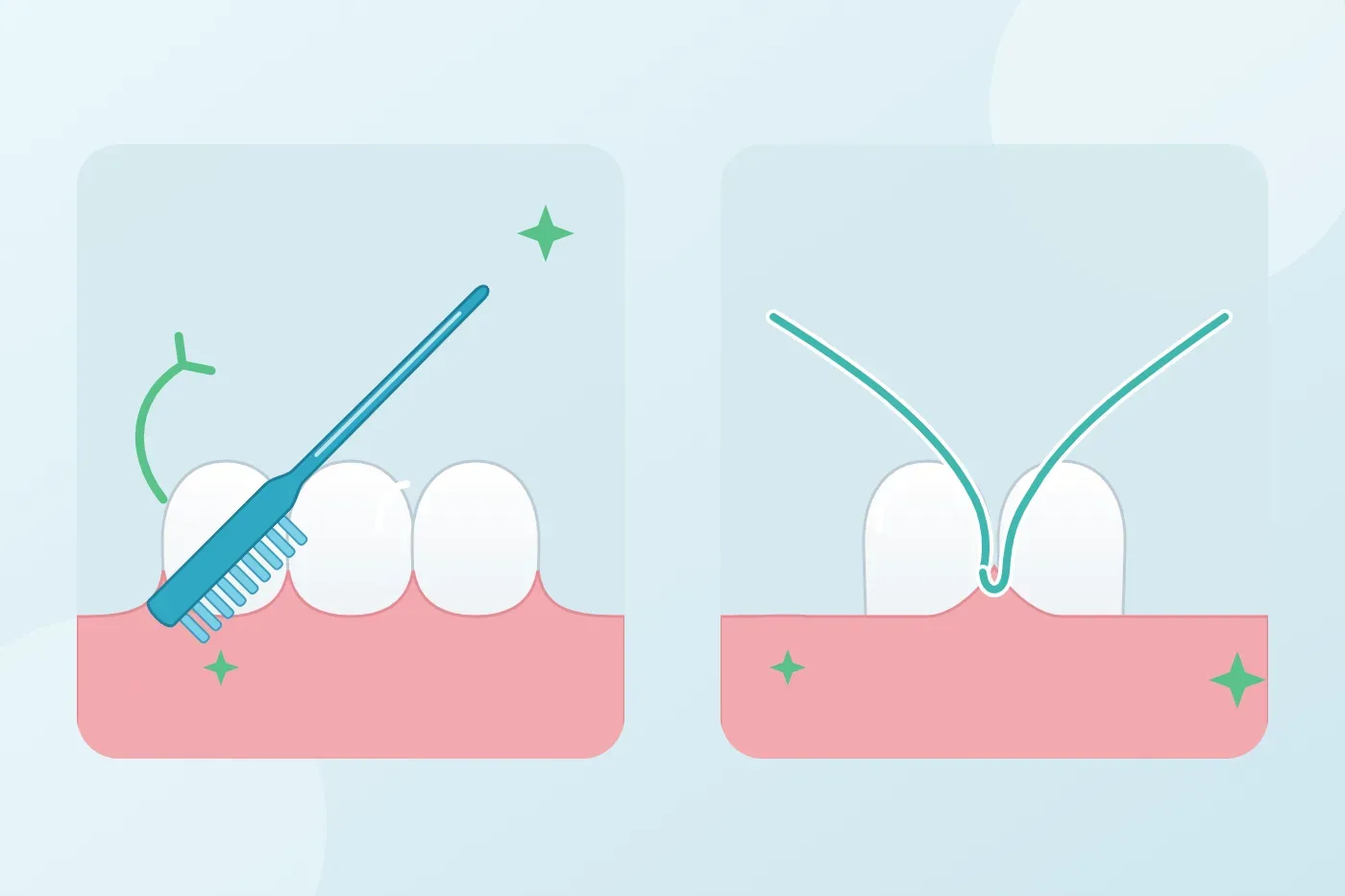
- Use a soft brush tilted about 45 degrees toward the gum line and brush gently in small circles, not hard from side to side.
- Dental floss cleans the gaps that a toothbrush cannot reach, so use it once a day.
- Correct brushing does not replace regular check-ups, because hardened tartar can only be removed at the clinic.
Almost everyone brushes daily, yet at the check-up we still find tartar, inflamed gums and cavities between the teeth. The usual reason is brushing the wrong way: too hard, too fast, or skipping the spots where plaque likes to collect. This article keeps it short and easy to follow at home.
How many times a day and for how long should you brush?
You should brush twice a day, about 2 minutes each time: once in the morning and once before bed. The bedtime brushing matters most, because saliva flow drops at night and bacteria multiply on any plaque left behind.
Brushing longer does not mean cleaner teeth. What counts is covering every surface: the outer, inner and chewing surface of each tooth, instead of only the outer side you can see.
Steps for brushing correctly
- Choose a soft-bristled brush with a small head that reaches the back teeth. Hard bristles can wear down the necks of the teeth and cause gum recession.
- Tilt the brush about 45 degrees toward the gum line so the bristles reach the spot where tooth meets gum, where plaque builds up most.
- Brush gently in small circles or with a light vibrating motion, 2-3 teeth at a time, without scrubbing hard from side to side.
- For the inside of the front teeth, hold the brush upright and sweep from the gum down toward the tooth.
- Brush the chewing surfaces back and forth, then gently brush your tongue to reduce the bacteria that cause bad breath.
A pea-sized amount of toothpaste is enough. Hold the brush like a pen and use light pressure. If the bristles splay out quickly, you are brushing too hard. Replace your brush about every 3 months, or sooner once the bristles bend or flare.
Is dental floss really necessary?
Yes. A brush cleans the tooth surfaces, but the contact area between two teeth makes up a significant part of the tooth surface and the bristles barely reach it. This is where cavities between teeth and gum inflammation often begin.
How to use it: take a piece about 40 cm long, wind it around your two middle fingers, slide it gently past the contact point between two teeth, then hug the side of the tooth in a C shape and move it up and down. Do not snap the floss down onto the gum, and use a clean section for each gap. Once a day, in the evening, is a reasonable routine.
In the first few days of flossing, the gums may bleed slightly because they are already inflamed. If the bleeding continues after several days of regular flossing, please get checked, and read why gums bleed and what it means. People with gaps between teeth, bridges or implants may also use interdental brushes or a water flosser, and the dentist will advise which one suits you.
When should you see a dentist even if you brush regularly?
Correct brushing reduces plaque but cannot replace regular check-ups, because once tartar has hardened a toothbrush cannot remove it. Please come in if you have long-lasting bleeding gums, persistent bad breath, tooth sensitivity, swollen or receding gums, or if it has been a long time since your last scaling. See also whether scaling hurts and everyday habits that harm your teeth.
You are welcome to walk in during working hours at Nha Khoa Kỳ Hòa, 266A - 268, Đường 3 Tháng 2, Phường Hòa Hưng, Ho Chi Minh City, or call the hotline 028.3868.1097 to ask about quieter hours first.
Frequently asked questions
Should I rinse with lots of water right after brushing?
Spit out the toothpaste foam and rinse only lightly, once. Rinsing with a lot of water straight away washes off the thin layer of toothpaste left on your teeth.
Should I brush right after eating?
After sour food or fizzy drinks, enamel is temporarily softer. Wait about 30 minutes before brushing to avoid wearing it down.
Should I stop brushing if my gums bleed?
No. Keep brushing gently and clean along the gum line, and the bleeding usually eases as the gums calm down. If it lasts more than 1-2 weeks, please get checked.
Is an electric toothbrush better than a manual one?
Both work if you use the right technique for long enough. An electric brush can help people who find it hard to grip a brush, but you still need floss for the gaps between teeth.