
Many people hesitate over a porcelain crown only because they fear the tooth has to be ground down. Understanding why it is done and how far it goes helps you decide with more confidence.
- The tooth is numbed before preparation for a crown, so it usually hurts little and may be sensitive for a few days afterwards.
- The dentist removes a suitable layer for the crown, and the amount differs for each tooth and type of porcelain.
- The removed tooth layer does not grow back, so consider carefully and ask about more conservative options.
- Spontaneous pain, pain when biting or sensitivity lasting weeks needs a return visit.
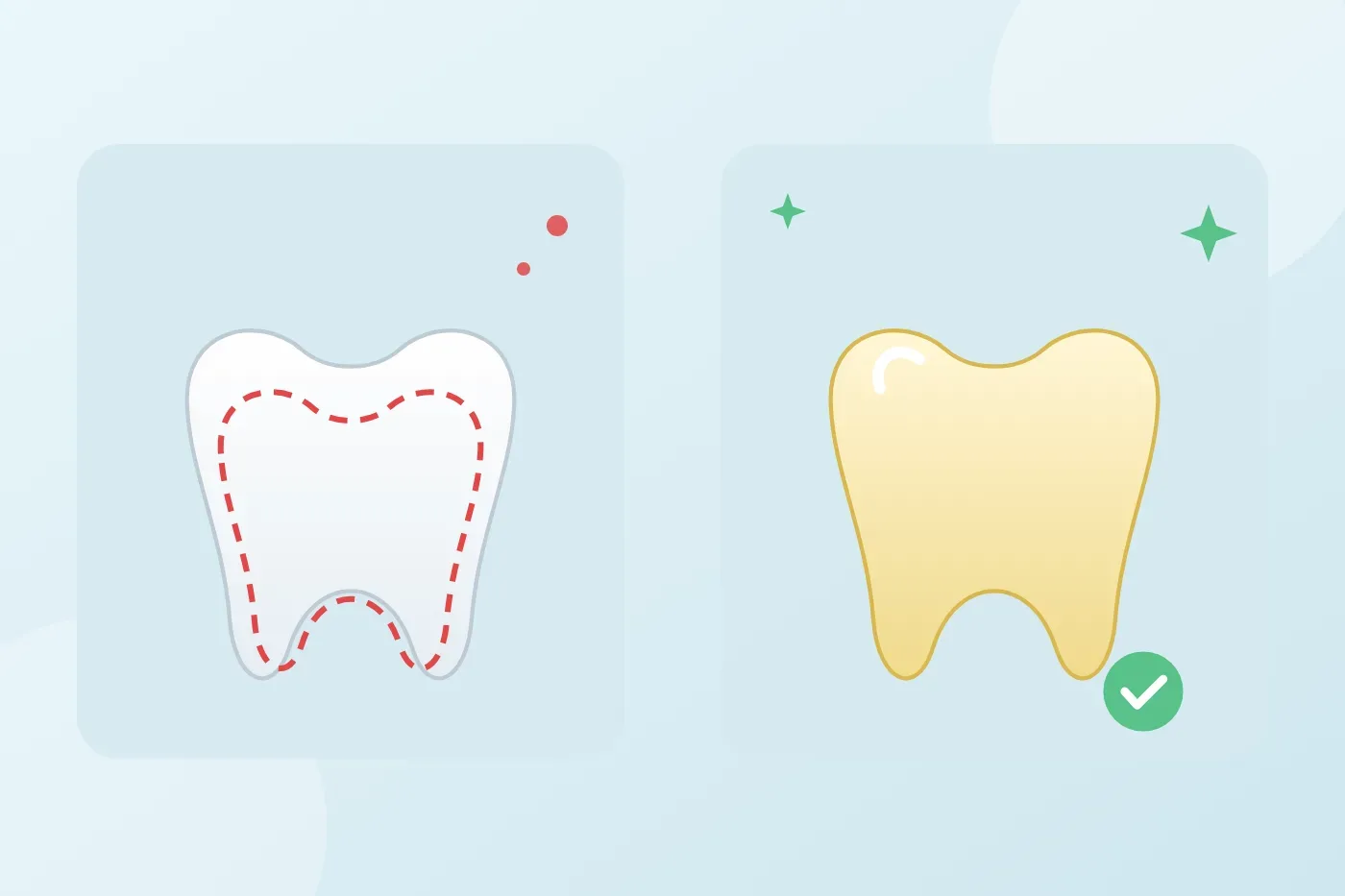
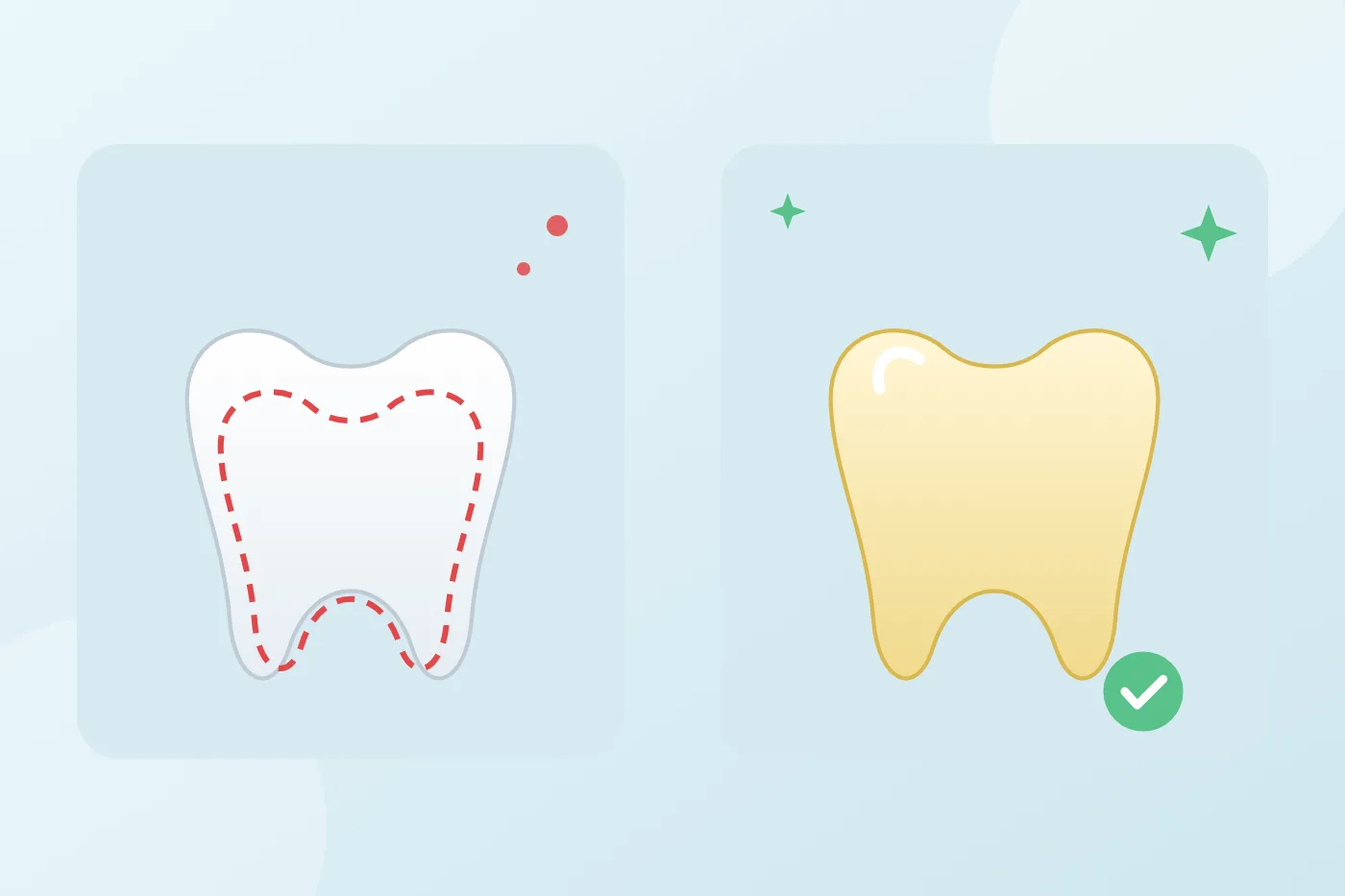
A porcelain crown is a cap that fits over the tooth. To make room so it fits snugly and the tooth does not end up bulkier, the dentist has to remove a layer of tooth tissue.
Does preparing the tooth hurt?
It usually hurts little because the tooth is numbed before it is prepared. You may feel vibration and hear the drill, but not sharp pain. Once the numbness wears off, some people feel sensitivity for a few days. If the tooth was already sensitive or inflamed, there may be more discomfort.
How is it done and how much is removed?
- The dentist examines and takes X-rays to check the pulp, root and gum first.
- A suitable layer is removed for the crown; the amount differs for each tooth and each type of porcelain.
- An impression is taken to make the crown.
- A temporary crown is fitted to protect the tooth and keep its appearance while you wait.
- The final crown is fitted and the bite adjusted.
The tooth layer that has been removed does not grow back. So this is a decision to consider carefully, especially for a tooth that is still fairly intact. See does a porcelain crown harm the tooth and filling or porcelain crown.
What should you ask the dentist before starting?
- Does my tooth really need a crown, or is there a more conservative option?
- Roughly how much will be removed and could it affect the pulp?
- The timeline, the temporary crown, the steps and follow-up checks.
- How to care for the crown and the cost. See how to read a crown price list and the price page.
Please note that porcelain crowns for cosmetic purposes are not covered by health insurance.
When should you go back?
If after preparation or fitting the tooth aches by itself, hurts to bite, stays sensitive for weeks, or the gum around it is swollen and sore, go back so the dentist can check. You can visit in person during working hours at 266A - 268, Đường 3 Tháng 2, Phường Hòa Hưng, Ho Chi Minh City, or call the hotline 028.3868.1097 (Zalo 082.299.3377) to ask about quieter hours.
Frequently asked questions
Does tooth preparation for a crown hurt?
It usually hurts little because the tooth is numbed first. After the numbness wears off, some people are sensitive for a few days, especially if the tooth was already sensitive or inflamed.
Does the ground tooth grow back?
No. The tooth tissue that has been removed does not grow back, so a crown should be considered carefully, especially for a fairly intact tooth.
Are porcelain crowns covered by health insurance?
Porcelain crowns for cosmetic purposes are not covered by health insurance. Ask staff when you visit to confirm what applies.