
Plaque is a soft, sticky layer of bacteria that forms every day and can be brushed away. Left too long, it absorbs minerals from saliva and hardens into tartar, which can only be removed with dental instruments.
- Plaque is a soft layer of bacteria that forms every day and can be brushed away.
- Plaque left too long hardens into tartar that sticks firmly to the teeth.
- Tartar cannot be brushed off and needs removal with instruments at a clinic.
- Daily brushing, flossing and regular scaling help keep gums healthy.
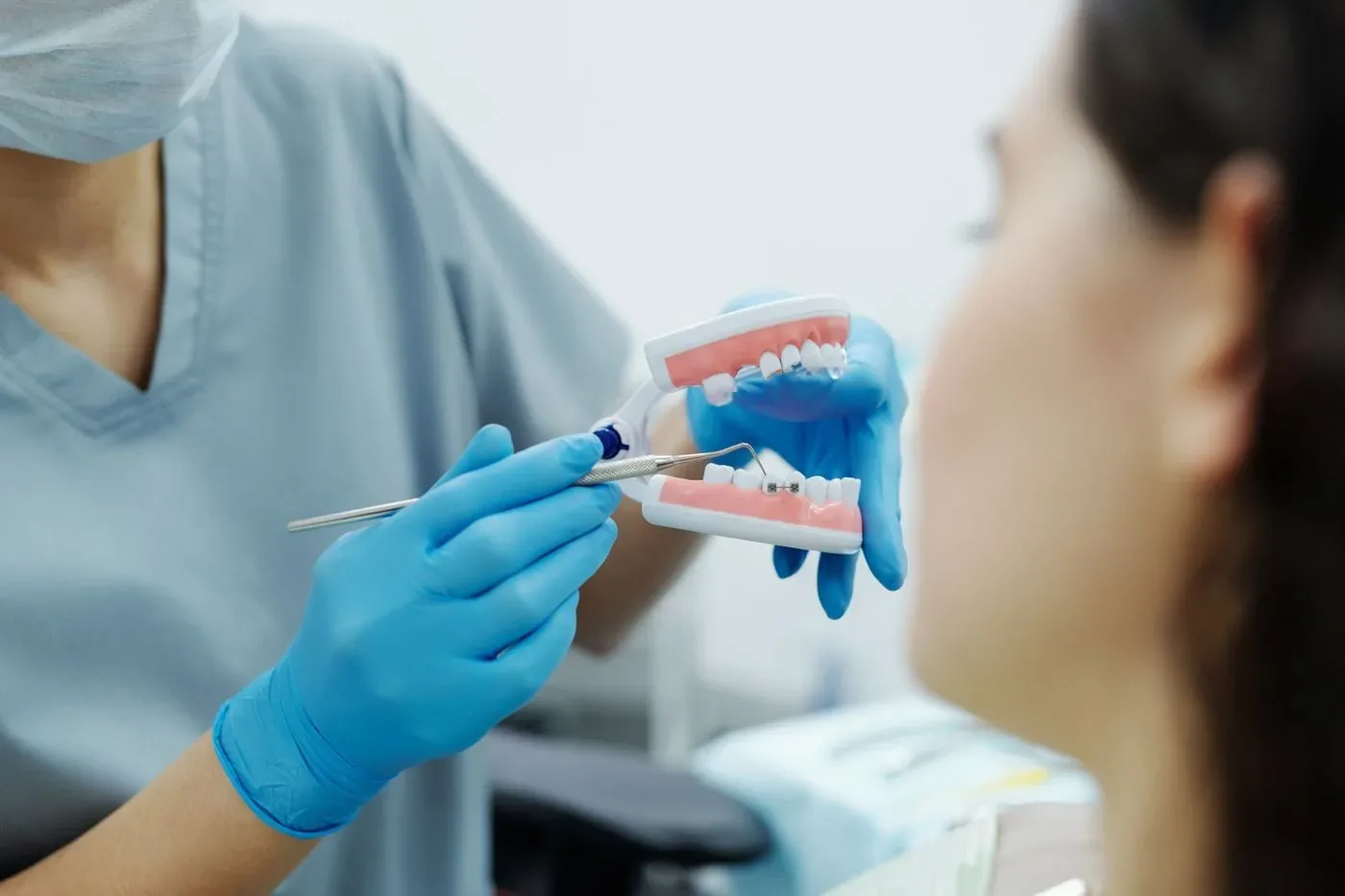
Many people brush carefully yet still see a hard yellow layer on the inside of their lower front teeth that never seems to come off. Understanding the difference between plaque and tartar helps you know what you can do at home and what needs a visit to the dentist.
What is dental plaque?
Plaque is a thin film, cloudy white or pale yellow, made up of millions of bacteria living with food debris and sticky substances from saliva. It starts to form again just a few hours after brushing. You can feel it as a rough, slimy coating on your teeth in the morning.
Bacteria in plaque ferment sugar into acid that causes decay, and they also irritate the gums, leading to inflammation and bleeding. The good news is that plaque is soft, so it can be removed with a toothbrush and floss.
What is tartar?
Plaque that is not cleaned away absorbs calcium and phosphate from saliva, starts to harden within a few days and becomes tartar, also called calculus. Tartar sticks firmly to the tooth surface and is yellow, brown, or black when below the gum line.
- Tartar above the gum line: easy to see, often on the inside of the lower front teeth and the outside of the upper molars, near where the salivary glands open. See tartar on the inside of the lower front teeth.
- Tartar below the gum line: sits in the gum pocket, is hard to see and is closely linked to gum disease.
Why can brushing not remove tartar?
Tartar is hard and firmly attached, like limescale inside a kettle. Toothbrushes, floss and mouthwash cannot dislodge it. Its rough surface also lets new plaque stick faster, creating a cycle of gum inflammation. Do not try to pick it off with toothpicks or metal objects, as this can injure the gums and scratch the enamel.
Tartar needs to be removed at the clinic with an ultrasonic scaler and hand instruments, followed by polishing. See does scaling hurt.
How to limit tartar build-up
- Brush twice a day for about two minutes each time, paying attention to the gum line and the inner surfaces. See how to brush properly.
- Floss every day to clean between the teeth.
- Cut down on sweets and sugary drinks and stop smoking.
- Have professional scaling about every six months; people who build tartar quickly may need it more often. See why tartar comes back quickly.
Nha Khoa Ky Hoa is at 266A - 268, 3 Thang 2 Street, Hoa Hung Ward, Ho Chi Minh City. Hotline 028.3868.1097, Zalo 082.299.3377 to ask about quieter times.
Frequently asked questions
How can I tell if I have tartar?
Tartar is usually a hard yellow or brown layer along the gum line that feels rough to the tongue and does not brush off. Tartar below the gums can only be seen at a dental examination.
Does tartar-control toothpaste dissolve tartar?
No. It only slows the formation of new tartar and does not dissolve tartar that is already there.
Does scaling create gaps between teeth?
No. The gaps were there before but were filled with tartar. The gums tighten again once the inflammation settles.