
The word extraction puts many people on edge, partly from fear of pain and partly from worry about whether the instruments are truly clean. This article walks through exactly how an extraction is carried out, from the moment you sit down in the chair to the moment you leave.
- An extraction is minor surgery leaving an open wound, so infection control is a compulsory part of clinical practice rather than a matter of appearances.
- A safe extraction begins before any instrument is picked up: identifying the correct tooth, imaging where needed, asking about underlying conditions and medication, and checking blood pressure in older adults.
- Instruments go through a closed cycle of cleaning, packaging and autoclaving, and you are free to watch whether the pack is opened fresh in front of you.
- Ky Hoa Dental sits within a general medical centre, so blood pressure checks, tests, imaging and a joint consultation with an internal medicine doctor can all be done on the spot in the same visit.
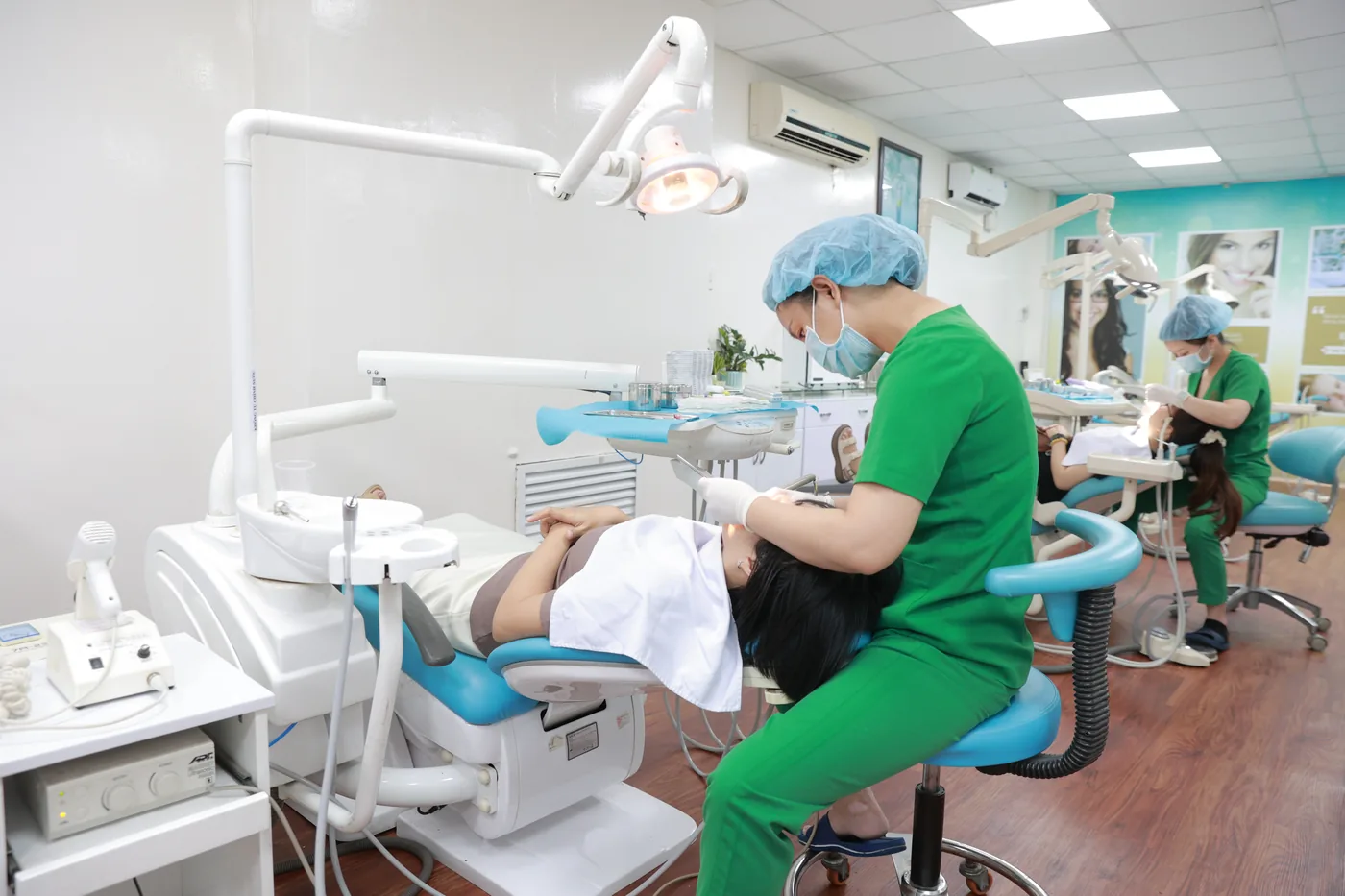
An extraction is minor surgery, meaning it involves living tissue and leaves an open wound. The two things people worry about, pain and infection, are therefore entirely reasonable concerns, and they are precisely what the clinical protocol is built to control. Here Ky Hoa Dental walks through the steps of an extraction, so you know what to expect and feel less tense in the chair.
Why does sterile technique matter so much in extractions?
The mouth carries a great many bacteria, even in a healthy person. Removing a tooth creates an open socket connecting to the jawbone beneath. If instruments or technique are not clean, bacteria have a route deeper in, leading to infection of the socket, prolonged swelling and pain, and slow healing.
Infection control is therefore not a matter of appearances but a compulsory part of clinical practice. It runs on three parallel tracks: instrument processing, preparation of the surgical field on the patient, and hygiene within the team. Neglect one and the other two cannot be complete either.
Before the extraction: examination, imaging and health assessment
A safe extraction begins well before any instrument is picked up. The dentist will:
- Examine and identify the correct tooth, assessing how far the decay or fracture goes, how loose it is and the state of the surrounding gum.
- Take an x-ray where needed to see the shape of the roots and the position of the tooth relative to the sinus and the nerve canal, particularly for impacted or partly erupted wisdom teeth. Imaging is what lets the dentist anticipate whether the case will be simple or complex.
- Ask about your medical history and current medication. People tend to skim over this step, yet it is very important. If you take anticoagulants, or are being treated for diabetes, heart disease or high blood pressure, or are pregnant, you must tell the dentist.
- Check blood pressure and arrange tests where indicated, which usually applies to older adults or anyone with an underlying condition.
- Explain the procedure and state the cost before starting, so you understand what is about to happen and can plan financially.
For anyone with an underlying condition, this assessment step does a great deal to determine how safe the extraction will be. For details, see our article on tooth extraction for patients with heart disease or diabetes.
How are instruments sterilised?
This part happens in a back room, so patients rarely see it, but it is worth knowing about. After every case, the extraction instrument set goes through a closed cycle:
- Initial cleaning: instruments are soaked in disinfectant solution and washed free of blood and tissue, because any residue left behind would shield bacteria from the sterilisation that follows.
- Thorough rinsing and drying before packaging.
- Packaging and sterilisation in an autoclave, typically pressurised steam. Each pack carries a colour-change indicator showing whether the cycle reached its parameters.
- Storage, with the pack opened in front of the patient. You are entirely free to watch whether the instrument pack is opened fresh at the chairside.
- Single-use items for things such as anaesthetic needles, saliva ejectors, gloves, masks and drapes, which are discarded after use and never reused.
On the team's side, the dentist and assistant wash their hands to protocol, wear gloves, masks and eye protection, and change gloves between patients. The chair, light, handpiece and worktops are also disinfected between cases.
The steps of an extraction
Once everything is ready, the extraction proceeds in this order:
- Disinfecting the mouth. You are given an antiseptic rinse, after which the dentist disinfects the gum around the tooth and places sterile drapes.
- Anaesthesia. Local or regional anaesthetic is given depending on the position of the tooth. You will feel some pressure as it goes in, then the lip, cheek and tongue gradually go numb. The dentist always tests the anaesthesia before beginning.
- Separating the gum and loosening the tooth. The dentist gently separates the gum attached around the neck of the tooth, then eases the tooth loose from its socket.
- Removing the tooth. With an impacted wisdom tooth or complex roots, the dentist may divide the tooth into smaller sections to remove it gently rather than pulling hard in one go.
- Cleaning the socket. Any remaining inflamed tissue is removed, the socket is irrigated, and it is checked for any retained root fragments.
- Controlling bleeding and suturing if needed. You bite on gauze to stop the bleeding, and some cases need a few stitches to bring the gum edges together.
Throughout the procedure you should feel numbness and pressure rather than sharp pain. If anything feels uncomfortable, raise your hand so the dentist can stop and address it rather than enduring it. How much you feel varies with the state of the tooth and with each person, and an impacted wisdom tooth usually takes longer than a routine extraction.
After the extraction: instructions and follow-up
Aftercare accounts for about half of whether the wound heals smoothly. Before you leave, the dentist will advise you to:
- Bite firmly on the gauze for about 30 to 45 minutes so the bleeding stops, without taking it out repeatedly to look.
- Apply a cold compress to the outside of the cheek during the first few hours if there is swelling, about 15 minutes at a time with breaks.
- Wait until the numbness has gone before eating, choosing cool soft food and chewing on the opposite side. For the first two days avoid vigorous rinsing, straws, tobacco and alcohol.
- Take your medication exactly as prescribed, without stopping or increasing the dose on your own.
- Attend the follow-up or suture removal at the appointed time if stitches were placed.
For eating in detail, see our article on what to eat after a tooth extraction. Please contact the clinic if heavy bleeding has not stopped after biting on gauze for more than an hour, if pain increases after 2 to 3 days along with an unpleasant smell from the socket, or if there is marked swelling, fever or difficulty opening your mouth.
Tooth extraction at Ky Hoa Dental
Ky Hoa Dental is the dental specialty department of Ky Hoa Medical Center, operating under licence No. 00449/HCM-GPHĐ, at 266A - 268, Duong 3 Thang 2, Hoa Hung Ward, Ho Chi Minh City. Because we sit within a general clinic, blood pressure checks, laboratory tests, imaging or a joint consultation with an internal medicine doctor before an extraction can all be done on the spot in the same visit. That matters for older adults and anyone living with an underlying condition.
Where a tooth must be removed because of disease, you can use your health insurance card to reduce the cost; details are in our article on whether health insurance covers tooth extraction. To read more, visit our tooth extraction service page or call our Hotline 028.3868.1097 or message Zalo 082.299.3377 during opening hours, Monday - Saturday, 06:30 - 17:00 (closed Sunday).
Having a tooth out sounds daunting, but with a careful examination, proper imaging and correct sterile technique it is a routine procedure. If you are unsure whether to keep a tooth or have it removed, come in so the dentist can assess it directly and advise on the approach that suits your situation.
Frequently asked questions
Is having a tooth out dangerous?
An extraction is routine minor surgery, but it still calls for a careful examination beforehand, imaging where indicated and an assessment of your general health. Do tell the dentist about any underlying conditions and current medication, particularly anticoagulants, so they can weigh up the right approach.
How can I tell that the extraction instruments have been sterilised?
The instrument set is cleaned, packaged and then autoclaved, and the pack carries a colour-change indicator showing that the cycle reached its parameters. You are entirely free to watch whether the pack is opened fresh in front of you, and items such as anaesthetic needles, saliva ejectors and gloves are all single-use.
How long does an extraction take?
It depends on the case. A loose tooth or a simple root is usually quick, while an impacted or partly erupted wisdom tooth that needs sectioning takes longer and may require stitches. After examining you and taking an x-ray, the dentist will estimate and let you know in advance.