
Many parents think baby teeth will fall out anyway so decay does not matter. In fact decayed baby teeth can cause pain, infection and affect the permanent teeth, so they need to be checked and treated in time.
- Decayed baby teeth still need treatment because they hold space for permanent teeth and severe decay can cause pain and infection.
- Mild decay needs only a filling, decay reaching the pulp may need root canal treatment of the baby tooth, and very severe decay or an abscess usually means extraction.
- Chalky or brown spots, small holes, sensitivity when eating or a child who cries are signs to see a dentist.
- Helping children brush, limiting sweets before bed and a check-up every six months help prevent decay.
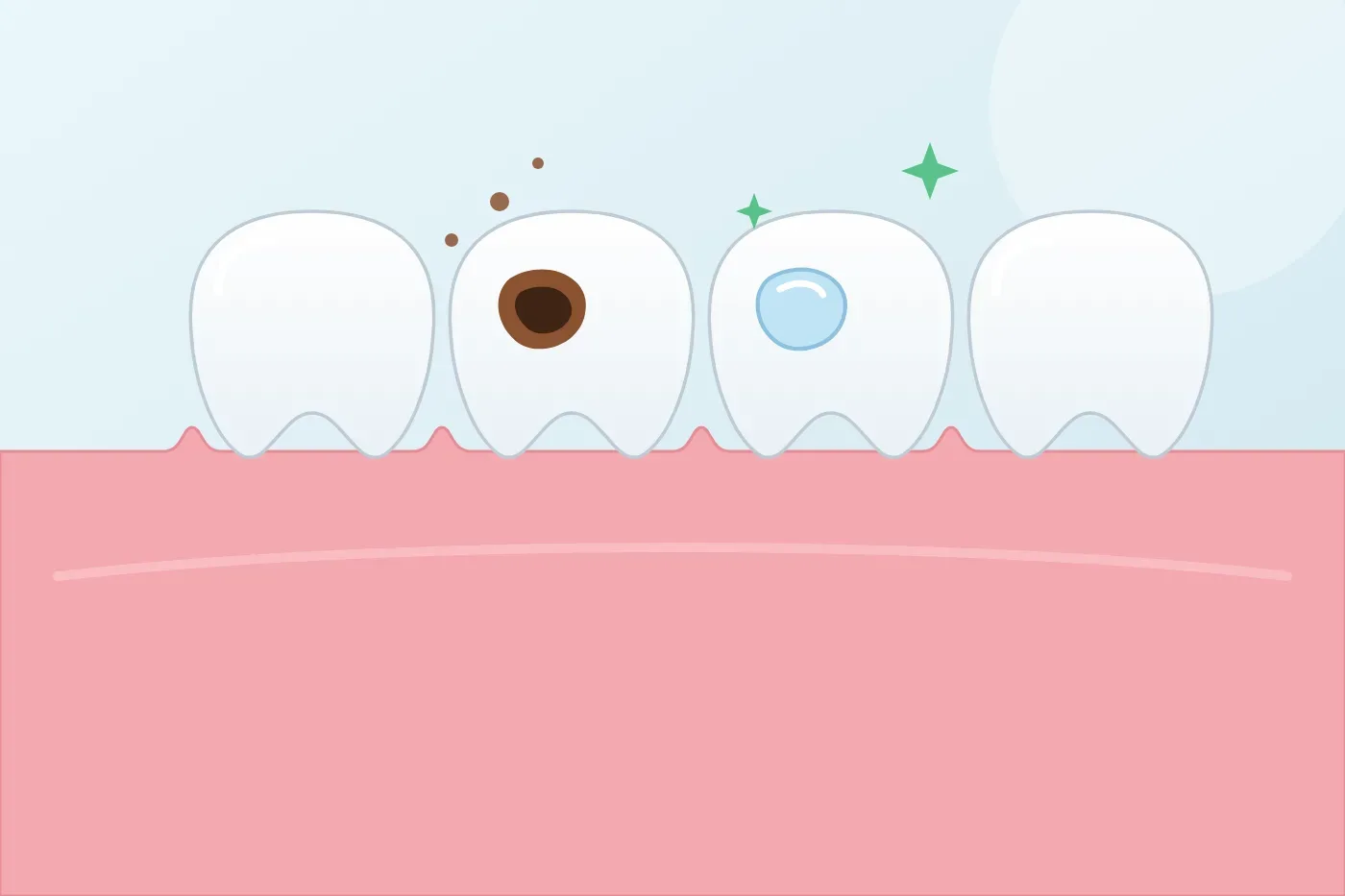
Baby teeth fall out and are replaced by permanent teeth, so many parents believe decayed baby teeth do not need treatment. This thinking can leave a child in pain for a long time and affect the permanent teeth later. This article helps parents understand why treatment is needed and what it involves.
Why should decayed baby teeth still be treated?
- They hold space for permanent teeth: losing a baby tooth too early lets neighboring teeth drift in and permanent teeth may come in crooked.
- The child hurts and eats poorly: decay that reaches the pulp causes pain and sensitivity, so the child refuses food and sleeps badly.
- Infection can spread: an abscessed baby tooth can affect the permanent tooth bud underneath.
- Chewing and speech can be affected when many teeth are lost.
Signs of decay in baby teeth
- Chalky white, brown or black spots on the teeth.
- Small holes where food often gets stuck.
- The child complains of sensitivity or pain with hot, cold or sweet food.
- The child refuses food, cries or sleeps badly.
See also decay in children: what parents can do to protect their teeth.
Treating decayed baby teeth by severity
- Mild decay: the decayed part is cleaned out and the tooth filled. This is simple and usually gentle for the child.
- Decay reaching the pulp: the dentist may do root canal treatment on the baby tooth to keep it until it falls out.
- Very severe decay or an abscess: the tooth may have to be pulled. See does pulling a baby tooth hurt.
How to prevent decay in baby teeth
- Help your child brush twice a day until they can do it well themselves.
- Limit sweets, soft drinks and candy, especially before bed.
- Take your child for a check-up every six months. See when should a child first see a dentist.
- Ask the dentist about sealing the grooves of the molars. See what is fissure sealing for children.
Children's dental care at Ky Hoa
For health insurance coverage for children and costs, see the health insurance dental page and the price page.
Nha Khoa Ky Hoa is at 266A - 268, 3 Thang 2 Street, Hoa Hung Ward, Ho Chi Minh City. You can bring your child in during working hours, or call the hotline 028.3868.1097 (Zalo 082.299.3377) to ask about quieter hours first.
Frequently asked questions
Does decay in baby teeth go away by itself?
Decay does not heal by itself and tends to go deeper. A decayed baby tooth should be checked and treated early so the child has less pain and the permanent teeth are not affected.
Does filling a baby tooth hurt?
Filling a baby tooth is a gentle procedure. The dentist cleans out the decay and fills the tooth, using local anesthetic if the tooth is sensitive. Parents can explain calmly to help the child feel less afraid.
Does a badly decayed baby tooth always have to be pulled?
Not always. The dentist may treat the pulp of the baby tooth to keep it, while a tooth that is too badly damaged or abscessed usually has to be pulled.
How can I prevent decay in my child's baby teeth?
Help your child brush twice a day, limit sweets especially before bed and take them for a check-up every six months.