
Cervical tooth wear is the gradual loss of enamel and dentin where the tooth meets the gum, leaving a wedge-shaped or saucer-shaped notch that often causes sensitivity. This article helps you recognise it early, understand the causes and know when to see a dentist.
- Cervical tooth wear is the gradual loss of enamel and dentin at the gum line, leaving a wedge or saucer-shaped notch that often causes sensitivity.
- Common causes are wrong brushing technique, grinding, acid, receding gums and age.
- Lost enamel and dentin do not grow back, so treatment aims to reduce sensitivity, prevent further wear and fill the notch when needed.
- Gentle brushing with a soft brush, limiting acidic drinks and regular check-ups help prevent it.
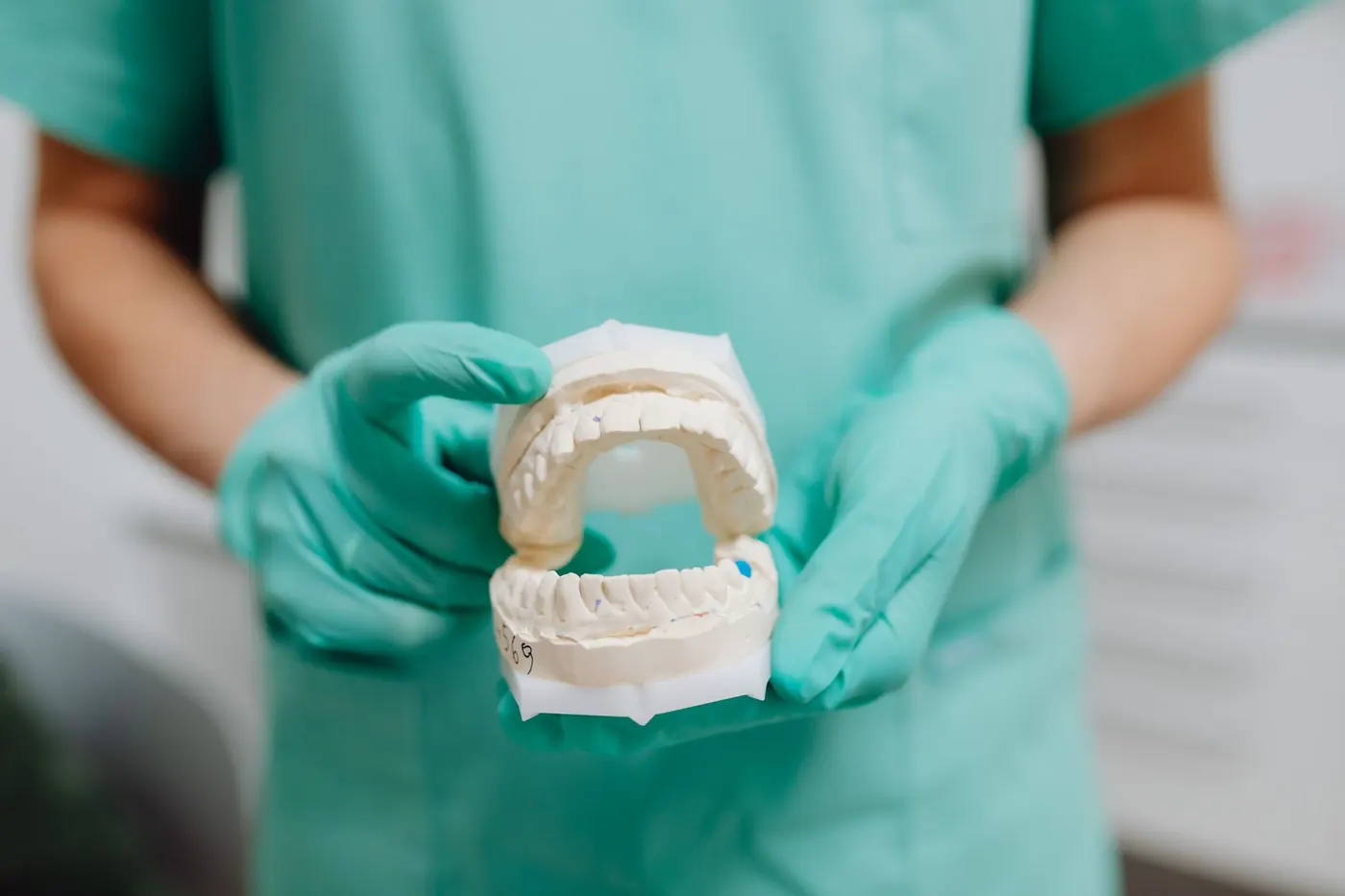
Many people brush carefully every day yet still feel sensitivity with cold drinks, and when they look in the mirror they notice a groove right at the base of a tooth. This may be cervical tooth wear, a fairly common condition in adults and older people.
What is cervical tooth wear?
The neck of the tooth is the part right next to the gum line, where the enamel is thinnest. When enamel and part of the dentin in this area wear away, a wedge-shaped (V-shaped) or saucer-shaped notch appears on the outer surface of the tooth. This notch is not tooth decay, but if left alone it deepens and easily causes sensitivity.
Why do teeth wear at the neck?
It is usually a combination of several factors rather than a single cause:
- Brushing the wrong way: scrubbing sideways, pressing hard or using a hard-bristle brush for a long time wears enamel and dentin at the neck and can push the gum back.
- Grinding or clenching: uneven bite forces put pressure on the neck of the tooth and make enamel flake off. See is grinding your teeth at night harmful.
- Acid: frequent acidic food and drinks, or stomach reflux, weaken the enamel.
- Receding gums: exposed roots have no enamel protection and wear faster. You can read more about periodontal disease.
- Age: teeth naturally wear down after many years of use.
Signs of cervical tooth wear
- Sensitivity to cold drinks, sour food, brushing or cold air. See also what to do about sensitivity to cold.
- A groove or notch at the gum line that catches your fingernail.
- A yellowish tooth neck and roots that look longer because the gum has receded.
- Food easily packs into the notch.
Does it heal by itself and how is it treated?
Enamel and dentin that have been lost do not grow back. So the goal is to reduce sensitivity and stop further wear. Depending on severity, the dentist may advise:
- Changing how you brush, switching to a soft-bristle brush and a toothpaste suitable for sensitive teeth.
- Applying a protective desensitising agent at the clinic.
- Filling the notch when it is deep, very sensitive or traps food. See filling or porcelain crown.
- Treating related causes such as grinding (the dentist may advise a night guard), gum recession or reflux.
- If the wear is so deep that it nears the pulp and causes strong pain, root canal treatment may be needed.
Prevention and when to see a dentist
Brush gently with vertical or small circular strokes using a soft-bristle brush, do not brush right after eating or drinking something acidic, limit acidic drinks and have regular check-ups. If sensitivity lasts more than a few days, or the groove at the base of a tooth keeps getting deeper, see a dentist to check whether it is cervical wear or decay.
You are welcome to walk in during working hours at Ky Hoa Dental Clinic, 266A - 268 Duong 3 Thang 2, Hoa Hung Ward, Ho Chi Minh City, or call the hotline 028.3868.1097 to ask about quieter hours. If you have BHYT, see the BHYT page for the scope of coverage, as cosmetic fillings and porcelain crowns are not covered.
Frequently asked questions
Is cervical tooth wear the same as tooth decay?
No. Cervical wear is loss of enamel and dentin from mechanical or chemical action, while decay is caused by bacteria. However, the notch traps food and can decay later, so an examination is needed to tell them apart.
Can cervical tooth wear heal on its own?
No. Enamel and dentin that are lost do not grow back. Sensitivity can be reduced and further wear prevented by changing how you brush, protecting the notch or filling it as the dentist advises.
Does cervical tooth wear need a filling?
Not always. Shallow wear may only need monitoring and good care. When the notch is deep, very sensitive or traps food, the dentist will advise a filling after an examination.
How should you brush to avoid cervical tooth wear?
Use a soft-bristle brush, brush gently with vertical or small circular strokes and avoid sideways scrubbing and heavy pressure. Do not brush right after eating or drinking something acidic.