
Red or slightly swollen gums, or bleeding when you brush, are common signs of gingivitis. Spotting it early and caring for your gums properly helps them recover and stops it getting worse.
- Gingivitis is gum inflammation caused by plaque, showing as red, swollen gums that bleed when brushing.
- Mild gingivitis can recover if plaque is cleaned well, but once tartar has formed it usually returns and needs scaling.
- Left alone, gingivitis can progress to periodontitis, causing gum recession and loose teeth.
- Correct brushing, flossing, regular scaling and a check-up every six months help prevent gingivitis.
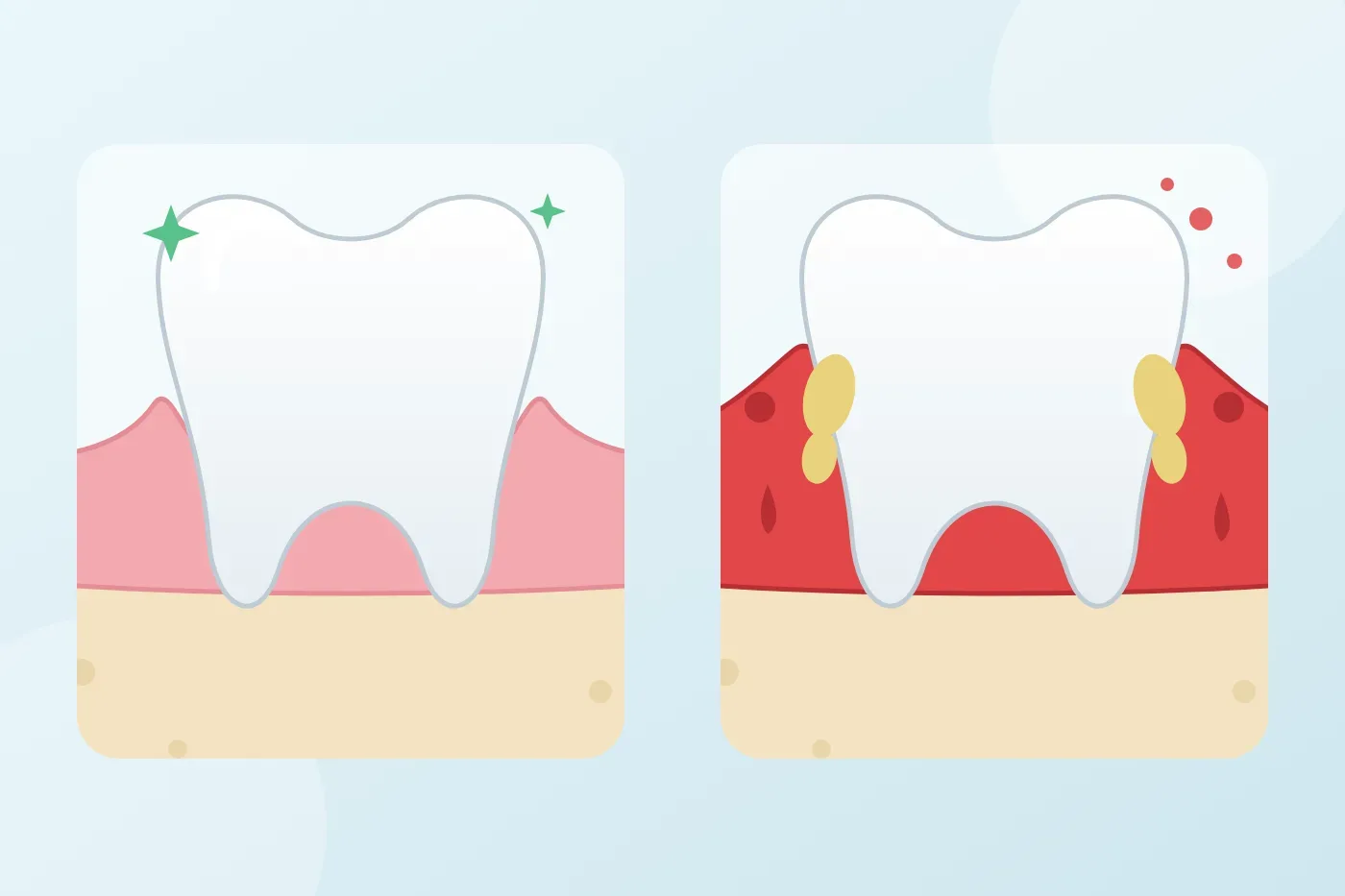
Many people notice red, slightly swollen gums or a little blood when brushing and assume it will pass in a few days. It may be gingivitis, the early stage of gum disease. This article helps you recognize it, understand the causes and know when to see a dentist.
What is gingivitis and what are the signs?
Gingivitis is inflammation of the gums caused by bacteria in plaque that builds up around the neck of the tooth. Common signs include:
- Red, swollen, shiny gums that are sometimes a little sore.
- Bleeding when brushing or flossing.
- Bad breath.
- Soft gums that bleed easily when touched.
At this stage the teeth are not loose and the jawbone is not yet affected.
Why does gingivitis happen?
- Plaque and tartar: the most common cause, from brushing that misses areas or skipping the spaces between teeth.
- Smoking: makes gums inflame more easily and heal more slowly.
- Hormonal changes: for example in pregnancy, when gums swell and bleed more easily.
- Underlying conditions: such as diabetes make gums more prone to infection. See diabetes and gum disease.
- Crooked teeth or overhanging fillings and restorations: they trap food and are hard to clean.
Does gingivitis clear on its own?
If it is mild and you remove plaque well, the gums can recover gradually over a few days to a few weeks. But once tartar has formed, brushing cannot remove it and the inflammation keeps coming back. Left alone, gingivitis can progress to periodontitis, causing gum recession and loose teeth. See can gum disease be treated.
What can I do to get my gums healthy again?
- Brush gently twice a day with a soft brush for about two minutes.
- Floss or use interdental brushes every day to clean between teeth.
- Have tartar removed regularly. See does scaling hurt or the scaling service page.
- Quit or cut down on smoking and keep underlying conditions under control.
When should I see a dentist?
See a dentist if gums bleed for more than one to two weeks, swell and hurt a lot, release pus, give off a foul smell or if teeth start to loosen. You can also read what bleeding gums mean. For health insurance coverage of scaling, see is scaling covered by health insurance.
Nha Khoa Ky Hoa is at 266A - 268, 3 Thang 2 Street, Hoa Hung Ward, Ho Chi Minh City. You can walk in during working hours, or call the hotline 028.3868.1097 (Zalo 082.299.3377) to ask about quieter hours first.
Frequently asked questions
Does gingivitis go away by itself?
Mild gingivitis can recover if plaque is cleaned well, but once tartar has formed it usually returns. Have tartar removed and get checked so the gums can heal.
Is gingivitis dangerous?
It is not dangerous at first, but left for a long time it can progress to periodontitis, causing gum recession and loose teeth, so it is best dealt with early.
Is bleeding when brushing always gingivitis?
Bleeding when brushing is a common sign of gingivitis but can have other causes. If it lasts, see a dentist to find out why.
How can I prevent gingivitis?
Brush correctly twice a day, floss, have tartar removed regularly and get a check-up every six months to catch problems early.