
Clicking in front of the ear when chewing, a tired jaw in the morning or trouble opening wide are signs many people notice. They often involve the temporomandibular joint.
- The temporomandibular joint sits in front of the ear and works every time you chew, talk or yawn.
- Clicking, pain in front of the ear, a tired jaw in the morning and trouble opening wide are common signs.
- Grinding, chewing on one side, missing teeth and an uneven bite are frequent contributing factors.
- A locked jaw, long-lasting pain, swelling or fever should be examined early.
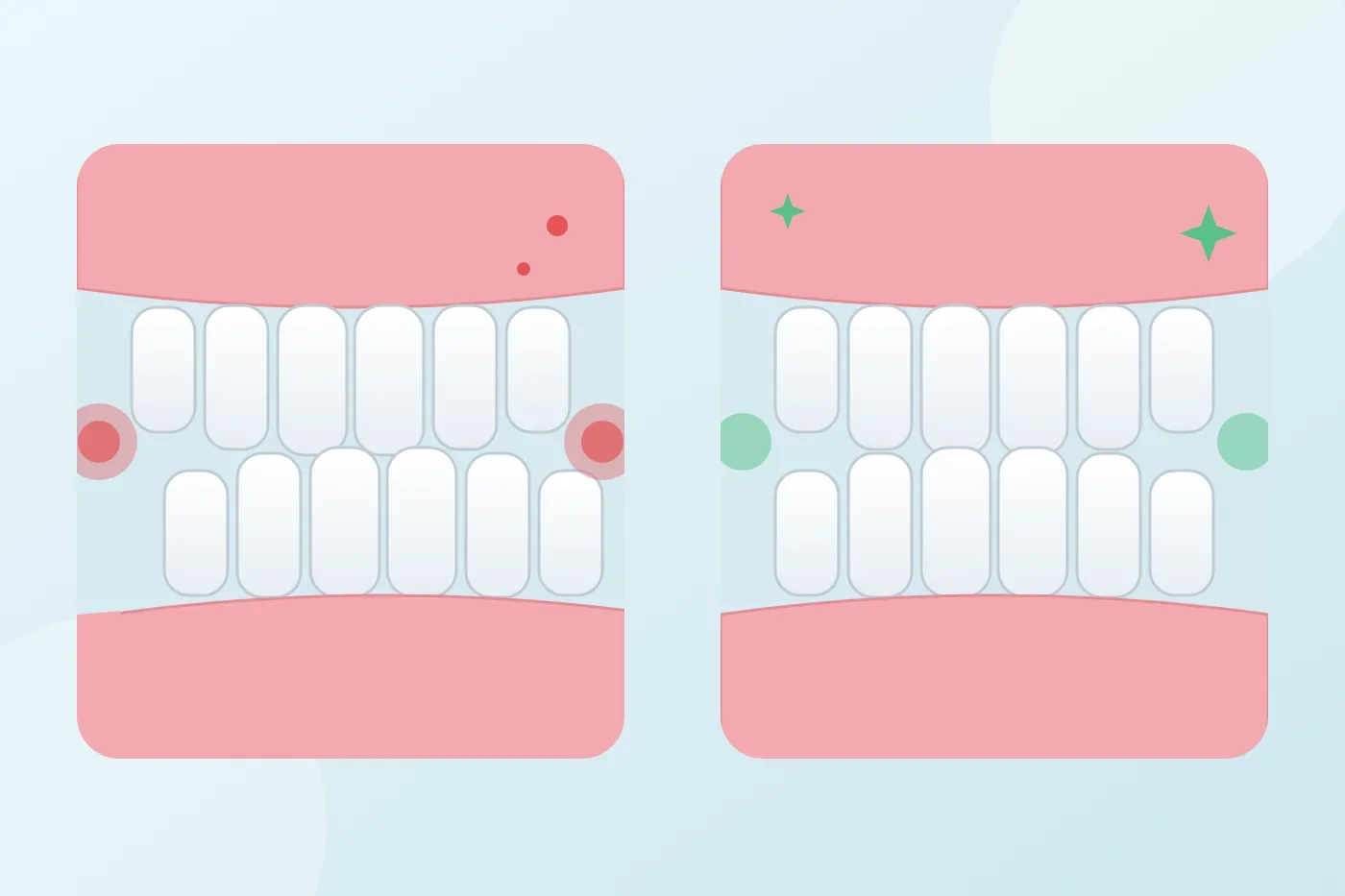
The temporomandibular joint sits right in front of the ear and connects the lower jaw to the skull. It works every time you chew, talk or yawn, so when something is off, you notice it straight away.
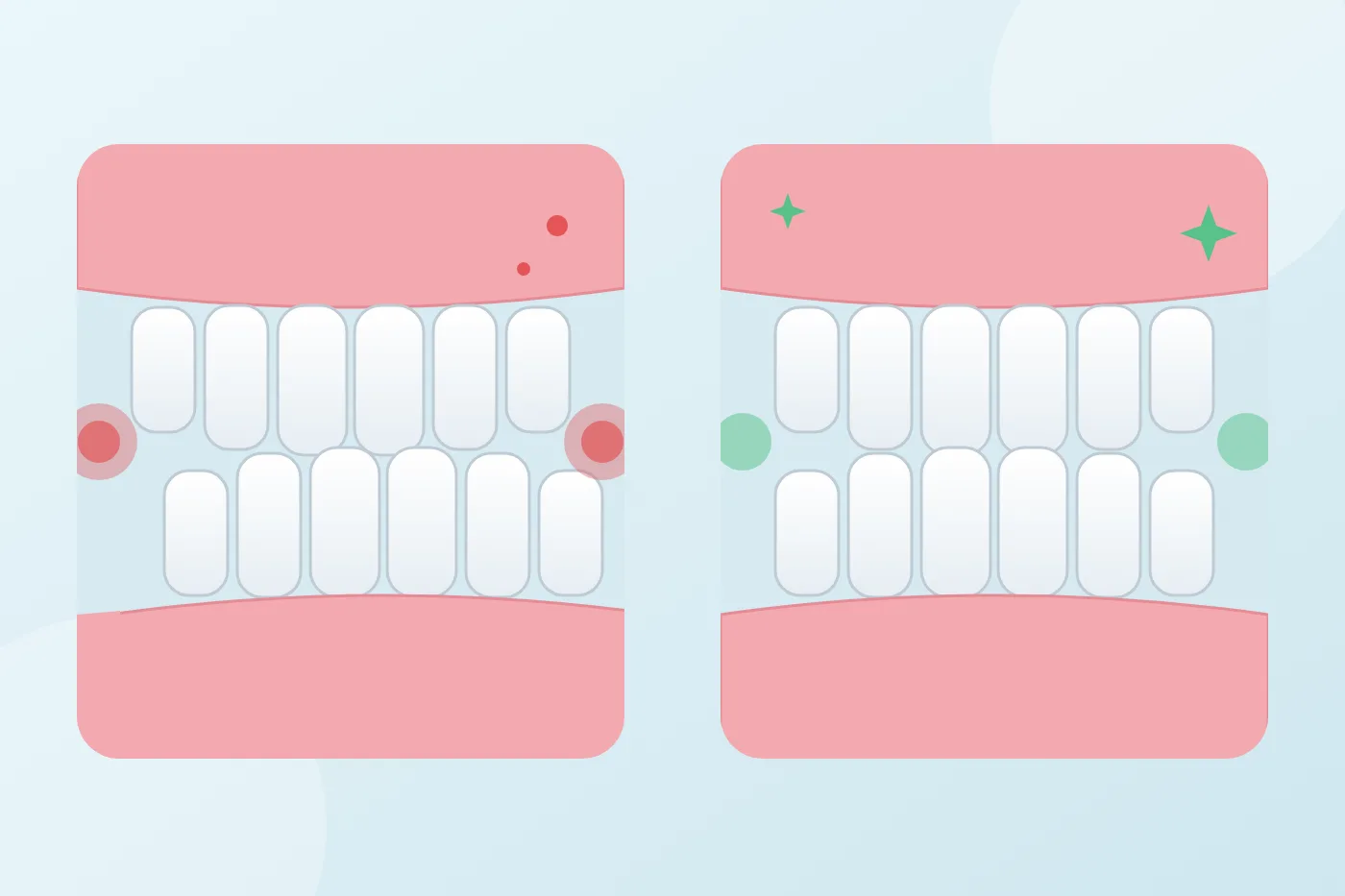
Common signs
- Clicking, popping or catching when chewing or opening wide.
- Pain or tiredness in front of the ear or along the jaw angle, often worse in the morning.
- Difficulty opening wide, or the jaw shifting to one side when opening.
- Headaches, pain around the ear, or a feeling that the teeth do not meet evenly.
Why does the jaw joint have problems?
There is usually no single fixed cause, but a combination of factors:
- Teeth grinding or jaw clenching during sleep or stress.
- Chewing on one side for a long time, often because of a missing or painful tooth.
- An uneven bite from a missing tooth, a tilted tooth or an ill-fitting denture.
- Opening very wide when yawning, laughing or biting large food.
- Injury to the jaw or face area.
If you suspect grinding, you may like to read is grinding your teeth in your sleep harmful.
What can you do at home to ease discomfort?
- Eat soft food for a few days and cut food into small pieces.
- Avoid chewing gum, tough or hard food and opening very wide.
- Apply a warm compress in front of the ear for about ten minutes to relax the muscles.
- Try keeping your lips together but your upper and lower teeth apart, so the jaw muscles can rest.
When should you see a dentist?
Get examined if:
- You cannot open wide, or the jaw locks and will not open.
- Pain lasts more than a few weeks or keeps getting worse.
- The pain comes with swelling, fever or after an injury.
- You think it may be linked to missing teeth, tilted teeth or an ill-fitting denture.
The dentist will check the teeth and the bite, advise a suitable direction, and when needed may suggest a night guard for grinding or coordinate with another specialty. You can visit in person during working hours at 266A - 268, Đường 3 Tháng 2, Phường Hòa Hưng, Ho Chi Minh City, or call the hotline 028.3868.1097 to ask about quieter hours.
Frequently asked questions
Is clicking when opening the mouth without pain a problem?
If it is only a mild click, painless and does not affect eating, it is usually not a concern. If the clicking comes with pain, locking or gets worse, you should be examined.
Can teeth grinding cause jaw joint pain?
It can. Long-term grinding or clenching overloads the jaw muscles and joint, causing tiredness and pain. The dentist can examine you and suggest a night guard when suitable.
When is difficulty opening the mouth serious?
If the jaw locks and will not open, pain lasts or swelling and fever appear, see a dentist early for an assessment.