
Grinding teeth in sleep wears down enamel and causes sensitivity and jaw pain. A night guard is a way to protect the teeth at night that many people are advised to use by their dentist.
- A night guard is a clear plastic piece made to your teeth and worn in sleep so the teeth do not grind directly against each other.
- It does not cure the cause of grinding but it protects enamel and reduces jaw pain.
- Flattened or sensitive teeth, a tired jaw on waking or morning headaches are signs a dentist may advise one.
- Rinse it with cool water each morning, store it dry in its own case and have regular check-ups to check wear.
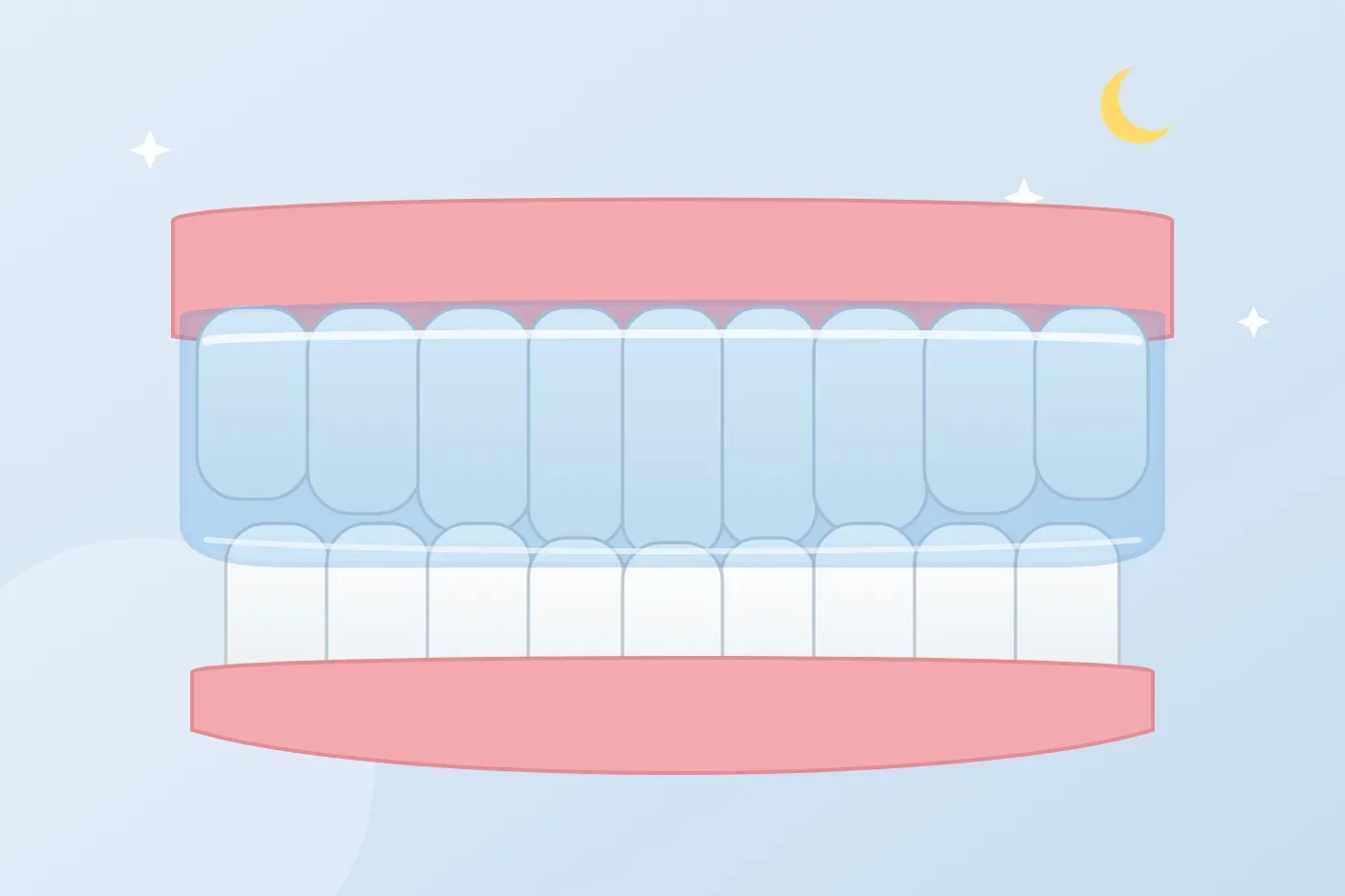
Many people grind their teeth in their sleep without knowing it, only noticing a tired jaw, a headache or sensitive teeth in the morning. A night guard is a device that protects the teeth while you sleep. This article explains what it is, who needs one and how to use it properly.
What is a night guard?
It is a thin, clear piece of plastic made to the mold of your own teeth and worn over the upper or lower teeth during sleep. It creates a cushion between the two jaws so the teeth do not grind directly against each other.
A night guard does not cure the cause of grinding, but it reduces damage to the enamel and the jaw muscles. See is grinding teeth in sleep harmful.
Who should use a night guard?
The dentist may advise one if you have:
- Flattened teeth, thin enamel or sensitive teeth.
- A tired jaw on waking, pain around the ear or morning headaches.
- A partner who hears grinding at night.
- Teeth that often chip or crack. See what to do about a cracked, chipped or broken tooth.
How do I use a night guard properly?
- Wear it every night before sleep, after brushing your teeth.
- Give yourself a few days to get used to it: at first it may feel bulky and make you produce more saliva, which usually settles.
- Return when the dentist asks so it can be adjusted if it feels tight or loose.
- Have regular check-ups so the dentist can check wear on the guard and on your teeth.
Cleaning and storing the guard
- Rinse it with a soft brush and cool water each morning. Avoid hot water, which can warp it.
- Let it dry and keep it in its own case, away from heat such as direct sunlight.
- Keep it away from pets and do not share it with others.
- Replace it if it cracks, wears through or no longer fits.
Night guards at Ky Hoa
Nha Khoa Ky Hoa makes night guards. Also read everyday habits that quietly harm your teeth to reduce jaw tension. For costs, see the price page.
Nha Khoa Ky Hoa is at 266A - 268, 3 Thang 2 Street, Hoa Hung Ward, Ho Chi Minh City. You can walk in during working hours, or call the hotline 028.3868.1097 (Zalo 082.299.3377) to ask about quieter hours first.
Frequently asked questions
Does a night guard stop teeth grinding completely?
A night guard does not treat the cause but it protects enamel and reduces jaw pain. Reducing stress and keeping good habits also help.
Is it uncomfortable to wear a night guard?
In the first few days it may feel bulky and you may make more saliva, which usually settles. If it feels tight or painful, return so the dentist can adjust it.
How should I clean a night guard?
Rinse it with a soft brush and cool water every morning, let it dry and store it in its own case. Avoid hot water because it can warp the guard.
When should I replace a night guard?
Replace it when it cracks, wears through or no longer fits your teeth. Regular check-ups let the dentist judge the wear and decide.