
A tooth decayed for a long time can break down until only the root is left in the gum. Not every case needs extraction, but leaving it alone is not a good idea either.
- A long-decayed tooth can break down to the root, and leaving it easily causes gum inflammation, abscess and a swollen cheek.
- Not every root must be pulled, a root that is firm enough can have root canal treatment and be restored with a post and crown.
- A root that is too short, cracked lengthwise or severely inflamed is usually pulled, which is often more complex than pulling a whole tooth.
- After extraction, bite on gauze, eat soft cool food and think about replacing the lost tooth to avoid bone loss.
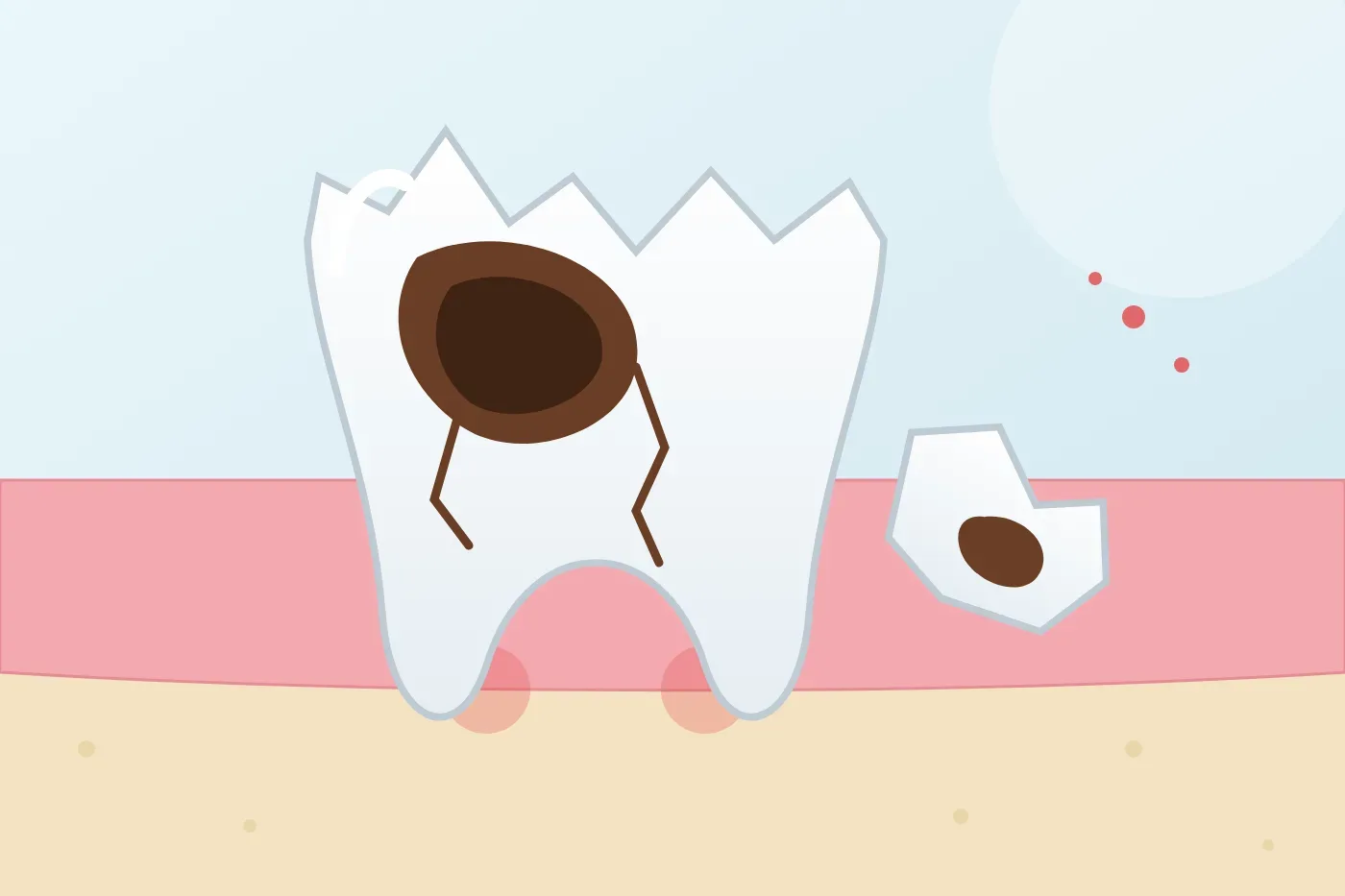
Many people leave a decayed tooth for a long time until the crown breaks off biting something hard, leaving only the root. Because it does not always hurt, some people just leave it. This article explains why it should not be ignored, when extraction is needed and when the tooth can still be kept.
Why do decayed teeth break down to the root?
Decay gradually eats into the dentin and the pulp, making the crown thin and weak. Biting something hard can then break the crown away, leaving the root in or level with the gum. See also decay in adults: recognizing and treating it.
Is it harmful to leave the root there?
The remaining root can harbor bacteria and cause:
- Gum inflammation around the root and bad breath.
- Aching on and off, especially when chewing.
- An abscess and a swollen cheek if infection spreads. See swollen cheek from a tooth, could it be an abscess.
- Effects on neighboring teeth from plaque building up.
Does it always have to be pulled?
The dentist will examine you and take an X-ray to decide. Not every root has to be pulled.
- It may be kept: when the root is long and firm enough, the dentist may do root canal treatment and then restore the tooth with a post and a porcelain crown.
- It should usually be pulled: when the root is too short, cracked lengthwise, loose or severely inflamed around the root so it cannot be saved.
Is pulling a broken root difficult?
Removing a root is usually more complex than pulling a whole tooth because there is no crown to grip. The dentist may need to divide the root or remove it in pieces. The area is numbed so you feel no pain during the work, but it can take longer. The sterile procedure is described in how a safe, sterile tooth extraction is done.
What should I do after extraction?
- Bite firmly on gauze as instructed to stop bleeding.
- Eat soft, cool food in the first days. See what to eat after a tooth extraction.
- Do not rinse hard or poke the socket.
- Think about replacing the lost tooth to avoid bone loss and shifting teeth. See what you need to know about dental implants.
For health insurance coverage of extractions, read whether tooth extraction is covered by health insurance.
Nha Khoa Ky Hoa is at 266A - 268, 3 Thang 2 Street, Hoa Hung Ward, Ho Chi Minh City. You can walk in during working hours, or call the hotline 028.3868.1097 (Zalo 082.299.3377) to ask about quieter hours first.
Frequently asked questions
Does a decayed tooth broken to the root always have to be pulled?
Not always. If the root is long and firm enough, the dentist may do root canal treatment and then a post and crown, while a root that is too short or cracked lengthwise is usually pulled.
Is it dangerous to leave a decayed root for a long time?
A root easily harbors bacteria and can cause gum inflammation, aching, an abscess and a swollen cheek. It should not be ignored and should be checked early.
Does pulling a broken root hurt?
The area is numbed so you usually feel no pain during the work. It may take longer than pulling a whole tooth because there is no crown to grip.
What can I do to replace the lost tooth afterwards?
Ask the dentist about options such as a bridge or an implant to avoid bone loss and shifting of neighboring teeth. The right choice depends on your teeth and bone.