
Menopause does not only bring hot flushes or poor sleep, it can also affect the mouth. This article helps women understand the link and protect their teeth during this stage.
- Falling hormones during menopause can make gums more sensitive and prone to swelling and bleeding.
- Dry mouth and a burning feeling in the mouth are common complaints for some women.
- A higher risk of osteoporosis may affect the jawbone, so tell the dentist before extractions or implants.
- Good brushing, enough water and regular dental check-ups help protect the mouth.
How does menopause affect the mouth?
When menopause begins, the level of female hormones in the body gradually falls. This change can affect many tissues, including the gums, saliva and the jawbone. Not everyone has problems, but many women find their mouth more sensitive than before.
Common signs
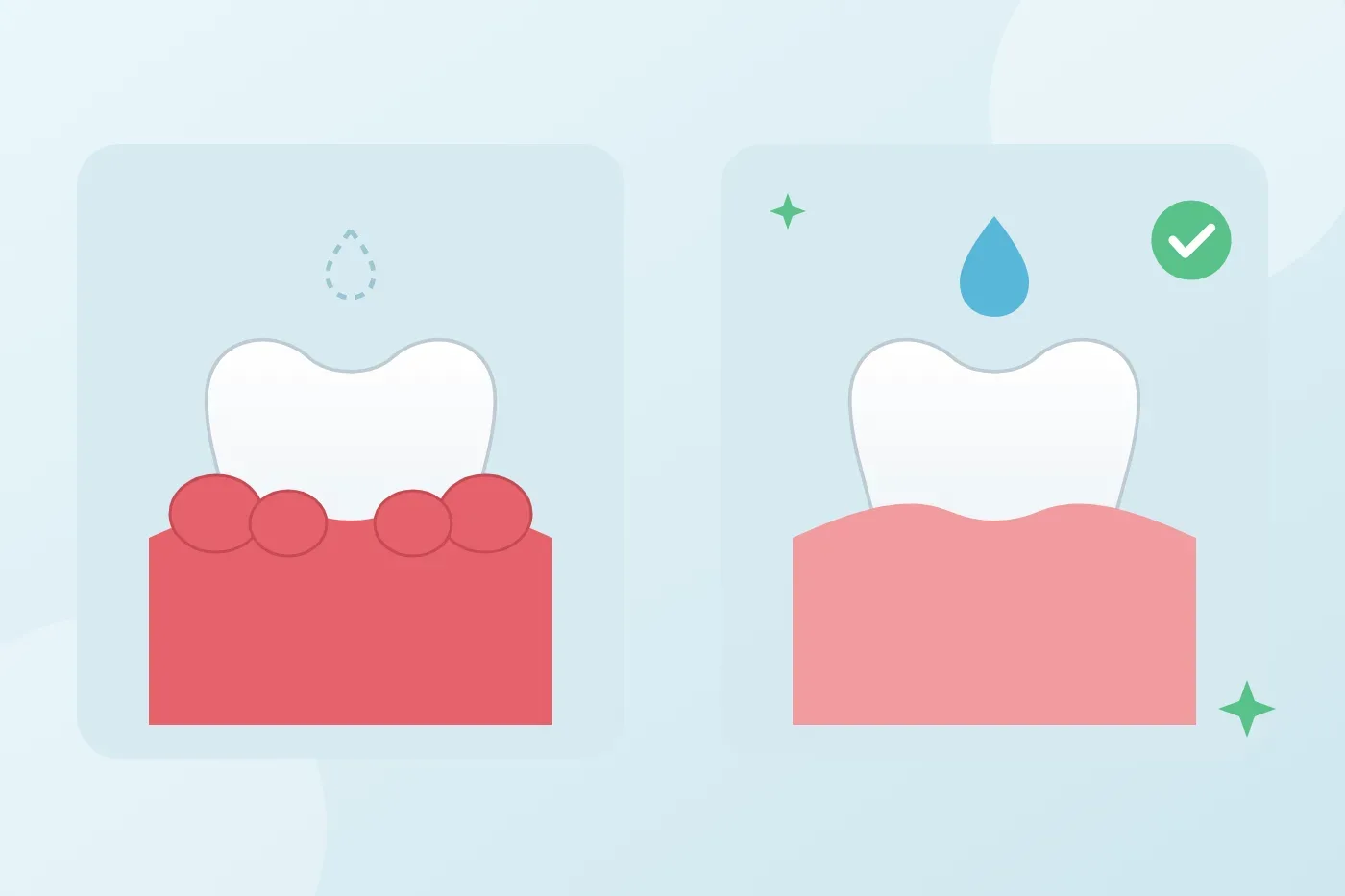
- Gums that swell, redden and bleed easily: the gum tissue is thinner and more sensitive, so plaque inflames it faster.
- Dry mouth: less saliva leaves the mouth dry, changes taste and raises the risk of cavities.
- A burning feeling in the mouth: some people feel burning on the tongue, lips or palate.
- Sensitive teeth and receding gums: roots become exposed and react to hot and cold food.
These signs can also have other causes such as gum disease, medicines or an underlying condition, so a dentist needs to examine you to tell them apart.
The jawbone and osteoporosis
Menopause is also a time when the risk of osteoporosis rises. The jawbone supports the roots of the teeth, so when bone weakens the teeth may feel less firm. If you are being treated for osteoporosis and need an extraction or an implant, tell your dentist. You can read more in whether you can have a tooth extracted during osteoporosis treatment.
Caring for your mouth at this stage
- Brush twice a day with a soft toothbrush and clean between the teeth.
- Drink water often and chew sugar-free gum if your mouth feels dry.
- Limit cigarettes, alcohol, sugar and very sour food.
- Get enough calcium and vitamin D as your doctor advises.
- Have regular check-ups and scaling.
When should you see a dentist?
Please come in when gums bleed or swell for a long time, the mouth is uncomfortably dry, or teeth become loose or very sensitive. You can also read what gingivitis is and whether it heals on its own and dry mouth and how to manage it. Call the hotline 028.3868.1097 or visit Nha Khoa Kỳ Hòa at 266A - 268, Đường 3 Tháng 2, Phường Hòa Hưng, Ho Chi Minh City.
Frequently asked questions
Does menopause weaken the teeth?
It can in some people, because of hormonal change and a higher risk of osteoporosis. Careful oral care and regular check-ups help keep teeth healthy.
Is dry mouth during menopause a concern?
Dry mouth raises the risk of cavities and gum inflammation. Drinking enough water and keeping good hygiene helps, and if it persists you should get checked to find the cause.
Will bleeding gums go away by themselves?
If plaque is the cause, the gums only improve once they are cleaned properly. Bleeding that continues should be checked to rule out gum disease.